Saturday, January 27, 2024

Letters to Peter, 1


My friend Peter has set me a challenge for 2024: each month he is going to ask me a question for me to answer. I want my answer to come from the heart, so I won't use books, except the Bible. And I will try keep it to 500 words. 

Thanks for the challenge Peter. I hope others find it helpful too.


1.      How do you encourage and build the prayer life of your local church fellowship?

Background is that we have been plugging prayer over the last year or more and have a number of prayer meetings and opportunities to pray yet the leadership generally feel that prayer is still a weak area of the church at the moment.


January 2024

Dear Peter,

Thanks for prompting me to think about prayer in the local church. What an vital question! There can be few things about the life of the local church that are more important.

And there can be few things about the life of the local church with which we can feel more of a sense of failure.

The great exhortations of Scripture – “Be…faithful in prayer” (Rom 12:12); “…always keep on praying for all the Lord’s people” (Eph 6:18); “…in every situation, by prayer and petition, with thanksgiving, present your requests to God” (Phil 4:6); “Devote yourselves to prayer, being watchful and thankful” (Col 4:2); “Rejoice always, pray continually, give thanks in all circumstances” (1 Thess 5:17), etc., – these great exhortations are a huge challenge.

And they might be crushing, were it not for the great promises and encouragements that go along with them: “Come to me, all you who are weary and burdened, and I will give you rest. Take my yoke upon you and learn from me, for I am gentle and humble in heart, and you will find rest for your souls. For my yoke is easy and my burden is light” (Matt 11:28-30); “I can do all this through him who gives me strength” (Phil 4:13).

And that same Lord Jesus has sent the Holy Spirit to help us and be with us for ever (John 14:16). And he is the Spirit of truth (17), the one who has inspired the Scriptures to teach us, rebuke us, correct us, and train us in righteousness, so that we may “be thoroughly equipped for every good work” (2 Tim 3:16-17; John 16:13). And that includes the work of prayer.

We are exhorted to “pray in the Spirit on all occasions with all kinds of prayers and requests” (Eph 6:18). Prayer is something the Spirit both empowers us for and guides us in: “We do not know what we ought to pray for, but the Spirit himself intercedes for us through wordless groans” (Rom 8:26). 

And what wonderful examples of prayer we have in the Scriptures: the prayer the Lord Jesus taught his disciples (Matt 6:9-13); the prayer of the disciples in those early days after Pentecost (Acts 4:23-31); and Paul’s great prayers in his letters (e.g., Eph 1:15-23 and 3:14-21).

But the greatest motivation to prayer is surely the gospel itself, isn’t it? We can organise prayer meetings, download apps, and sign up for prayer letters from all over the world. We can instruct, exhort, and challenge till we are red in the face. But none of these will fire up a church to pray like the gospel will.

So more than anything else, my prayer for you and your church, Peter, is that you would once again be captivated by the grace of God in the Lord Jesus Christ. That you would be thrilled as you listen again, in the preaching and teaching of the Word of God, to the wonderful reality that, “God was reconciling the world to himself through Christ, not counting people’s sins against them” (2 Cor 5:19).

Monday, January 1, 2024

Favourite Books of 2023

Theology and Culture

Biblical Critical Theory: How the Bible's Unfolding Story Makes Sense of Modern Life and Culture, by Christopher Watkin.

Watkin is a Yorkshireman who teaches French Literature in Australia. In this chunky book Watkin uses Augustine's City of God as a model of how to use the Bible in cultural engagement. I have found it bristling with insights and hope to go over it again to try to retain some of the stuff I have learned from it.


Unpacking Forgiveness: Biblical Answers for Complex Questions and Deep Wounds, by Chris Brauns. 

This is the one book (apart from the Bible) that I took into hospital with me in November. Chris is an American Presbyterian pastor with a lot of experience of helping people work through the pastoral issues related to forgiveness. He lands squarely on the need for repentance to precede forgiveness. Some people are horrified by such a stance, and many would be puzzled, but Brauns makes a solid case that, to me at least, is convincing. I am still working through issues in this area myself and this book has been a helpful guide.


Into His Presence: Praying with the Puritans, by Tim Chester.

Tim is an old friend of mine, and I have benefitted from so many of his books - he is a prolific writer. I am not normal big on written prayers, but having enjoyed The Valley of Vision a couple of years ago, thought I would give this a try. I was not disappointed. Gave copies to the family for Christmas.


What Makes Us Humans? And Other Questions about God, Jesus and Human Identity, by Mark Meynell.

Mark calls this a "short book about a big subject". There can be few subjects that are so important in our cultural moment. It is so vital we get a proper view of what it means to be human when all around us people are questioning reality and coming to grief. If you haven't read anything on this, please give this one a read. It is one of a series on hot topics by The Good Book Company called 'Questions Christians Ask'. They are bite size, biblical, and brilliant.


Reality and Other Stories: Exploring the Life We Long for through the Tales We Tell, by Matt Lillicrap and Peter Dray.

Stories are fundamental to what it means to be human (see above). Matt and Peter reflect on seven kinds of stories that we tell each other. This book started as a series of talks by Peter at Cambridge Inter-Collegiate Christian Union and then reworked with Matt, using the framework provided by Christopher Booker in his The Seven Basic Plots. It's brilliant.


Missiology

Motus Dei: The Movement of God to Disciple the Nations, edited by Warrick Farrah.

News from far-flung places suggests that great numbers of people around the world are turning to Christ. And we are told that a leading factor in this movement is a relatively new method of church planting or disciple making. Motus Dei (Latin for the 'Movement of God') is a multi-author work that reflects on this phenomenon in a number of contexts around the world. It's a mixed bag. I offered to review this book for the International Journal of Frontier Mission but the project snowballed and now a whole issue is to be given over to it with my review article being followed by responses by other writers. Spoiler alert: I am sympathetic but have serious misgivings.


Biography

A Camaraderie of Confidence: The Fruit of Unfailing Faith in the lives of Charles Spurgeon, George Müller and Hudson Taylor, by John Piper.


This is the fourth book that I have read in this series of potted biographies by Piper. They spring from papers that he has given at his annual pastors' conference at Bethlehem Baptist Church. They are always super-encouraging and challenging. Piper doesn't focus on critique or analysis, though he could, but he does think freshly on his subject. His concern is to bring the faith of these three great men into focus so that we would emulate that faith in our day. I gave copies to a bunch of pastors in my area, with whom I hope we too form a camaraderie of confidence in the Lord.


Fiction

The Murder of Roger Ackroyd, by Agatha Christie.

I am not an aficionado of crime fiction as some of my friends are, but this has got to be one of the best. An excellent plot with a stunning plot twist. 

Tuesday, October 31, 2023

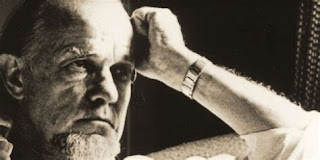
Francis Schaeffer at Lausanne

This weekend, Lord willing, I will join 134 others in Budapest for the Lausanne Europe Gathering. This is preparatory to the next large congress that is scheduled for next September in Seoul. There are four of us going from Great Britain, representing a spread of age, gender, ministry situation, and ethnicity. 

Often when we consider the first Lausanne Congress in 1974, we think of the important contributions of John Stott, Samuel Escobar, Rene Padilla, and Ralph Winter.

But one of the less well-known contributors to that first congress was Francis Schaeffer. Francis and Edith Schaeffer were American missionaries who had developed a very significant ministry, inviting disillusioned young people to their home in Switzerland, and sharing the gospel with them.

I had come across Schaeffer as a teenager, and read everything I could that the Schaeffers had written.

Schaeffer’s talk at Lausanne was published as “Two Contents; Two Realities”.

As I reread that talk the other day, I was struck by two things:

1.     How this message had been so influential on my ministry throughout my life; and

2.     How relevant it is half a century later.

This is what he said:

There are four things which I think are absolutely necessary if we as Christians are going to meet the need of our age and the overwhelming pressure we are increasingly facing. They are two contents and two realities:

 The First Content: Sound Doctrine

 The Second Content: Honest Answers to Honest Questions

 The First Reality: True Spirituality

 The Second Reality: The Beauty of Human Relationship


I want to read to you one short quote from each point to give you a flavour of his presentation:


The First Content: Sound Doctrine


Schaeffer focusses firstly on the importance of believing and practicing truth:

…nowhere is practicing the truth more important than in the area of religious cooperation. If I say that Christianity is really eternal truth, and the liberal theologian is wrong—so wrong that he is teaching that which is contrary to the Word of God—and then on any basis (including for the sake of evangelism) I am willing publicly to act as though that man’s religious position is the same as my own, I have destroyed the practice of truth which my generation can expect from me and which it will demand of me if I am to have any credibility. (411)


The Second Content: Honest Answers to Honest Questions


His second point is on the importance of what we would now call cultural engagement:

Christianity demands that we have enough compassion to learn the questions of our generation. The trouble with too many of us is that we want to be able to answer these questions instantly, as though we could take a funnel, put in in one ear and pour in the facts, and then go out and regurgitate them and win all the discussions. It cannot be. (414)


The First Reality: True Spirituality


Here Schaeffer tells of a spiritual crisis he had gone through twenty years before, as he reflected on his life, and how he recognised that his spiritual life had not kept in line with his stated beliefs. He took time out to rethink his whole belief system, and then he says this:

I found something I had not been taught, a simple thing but profound. I discovered the meaning of the work of Christ, the meaning of the blood of Christ, moment by moment in our lives after we are Christians—the moment-by-moment work of the whole Trinity in our lives because as Christians we are indwelt by the Holy Spirit. That is true spirituality. (416-17)


True spirituality, he is arguing, is essential if we are to have any kind of lasting fruit in our lives. And that spirituality must be real, not fake.


The Second Reality: The Beauty of Human Relationships


Here he is talking about the importance of love in the community of God’s people:

Now if we are called upon to love our neighbour as ourselves when he is not a Christian, how much more…should there be beauty in the relationships between true Bible-believing Christians, something so beautiful that the world would be brought up short!...if we do not show beauty in the way we treat each other, then in the eyes of the world and in the eyes of our children, we are destroying the truth we proclaim. (419)


It is my conviction that these things are as true now as they were when Schaeffer first spoke them, and that is why they continue to have a profound influence on my life. My prayer is that these convictions would also shape the way we interact in Budapest.

(All refs are to the Complete Works of Francis Schaeffer, Vol. 3)

Monday, April 17, 2023

George Verwer (1938-2023)

One of my heroes, George Verwer, died on Friday, 14th April.


I first came across George as a teenager, when I read a copy of Come, Live, Die! My brother Dave had picked it up on a book table somewhere or other. I was attracted to the radical call to discipleship and felt, probably judgmentally in retrospect, that I had not really come across people who lived like this.

I had felt God’s leading in my life to serve the Lord among the least reached since even before I truly trusted Christ (I would have travelled over land and sea to make a single proselyte, just like the Pharisees). But my perception of the missionaries I had come across was that they did not live as radically as I thought they should.

Reading Verwer was adding fuel to the fire. But I was reading others too. Francis Shaeffer (who had also had a positive influence on George and his friends in the early years) was also radical but in a way that, I felt, acknowledged our creatureliness more coherently. Imagine my confusion, then, when I heard George say that he had bought a pizza at a take away. Reading his books and listening to his messages on tape, had led me to believe that eating out would be overindulgent! Clearly my perception of the man and his radical discipleship needed some rethinking.

George Verwer grew up in New Jersey, not far from where my wife Becky also grew up. He came to Christ at a Billy Graham rally, after reading a John’s Gospel, sent to him by a local woman, Dorothea Clapp, who had been praying for the children at her son’s school. That story, and a few others, attained the status of origin myths for Operation Mobilisation, shaping the philosophy and identity of the movement, especially in its first few decades.

In honour of George, here are six words, in no coherent order, that come to my mind as I reflect on his life and especially his impact on me:

Encouragement

I first met George when I went on my first OM ‘summer campaign’ in 1982. Every now and then, I got the opportunity to meet up with him at conferences or when he visited Nepal. In the midst of his very busy schedule, he always had time for people, even young men of little importance like me. And that went on - my last email from him, in response to one from me, was a couple of weeks ago - just one word: 'praying'.

Discernment

George sometimes seemed to have an unusual spiritual insight. In 1989 he visited Nepal just after I had been arrested and ordered to leave the country. He must have sensed a note of pride in my telling of the story, as his response went something like this: “I guess the Lord didn’t think you were ready for a longer stay in jail.” Ouch. I think it was just what I needed. 

Communication

George was never an expository preacher, but he was a gifted gut preacher: He walked with the Lord, so when he preached he unburdened what was on his heart from his meditation on Scripture and his interactions with people around the world. It was never deeply theological or closely argued, but it was always fresh, always earnest, always challenging. I appreciated that.

Passion 

George had a lifelong passion to get the gospel to every individual on the planet. And there can be few who have had more impact especially in getting literature to those who have not previously heard or read about Jesus; it wouldn’t surprise me if over a billion pieces of gospel literature have gone out through George’s influence as well as many thousands of gospel workers.

Generosity

One thing I always appreciated about George is that he never clung onto anything. He was giving things away all the time. He discerned his co-workers’ gifts and made space for younger men and women to take over an aspect of the work. And when one of those younger or older men left OM to begin a new organisation, he encouraged them to flourish, rather than resent them or see them as a threat. There are literally hundreds of organisations, especially in India, that are led by former OMers and which have been helped to flourish through gifts of literature from George’s Special Projects ministry.

Sensitivity

George was not always easy to work with. One gets the impression that in the early days he expected too much from the young people who worked with him. But George was always ready to repent of his arrogance or insensitivity. The story told by Peter Conlan of their altercation on the Silk Road between Istanbul and Ankara is very moving:

It was 1968, we were both young men, and I was driving a VW van packed with the Verwer family and team. Everyone was tired, thirsty and hungry. George was impatient to keep pressing on. I eventually slammed the brakes on and shouted to George to get out. To the stunned amazement of the team George and I faced each other with clenched fists. I said to George, ‘go on, Christian leader, hit me!’ For a moment we glared at each other and I waited for impact. Then George began to shake, tears started to flow and his arms were wrapped around my shoulders. Brokenness at the foot of the cross is not only his message, it is his life. (“Incurable Fanatic, Unshakeable Friend” in Global Passion: Marking George Verwer’s Contribution to World Mission, ed. David Greenlee; Secunderabad, India: OM Books, 2003, 194).  (“Incurable Fanatic, Unshakeable Friend” in Global Passion: Marking George Verwer’s Contribution to World Mission, ed. David Greenlee; Secunderabad, India: OM Books, 2003, 194). 

How differently it could have turned out. And how much spiritual fruitfulness might have been lost if they had borne a grudge against one another.

I thank the Lord for the life of George Verwer. He has finished the race and is now enjoying the glorious face-to-face intimacy with his Saviour who bought him at such a price. And I pray that a small part of his mantle might rest on me and on all true disciples. 

Wednesday, December 21, 2022

Favourite Books of 2022

So much of my reading these days is online. I read lots of articles. I find many of them helpful. This year, as before, I have found the articles on UnHerd informative and insightful, especially on the current issues and trends in politics and culture. This year, though, I think the website that has been most helpful to me has been that of Mere Orthodoxy. If you haven't read any of their material you are missing out. They are often long-form articles so you may need half an hour of undisturbed reading. But they are well written and often display profound theological and cultural depth.

As for books though, as usual I have not read nearly as many as I had hoped. But here are my top ten books from this year:

Commentaries

The Letters to Timothy and Titus, by Philip H. Towner 

Over the last few years at Freeschool Court Church, we have been working through the letters Paul wrote to his friends Timothy and Titus in our bimonthly home groups. We are nearly finished and it has been so helpful. I don't have a great wall of commentaries in my study as many of my friends do, as I have not been in a pastorate with the need to be constantly working on new preaching material. But I have adopted the practise of asking my good friend John Kendal (among others) for a recommendation when I have to spend more time on a book. This is what John suggested. It is chunky - nearly 900 pages - and scholarly. But it is not technical so you don't have to have Greek to benefit from its wisdom. Highly recommend it if you are willing to spend the money - it's expensive.


Theology & Culture

The Intolerance of Tolerance
, by D. A. Carson

This is ten years old and already a little out of date but still well worth the read. Like all Carson's books it is well-researched and readable.


Carson distinguishes between what he calls the 'old tolerance' and the 'new tolerance'. The old tolerance involves the acceptance of the existence of different views. The new tolerance involves the acceptance of different views. It is a subtle shift linguistically but profound in its impact. In the old tolerance of liberal democracy citizens were not to impose their beliefs on others. In the new tolerance the mere expression of disagreement with the radical agenda is to be banned.


The author reports a number of often high-profile cases in politics, the media, and the universities in which the new tolerance has been displayed. He then looks at the history of the idea of tolerance, directs the problems with the new paradigm, and suggests ten words as ways ahead. Still relevant.


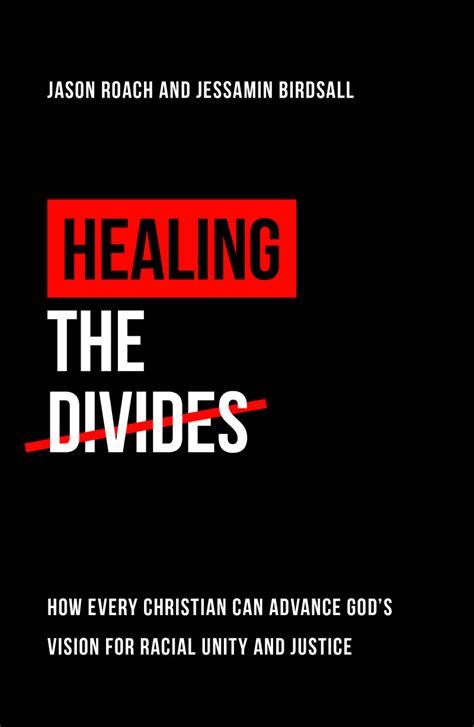
Healing the Divides: How Every Christian Can Advance God's Vision for Racial Unity and Justice
, by Jason Roach and Jessamin Birdsall

The authors, a Black British medic/pastor and a white American adult missionary kid writer, tackle this very thorny issue of race and especially the way Christians and churches should respond to ethnic diversity and prejudice.

They write well and explain current thinking clearly. They tackle the Black Lives Matter movement, Critical Race Theory, and anti-racism activism. Instead of emphasising one angle on racism they accept that there are individual and structural perspectives that are both useful. I had not come across the idea of 'interest convergence' before. Roach and Birdsall give plenty of practical suggestions along the road. I found the book helpful. It is a popular-level book and it left me wanting to go deeper into the concepts and theories that are informing much of the activism of our generation. I think that the authors on the whole did a fairly good job at navigating what is a potential minefield in writing this book. If there is any weakness I think it is in uncritical use of categories like BAME.


He Still Speaks: Francis Schaeffer’s Enduring Relevance
, edited by Steve Wellum

I picked up this book at the FEUER conference. I am a Schaeffer fan and thoroughly enjoyed these essays by folks involved in L'Abri: Andrew Fellows, Dick Keyes, Ranald McCaulay, and others. Schaeffer is shown to be prescient in so many ways. It is astonishing to see how he really understood the times way ahead of pretty much everyone else. If you have not read Schaeffer himself (I read nearly all his books while I was a student) this would be a good way into his works. (I couldn't find a photo of the book and don't know where to buy it either.)


Biographies

Bavinck: A Critical Biography, by James Eglinton

Herman Bavinck was a prodigious Dutch theologian at the turn of the last century and for a long time was not well known in the English speaking world. Eglinton, of Edinburgh University, is a leading Bavinck scholar and, with others, is in the process of translating his works into English. I have not read any of Bavinck's works (though I have read some work of his missiologist nephew John Herman Bavinck) so wanted to read this biography as a way into understanding his significance. The book is scholarly but readable. I hope to go on to read some of Bavinck himself before long, though I doubt I have it in me to read his magnum opus, the four volume Reformed Dogmatics. (An interesting personal connection with Bavinck was when I was stopped by the police for riding a bike on the very Leiden street on which student Bavinck lived [a century before - I admit this is tenuous!]. I explained that I was visiting and couldn't read the Dutch no cycling sign, so he let me go.)


In the Shadow of the Rock, by Geoffrey Thomas

Geoff is my old pastor from student days in Aberystwyth and continues to stay in touch with me. He has written this autobiography in the hope that it will be a blessing to his readers. It was a joy to read old stories again and learn so many new anecdotes from his life. In a way Geoff was an ordinary pastor. But in that he ministered in the same congregation for over 50 years you want to read his story to glean lessons for your own life. So many men, especially, have benefitted from his mentoring over all these years, including me. When I was a teenager I was already convinced that the Lord wanted me to go overseas with the gospel and wanted to prepare by going to Bible college. But I was advised to go to university first and so I ended up in God's providence at Aber. I always say that sitting under Geoff's ministry for three years was my Bible college! 


The Snow Leopard, by Peter Matthiessen 

I used to see this book in every book shop in Nepal and had often wanted to read it. When I saw it among the dross at the local lockdown book exchange - I periodically drop off gospel books there and they are always taken - it was like encountering someone I had known for ages but never had the chance to meet. It is a completely different book from what I had expected. Part travelogue and part Zen Buddhist meditation, Snow Leopard traces the journey of the author with his zoologist friend, George Shaller, into the snowy wastes of Dolpo to observe the rut of the Himalayan blue sheep. Evidence of those elusive and majestic cats is all around them, but would they actually get to see them with their own eyes? A tale of grief, human relationships, and personal discovery in an epic theatre.


Novels


The Thursday Murder Club
, by Richard Osman

Osman's first, blockbuster novel. I resisted jumping on the bandwagon for a while but when a copy was left at our house I resisted no more - and thoroughly enjoyed it. The plot is a bit of a stretch, but the characters - especially the four friends who form the club at Cooper's Chase retirement home - are a delight. I love the idea for the setting, especially as Osman paints older people in such a positive light. 


Klara and the Sun, by Kazuo Ishiguro

This is the fourth of Ishiguro's novels I have read, after The Remains of the Day, Never Let Me Go, and When We Were Orphans. I think Klara is more like Never Let Me Go than any of the others but really quite different as well. Ishiguro is an expert in making you think about what it means to be human. And that is perhaps the most important issue in Western culture in our generation. Thoroughly recommend it. But don't read it if you want to read something to relax and make you happy. It made me renew my commitment to reaching lost people with the good news of Jesus.

Wednesday, November 30, 2022

The Joy and Sorrow of Hindu Conversion Stories: Review of Brahmin Reborn by Bhaskar Sreerangam with Esther Sandys

The publisher 10 of Those kindly sent me a sample of this book to check out.

I confess I was reticent. As I expected Brahmin Reborn fits neatly into the genre of Hindu conversion stories, alongside others such as Death of a Guru, by Rabi Maharaj, and Found by God by Rahul Patel.

Like those others, Sreerangam's story resonates with authenticity. One is brought into the life of a young man in a very different setting to the experience of many of us. You marvel at the concerns of the family, the punctilious nature of their attention to ritual purity, the enormous respect that people have for the boy simply on the basis of his pedigree - a high-caste priestly family, and their devotion to the gods.

I was struck with young Bhaskar's spiritual wrestlings: how from a young age, he badgers his relatives and other respected people to show him how he can achieve eternal life. His dismay at his devout uncle's despairing death cry is very moving. How sad indeed that people leave this world without hearing how they can be made right with God and have a hope for eternity.

And so, if, like me, you read this book, you will enter into the heart-felt spiritual quest of a young man who is desperate to have that assurance but completely without any hope that he will gain it.

And as you read, you know, because of the sort of book it is, that there is [spoiler alert!] a happy ending. Sort of. A happy ending indeed for young Bhaskar who fulfils his quest. But not for his father, who disowns him, or his mother, who weeps at his abandonment of the family tradition, or his Akka, or his brothers, or his sisters, or his uncles and aunties, or anyone else in his community. Indeed, it is a bittersweet ending for Bhaskar himself.

But let me back up: young Bhaskar the engineering student in 1960s Madras (now Chennai) is handed an invitation to an event put on by the local group of UESI (IFES). He has never heard the name Jesus before and is intrigued by the talk about this person. And just in the nick of time - but I won't give it all away.

Love, community, kindness, long conversations, and in six weeks Bhaskar is brought to faith in Christ.

But then his troubles begin. And if, unlike me, you were not prepared for that, you are now. It was a train crash waiting to happen. Why the secrecy about the baptism? Why drop it all on the family as a fait accompli? I hope I am not being unfair but this is my take: it is necessary for Mr Giri to advise Bhaskar in this way, in order to satisfy Mr Giri's own psychological need (p. 103). And so a clean break is arranged for Bhaskar, though he doesn't realise it until he reports the momentous news to his parents.

And that is how these testimonies go. The agonising spiritual journey, the release, the conflict, the break. So glad, but also so sad.

So will I be recommending this book (or that of Maharaj or Patel) to the Hindu students I meet in the coming months? What do you think? If I believed that faith in Christ required a complete severance of one's family ties, then sure. But I don't. That may happen in some cases, even when the new Jesus devotee is wise and sensitive. In such situations, I think, Jesus' well-known words apply most acutely (Luke 14:26-27). But for most, happily, such a social death is not inevitable (1 Cor 7:17, 20, 24). 

And, I would contend, that applies to the most devout Brahman of all. Sreerangam didn't come to understand that. But a few others have. Take N. V. Tilak, for example. Tilak went through all the same agonising spiritual and social contortions that Sreerangam did. But later he came to understand that he had let his people down as he responded to the gospel and sought to make up for his mistakes.

My prayer is that those mistakes are not made in the first place. And that demands careful communication of the good news of Jesus that is sensitive to the respondent's social and cultural situation.

Wednesday, November 23, 2022

Sense and Sensibility: Two Dimensions of Pioneering Evangelism

[This message was given at the close of a half-day conference with EMF at my church, Freeschool Court Church, Bridgend, Wales, on 19th November 2022. I had been asked to stand in for my friend who was not well.]

We have been listening throughout the morning to the great challenge of taking the glorious message of the gospel of Jesus Christ to the dark continent of Europe.

And what a challenge it is!

How can we be faithful in reaching Europe with the gospel in the 21st Century?

It seems to me that there are two miss-steps we can make as we think through that question:

1.     It all comes down to strategy. We need to research the European scene in careful detail, analysing the social demographics, and interpreting the cultural themes that dominate the minds of her people. Then we need to assess methods of engagement, adopt successful models, manage our ‘human resources’, train a rising generation in the latest in effective mission techniques, invest in dynamic technologies, and develop a sustainable support base to ensure that we can always affirm that “God’s work, done in God’s way, will never lack God’s supply.”

2.     It all comes down to the Holy Spirit. We need to allow the Holy Spirit to lead the ministry. If we are truly spiritual people, we will be filled with the Spirit and we will be able to operate in the power of the Spirit rather than in the power of the flesh. In the spirit of the Proverbs, if in all our ways we acknowledge him, he will direct our paths. And in that way, we will taste success in in such a way that has never before been seen in the history of missions. The Spirit will give us Europe. 

Now, these are really caricatures, and in practice we may be hard pressed to find such extreme thinking in reality. But we can readily find examples of churches and organizations who have adopted one or the other of these models as their general approach.

Why do I say these two approaches to ministry in Europe today are miss-steps? For a simple reason: each, at least in these stereotypical forms, leaves no room for the other. They are totalizing. All you need, say both camps, is this. They are Shredded Wheat approaches: nothing added, nothing taken away.

How should we move forward in the great task of disciple making 20 centuries after the Lord first gave his disciples his final instructions? 

It seems to me that we need to have a two-dimensional approach. And I think we can see that very clearly in the story of the way the gospel first came to the mainland of what we now call Europe, around the year 50AD. Turn with me to Acts 16:6-15.

So in this wonderful story, we observe two dimensions of pioneering evangelism – with apologies to Jane Austen – sense and sensibility:

1.    Sense

Imagine the scene: Paul and his companions are walking through the hot, dry interior of what is now called Turkey. Where are they going? They were not wandering around the Mediterranean Basin in a random manner. 

If you look carefully at Paul’s movements throughout the book of Acts, you will be struck that Paul was intentional in all he did. Remember how he was sent out from Antioch, and how he and Barnabas “went down to Seleucia and sailed from there to Cyprus” (Acts 13:4)? Why did they go there on their first excursion? We are not told, but that fact that we are told that Barnabas was from Cyprus surely gives us a very strong clue. That was Barnabas’ place. He knew it well. He had connections. They could stay with relatives. He understood the Cypriot mindset and could help Paul to avoid some of the faux pas that every cross-cultural worker knows so well.

But where do they go when they land in Cyprus? The port towns of Salamis where they landed and Paphos from where they sailed for Perga in Pamphylia to the north. And that is what we see on all Paul’s gospel journeys – he makes for important cities and when he arrives proclaims the gospel, often staying until he is kicked out.

Clearly, Paul and his companions were seeking to evangelise according to a plan, according to an approach, according to a strategy. They were in other words, using their sense. Using their God-given gift of intelligence.

In Paul’s letter to the Romans he tells them that he had “planned many times to come to you” (Rom 1:13). At the end of his letter, he outlines his whole approach to his ministry: “It has always been my ambition to preach the gospel where Christ was not known, so that I would not be building on someone else’s foundation” (Rom 15:20). Then he tells them of his ‘plan’ to visit them on his way to Spain (24). 

In the same way, Paul discusses his plans to visit the church in Corinth (2 Cor 1:15-17).

Now this is important. As we have seen, there are those who suggest that strategic planning is unspiritual. They criticise those who spend time researching the people among whom they are hoping to witness. “Just go out and see how the Spirit leads you,” they say. Strategy is unspiritual.

Not so to Paul. And that is why he and his companions, Silas and Timothy, were on their way through the interior. They had revisited the cities at which they had previously preached: places like Derbe and Lystra. And now they are heading west. Where are they going? They are heading to the Roman Province of Asia. Now that is not the vast continent we call Asia today. Asia in Paul’s day was a much smaller region – a Roman Province. And, more importantly, Paul is heading for Ephesus, the principal city of the province. How do we know that? In v. 6 we read that they had “been kept by the HS from preaching the word in the province of Asia.” But there is further evidence: this verse begins a new act in the drama of the Acts of the Apostles. You can see it is a new act because the previous verse is one of Luke’s summary statements (5).

So Asia is mentioned right at the beginning of this section – of this act. Paul is wanting to preach in Asia, and especially at its principal city, Ephesus. He doesn’t manage to get there at first but gets diverted – more on that in a minute. But after he and his team travel all around Macedonia and Achaia they do in fact end up in Ephesus (19:1). Finally, phew, they arrive in the great city and have such a fruitful visit they end up staying for over two years (19:10). And so Luke can wrap up that act in the drama by showing how Paul’s plan had been successful, even though he had had to get there in a convoluted manner (19:20).

So really, Paul’s ministry in Macedonia and Achaia could be described as a diversion from Paul’s plan. But what a diversion it was. And that leads us to the other dimension of pioneering evangelism:

2.    Sensibility

By this I mean, sensitivity, or the ability to perceive the leading of the Spirit.

Paul and his companions “were kept by the Holy Spirit from preaching the word in the province of Asia” (Acts 16:6). That would mean nothing if they hadn’t been prevented from carrying out a plan. In the next verse we read that they “tried to enter Bithynia, but the Spirit of Jesus would not allow them to.” 

We are not told in what way the Holy Spirit had prevented them from ministering in Asia and Bithynia. Perhaps there was a word of prophecy. Or a dream. Or maybe it was circumstantial, a river in flood across their path, for instance. We are not told. But whatever it was, Luke tells us that it was the work of the Spirit. And they recognised it as such. That is what I mean when I say they had sensibility, or sensitivity.

And so they pass by Mysia and make their way down to the port city of Troas (8). And it is there, during the night, that Paul has a vision of a man of Macedonia standing and begging him, ‘Come over to Macedonia and help us’ (9). Well, you would think with such sensibility as Paul evidently had it would be a no-brainer. But read on and how do we find them responding to that vision (10)? Don’t miss it. They “concluded that God had called [them] to preach the gospel to them.” How did they do that? They must have talked it over. Paul could be very strong when he needed to be. But he did not issue a directive. He mulled it over with his companions, Silas and Timothy and now also Luke.

I love that about Paul. He planned, he strategized, he used the sense that God had given him. But he was also sensible – sensitive to the leading of the Holy Spirit in extraordinary ways. And even with such extraordinary leading, he still discussed it with his companions. Wouldn’t you have loved to be part of that team? No heavy handedness, no throwing his weight around, no abuse of power. A far cry from the way that some gospel workers operate.

So, they put to sea and arrive in Neapolis (11). And after disembarking they make their way up the hill on the outskirts of the town, and down the other side, heading inland through the Macedonian scrubland to find the Egnation Way, the Roman road that linked the eastern part of the empire with Imperial Rome itself. And after a few hours of walking, there it is.

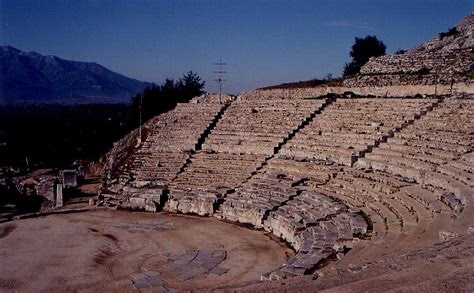
They join the road with its marble flagstone heavily rutted by the chariots and carts of numerous Roman legions, and head west for the important Roman colony of Philippi. They can see the rocky hill of the Acropolis up ahead, above the city. And finally they arrive at their destination. It is a small city – less than half a mile across and packed with houses, administrative buildings, a market place and forum, and off to their right, at the foot of the Acropolis, the amphitheatre whose acoustics no doubt Paul was eager to try out.

And we are told that they stay there several days. They need to rest after their journey. No doubt also they are praying that the Lord would open up a door of opportunity for the gospel.

And so it is that, on the Sabbath, they make their way passed the prison on their right and out of the city, and ten minutes later arrive at a small river, where, just as they expected, they find a place of prayer (13). And it is there that they speak to the women who have gathered.

And then read this: “One of those listening was a woman from the city of Thyatira named Lydia, a dealer in purple cloth.” And then these wonderful words: “The Lord opened her heart to respond to Paul’s message” (14).

And that is how the gospel first came to the European mainland.

What Can We Learn from This?

We must always resist the temptation to reduce the ministry that the Lord has given us to a single dimension. It’s not sense or sensibility. It is sense and sensibility. And that means we can learn two lessons for our ministry in Europe today:

1.     The Lord has given us minds. And one of the works of the Spirit in the life of a believer is to elevate our minds so that we can think clearly and be wise in the way we act. So it is entirely appropriate for us to do our demographic research and our social analysis and our cultural interpretation. Because that is a God-glorifying use of our rational faculties. That is why, a few weeks later, Paul could say to the Athenian philosophers, “As I walked around and looked carefully at your objects of worship, I even found an altar with this inscription: TO AN UNKNOWN GOD” (Acts 17:23). What a thing for the zealous Jew Paul to do! Before he came to Christ, he would not have been seen dead near a detestable idol. But now the Lord had liberated him from that scrupulosity. He would observe their artefacts. He would read their poets. He would find points of contact, the bridges of God, and he would cross them with the gospel. He was not worried about being polluted by false religion. He would reason with everyone who would want to engage with his message.

2.     The Lord has not left us as orphans. He has given us his Spirit. You remember the last words of our Lord before he was taken up into heaven in front of his disciples: “…you will receive power when the Holy Spirit comes on you; and you will be my witnesses in Jerusalem, and in all Judea and Samaria, and to the ends of the earth” (Acts 1:8). The Spirit would lead them. And he would ensure that the gospel would ring out across the globe. Even to Europe, and the other ends of the earth. And sometimes he will do that by diverting us away from our best laid plans and sending us to a country controlled by the mafia, a university controlled by the thought police, or a sink estate where no one controls anything.

May the Lord give us grace to use the gifts he has given us and the wisdom and sensitivity to recognise when he will have us go out of our comfort zone and step into the unknown, trusting him to lead us. Amen.