Thursday, February 12, 2015

Some Thoughts on 40 'Unreached' Places

Missions researcher Justin Long recently produced a list of the 40 global districts with the most 'unreached' people. These 40 places - districts or provinces or states depending on what the relevant country calls them - have together 1.87 billion people among them who make no claim to being in Christ. Most of them are Hindu, Muslim or Buddhist. The proportion of those who identify with Christianity is under 5%, meaning that many of those people, probably the vast majority due to the social realities of communalism, have no personal interaction with followers of Christ.

Justin Long believes that 'engaging these places is incredibly important to the remaining task' of world evangelization. I agree and here are a few thoughts on this list for those who think strategically or are considering their role in bringing the Good News here.

1. Latitude


Nearly all of the places on the top 40 list are located within tropical or sub-tropical climate zones. Because they are in low latitudes more than one staple crop can be grown, enabling a relatively small area to support a large population, with major consequences for the rise of civilization (see below). These places are hot. Anyone seriously considering relocating to one of these places from more temperate climes must count the cost. Perhaps air-conditioning will be available if your budget can handle that. But how is the creation of artificial climates in our homes (with the doors and windows closed all the time) going to enable you to build relationships with you neighbours, especially those for whom such luxuries are unimaginable? Missionary lifestyle has always been a hot issue (excuse the pun): our rights as the Lord's servants are not to be held on to at all costs. Rather, we have the opportunity to give up our rights in order not to be a stumbling block to others.

2. Rivers and mountains


Nearly all of the top 40 are dependent on the Asian monsoons, the annual rainy season, during which nearly all of the year's precipitation is dropped, and around which the agricultural cycle revolves. Furthermore, the majority are located on or near a major river system, such as the Ganges/Brahmaputra complex (Uttar Pradesh, Bihar, West Bengal, Dhaka, Haryana, Rajshahi, Delhi, Rangpur, Khulna, Uttarakhand), the Indus and its tributaries (Punjab - in both India and Pakistan, Sindh, Khyber Pakhtunkhwa, Chhattisgarh, Jammu and Kashmir), the Yellow (Shandong, Gansu), and the Yangtze (Sichuan, Hunan, Hubei). The mighty Himalayan mountain range stores up much of the precipitation in the form of snow to be released slowly over the course of the year as it melts. All the above rivers (and several others that are nearly as important, such as the Irrawaddy, Mekong, Salween) flow from the Tibetan Plateau.

The Himalayas themselves do not constitute a watershed so major tributaries of the Ganges, for instance, arise on the north side of the mountains, swing south and cut through the range creating the deepest gorges on Earth. The significance of this is that, given the monsoon climate, crops have to be irrigated. Without these rivers agricultural production would be much lower than it is. Historically, then, these regions could not have supported such a dense population and would not have developed the rich civilizations that they have. What effect will climate change have on these places? It seems incontrovertible to me that anthropogenic global warming is already having drastic effects on these provinces. Photos of the Himalayas taken decades apart dramatically demonstrate that the waters flooding down off the 'roof of the world' are not just fed by last year's snow. Mission in these provinces must be forward looking and consider how to respond to possible great upheaval.

3. The Eurasian continent


All the provinces in the top 40 list are located in the great Eurasian landmass. (Only one is not wholly in Asia - Istanbul which is mostly located on the European side of the Bosphorus waterway - but I don't think this is significant. Eurasia is not usually seen as a single continent because the Ancient Greeks decided that Europe should be delimited by the watershed divides of the Ural and Caucasus Mountains, the Ural River, the Caspian and Black Seas and the waterways connecting the Black and Aegean Seas, but in fact Europe is really the westernmost peninsula of Eurasia.) The great significance of this is that Eurasia is the only continent on the globe that enjoys a predominant east-west axis. That, as Jared Diamond points out in Guns, Germs and Steel: A Short History of Everybody for the Last 13,000 Years meant that innovations, such as the domestication of grains and livestock, could diffuse easily across the wide landmass, in spite of desert and mountains barriers. The people of Eurasia, then, were in the right place to develop complex civilizations.

I have been aghast on occasion at the wanton ignorance of some missionaries toward their host country's history. Anyone who seeks to engage the peoples of these top 40 provinces must place a high priority on learning the history of their host community. Only such people will deserve and receive a careful hearing as they share the message of Christ. I am reminded of the western missionary whom Narayan Vaman Tilak met on a train who was able to engage him deeply on his own turf and the tremendous impression it had on him. That ability doesn't come overnight but is the result of time-consuming and costly learning. Anything less than this is to short change our hosts. Not all are able to study in depth but those who can must make it a priority and all must do what they can. Ignorance does not adorn the gospel.

More thoughts here.

Wednesday, January 7, 2015

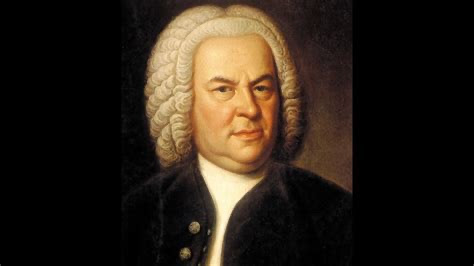
J.S. Bach and the Imago Dei

My family gave me two CDs of Bach's keyboard music for Christmas. I am, right now, enjoying his Six Partitas (BWV 825-830), played by Vladimir Feltsman. In his introduction, Feltsman points out that all of Bach's Suites, Partitas, Sonatas and Concertos are set in groups of six. Somehow I never noticed it: six Partitas, six Suites for Unaccompanied Cello, six Brandenburg Concertos, six French Suites, six English Suites, and a group of three Sonatas and three Partitas for solo violin. Why is this? he asks. Could it be that since seven is the number of perfection Bach felt it would be immodest to go beyond six? Or is it that six is the number of Days of Creation?

Certainly Bach was conscious that his creative gift was from the Lord (which is why he signed his work 'S.D.G.' (To the Glory of God Alone). But I think there is more to it than modesty. Bach was conscious of that great doctrine of the imago Dei - man being made is the image of God. When God said 'Let us make mankind in our image, in our likeness, so that they may rule over the fish in the sea and the birds in the sky, over the livestock and all the wild animals, and over the creatures that move along the ground' (Gen 1:26) He was saying 'Go create'. In his creative act then, Bach was obeying the cultural mandate in a God-honouring, joy-filled conscious reflection of God's creation. And we get to share in that joy!

Thursday, December 18, 2014

Modern-Day Slavery and Mission from Below

Let me introduce you to my friend Kumar. Kumar is not his real name. Posting his real name online might put him in jeopardy. I have known Kumar since he was a young man about to marry our househelper, Sita. He had moved into the Kathmandu Valley in search of a job and picked up construction skills working on building sites. It was a difficult life, getting up early every day to stand on street corners waiting to be hired by builders for a day's work, never knowing that he would have any income from one day to the next. Then the building industry collapsed and we helped Kumar learn to drive with the hope that he could become a taxi driver. That didn't work out so Kumar was back to square one and now with a wife and two sons to support things were not looking rosy.

One day he came to me with his 'contract' to work in the Gulf. It was a poorly photocopied sheet of paper with a dozen potential reasons why he might be sent home at any time at his own expense. He was to work on construction sites in the Gulf for two years in 50C (120F) heat, stay in a labour camp with scores of other workers. His passport would be taken away on arrival and returned only on completion of his commitment. His total pay for two years bonded labour: $3000, half of which would go to pay the manpower office that arranged his contract. I was incensed and tried to dissuade him from going but there was no other work to be had.

We heard bits and pieces of his life there during those years. Mainly we heard that he was still alive. When he returned, he came to visit us. "I survived," he told us. That was the main thing. Others didn't. One worker fainted at height, fell to the ground, broke his back, and was put on a flight back to Kathmandu, with no compensation. Nepal has no provision for paraplegics or disability benefits or free health care. Others died. There is a continual stream of coffins arriving on the tarmac of Tribhuvan International Airport to grieving relatives who have lost their only wage earner, or to no-one as no next of kin has been informed.

That is what modern day slavery looks like.

But there is a silver lining on this noxious cloud of gross injustice - mission from below. (I think it was Samuel Escobar who coined this expression.) Kumar loves the Lord Jesus. He also loves his fellow workers and so with others he started a church among them. Spiritual life welled up in the sands of that arid place. Now a whole lot of Nepalis arrive back in their home country new men. God does indeed move "in mysterious ways his wonders to perform" (William Cowper).

Wednesday, December 10, 2014

Why Ethnography is Vital in Missions

I just came across this quote that I saved some time ago. It is by two German architects who were working on the restoration of Nepalese monuments:
Deficient planning is all too frequent.  Western experts usually have but a perfunctory acquaintance with the cultural presuppositions of the countries they are working in.  Their counterparts from the developing countries, often western-trained, sometimes do not wish to appear traditionalist; equating tradition with backwardness, they too readily yield to suggestions which set their own cultural heritage at nought.
 The only escape from this dilemma is to present the axioms of a culture in a comprehensible way, and to work out some of the implications these axioms will have to the community that shares them.  An attempt to disentangle an incomprehensible conglomeration, and to show the system behind a mass of seemingly disjunct facts, might help experts to realise that very good reasons usually lie behind what are, apparently, queer and peculiar patterns of behaviour. (Gutschow, N., and B. Kölver 1975.  Ordered Space, Concepts and Functions in a Town in Nepal.  Wiesbaden: Franz Steiner, p. 6)
Gutschow and Kölver are concerned that Western experts involved in heritage restoration don't give themselves to really understanding the culture of the community that hosts them. Their local partners, furthermore, are concerned that they will appear to be uneducated and ignorant if they challenge the experts. And so the sensitive restoration of a national treasure ends up looking like a dog's breakfast.

It reminds me of so much that goes on as mission. Dedicated foreigners who have degrees in theology and mission partner with local believers (who, by virtue of their relationship to the foreigners are marginal to their community) to plant churches in an unreached community. Six months language study with minimal acquisition of local cultural understanding is followed by action on a grand scheme, drawn up in a foreign clime, funded by generous supporters, and approved by the local workers (who are they to challenge the latest ideas?). 'Queer and peculiar patterns of behaviour' are dismissed as false religion. The opportunity for careful contextualization is foreclosed.


Wednesday, December 3, 2014

Hard Rock Theology - my review of Dan Stange's theology of religions

Dan Strange's major new book was published in the UK in the spring: 'For Their Rock Is Not as Our Rock': An Evangelical Theology of Religions (Nottingham: Apollos, 2014, 384 pp, £19.99). (Due to be published in March 2015 in the USA.)

My review article of it is now online in Foundations here.

Here is a taster of the article in the hope that you go on to read the book and my review:

A few years ago I read this extract of a letter from a Japanese student on returning to Japan after studying in England:
Two months have already passed since I came home. I’ve been missing England and all my friends so much that I sometimes cry… Please listen to me. I’ve decided not to follow Christianity any more. I’m so sorry if my decision disappoints you. I can’t deny Christianity at all because I really know what I experienced in England… But now I must follow my family’s religion. Please don’t misunderstand. I’ve decided by myself although it was hard for me.
No sensitive disciple of Christ, regardless of their position on perseverance and apostasy, would be left unmoved on reading such words. But they also provoke questions: What does she mean when she says she is not going to follow Christianity anymore? Just what did she experience in England? What is it about her family’s religion that has led her to take such a decision? Quite apart from the pastoral issues that arise from such a situation the need for clear thinking on religion and religions is obvious. This volume by Daniel Strange, Academic Vice-Principal and Lecturer in Culture, Religion and Public Theology at Oak Hill College, London, is his attempt to do just that.
Strange draws the geological metaphor for his title from Moses’ song (Deut 32:31) and is not shy to declare his theological commitments: “this is a book for evangelical Christians, written by an evangelical Christian” (33). His particular confessional stance is that of Reformed theology (“the confessional tradition I believe to be closest to God’s revelation in Scripture”) although he hopes that the common evangelical position on the authority of Scripture will encourage a broad range of evangelical interaction. He also believes in the creation and fall as real space-time historical events, the uniqueness of Christ, and the necessity of conscious faith in the finished work of Christ for salvation, which I also affirm.

Dan’s book is a major contribution to the field of the theology of religion and deserves to be studied carefully.I learned a lot from it and have been challenged to hone my own understanding considerably. But I do have issues too. My critique in the review article focuses primarily on the author's method. It seems to me that Dan, like most writers in this area, get into difficulty by equating religion (the orientation of the heart) and religions (rival social realities). What do you think?

Thursday, October 23, 2014

Original Monotheism

Review of In the Beginning God: A Fresh Look at the Case for Original Monotheism by Winfried Corduan (Nashville, Tenn.: B&H Academic, 2013).

The author reprises the debate that raged in the 19th Century as to the origin and evolution of religion. At that time the dominant view emerged, championed by such noted scholars as E. B. Tylor and J. G. Frazer, that religion emerged first as a sort of animism in which societies began to worship spirits that inhabited the forest, river and mountain, later evolving to become polytheistic and eventually monotheistic. ‘Primitive’ communities in the world today, the argument followed, are archaic throw backs to older times, representing an unbroken tradition that gives us insight into the nature of the first religion. This was very convenient for them, as Corduan quotes Evans-Pritchard:

We should, I think, realize what was the intention of many of these scholars if we are to understand their theoretical constructions. They sought, and found, in primitive religions a weapon, which could, they thought, be used with deadly effect against Christianity. (11)

Other scholars challenged this view. Among them were Andrew Lang and Wilhelm Schmidt who argued that there are many societies that have the very simplest material culture that are, nevertheless, monotheistic. Schmidt in particular adduced an impressive array of evidence to back up his thesis, covering many volumes of, says the German-born author, difficult German. Corduan argues that Schmidt’s detractors clearly did not read his works closely at all but rather decided to dismiss his arguments on the basis of a supposed bias since he was a Catholic priest. Those same interlocutors expected their own views to be taken seriously by virtue of their not being religiously motivated and that is what happened. Schmidt’s views were ignored for the most part and by the mid-twentieth century a consensus emerged not to pursue this discussion further such that the Macmillan Dictionary of Anthropology on my bookshelf does not even mention him.

The culture-historical method that Schmidt’s theory grew out of lies over a narrative of migration which goes something like this: Groups of people migrate for many reasons and as they do so those groups encounter other groups and compete for food and other resources. The group with the less-developed technology ends up either being absorbed into the other group or migrating to another place as they are out-competed. Migration places the less-developed group in a more marginal environment. This can happen again and again, and has done so throughout human history. As has become very clear through genetic studies in recent years, “the history of humans is to a large extent the history of the migrations of people groups” (146). The groups with the least developed technology today, such as those of Southeast Australia, Greenland, Tierra del Fuego, the African jungle, or the Andaman Islands, living in isolated or inhospitable environments, therefore, are those whose culture preserves elements that are among the oldest in the world. The culture-historical method, then, uses this premise to tease out the oldest elements of culture. Using this method, then, Schmidt demonstrated that, far from being a new phenomenon, the oldest form of religion in the world is monotheistic and thus the culture-historical method supports the biblical narrative.

This is a work of apologetics and therefore out of my field of expertise. The author is well versed in philosophy, so employs careful logic to make his case. It would be good to see those that have inherited the mantle of Schmidt’s detractors work their way through the arguments. I cannot do that but want simply to state that I found the book compelling and fitting into my own studies of human development. Nevertheless, I have an issue with one assertion, that phenomenology is necessarily a subjective description in contrast to history being objective narrative (269). I fail to see why phenomenology is necessarily any more subjective than history. Indeed, phenomenology is surely the synchronic counterpart to the diachronic of history and therefore not necessarily any less reliable at all. The reliability of phenomenological descriptions can be challenged on at least two levels: the phenomena themselves and the interpretation of those phenomena in exactly the same way that historical accounts can be.

There are, in addition, a number of minor issues that I want to point out.

  • In a number of places Corduan mistakenly refers to roving groups of hunter gatherers, such as various Aboriginal groups in Australia, as ‘clans’ (e.g. 66). The term usually employed in the discipline is ‘band’ rather than clan: the latter refers rather to certain social structures that are typical of more complex societies such as those that have a pastoral or agricultural economy.
  • I am puzzled by Corduan’s use of the term ‘phratry’ which does not fit with common use as I understand it; he may have read more widely than I so I am open to being corrected. As I understand it, phratry is not synonymous with clan as the author seems to think (e.g. 83, 112) but rather refers to a grouping of two or more clans that claim common descent from a mythical ancestor, thereby making the phratry an exogamous group. If the society is divided into two phratries then each of these is a moiety but phratries are not necessarily moieties (121).    
  • Homo neanderthalensis is spelled homo neanderthalis (194).
  • Corduan calls the Nepali language ‘Nepalese’, a term which is reserved as an adjective for the people or their culture.

Wednesday, October 15, 2014

Does Mission Matter?

Review of Mission Matters: Essays on the Theory, Practice and Contexts of Mission by Keiran Beville (Darlington: Evangelical Press, 2014).

Mission Matters is a two-part collection of essays and reports that have been published before in magazines and journals over a number of years. The author is a pastor in Ireland and a visiting professor at Tyndale Theological Seminary in Amsterdam. In Part 1 Beville covers a number of missiological topics such as the nature of mission, the role of the local church in mission, and issues focussing on the Western context.

Beville roots his theology of mission in the mission of God (missio Dei) (149) and argues that mission should be defined broadly and holistically while retaining the central place of evangelism. He ably discusses contemporary movements such as ‘Aggressive Atheism’ and ‘Militant Secularism’ and suggests ways that the church should respond to these.

Beville argues, rightly I think, that ‘postmodernism presents a new frontier situation’ (94, though not perhaps so new now) and expresses concern that some Christians have sold out to the spirit of the age. Though I agree that that has indeed happened I think that Beville’s choice of the ‘missional church’ to direct his fire at is problematic. Without referencing any writer or public figure he describes the missional church as if it is one neatly defined movement and then sets about challenging this straw man. Pastors and other leaders from a broad range of doctrinal and missiological positions advocate reforms to church life that are characterized as missional so such a critique is too blunt an instrument for the job.

In reflecting on ‘false religions’ (130) Beville argues that there are ‘commonalities’ with the truth that can be used as ‘a fertile place for the true gospel of Jesus to take root’. He wants to distance himself though from the idea that ‘people throwing themselves on God’s mercy in response to natural revelation necessarily leads to salvation’, which suggests that, nevertheless it might be possible. The author goes on to argue that ‘where [the Scriptures] are not available or where a person has not had access to Scripture we may be sure that God knows how individuals would have responded if given the opportunity to do so’ (136). I wonder on what basis we may be so sure.

Part 2 is a collection of reports from trips the author has taken to various far-flung places such as India, Romania and Serbia. I would have been very happy to read these in their first incarnation but in a book they come across as dated and out of place, viz., for example, a photo of parking problems in Romania! Furthermore, although he acknowledges that he is ‘very new to the Indian scene’ (310), his makes forthright statements about the dalits that suggest that careful research of the missiological context is optional. Sadly, the factual errors presented demonstrate sociological and political naiveté. Is this inevitable when pastors travel overseas for short-term ministry? I hope not, but it is all too common.

Although the author has a number of good things to say, as a whole the book disappoints. It would have been better had the author used the stories in part 2 to illustrate the points he was making in Part 1 rather than divide the book in two. As it is, the book lacks cohesion. There are presentational issues, too, that drag the book down: poor printing (several pages have lines running through photos and text) and, in places, poor punctuation.

Although the reader can gain a good deal of helpful insights from this book, more reliable alternatives would be John Piper’s Let the Nations be Glad! The Supremacy of God in Missions (3d edition; Grand Rapids: Baker Academic, 2010) or, the recently published book by Michael W. Goheen, Introducing Christian Mission Today: Scripture, History and Issues (Downers Grove, Ill.: InterVarsity, 2014).