Showing posts with label Theology. Show all posts

Monday, December 29, 2025

Favourite Books of 2025

Theology

Finding the Right Hills to Die on: The Case for Theological Triage, by Gavin Ortlund 

When theological argument is conducted in a good spirit, then it should be helpful. After all, none of us has a monopoly on the truth; we all have blindspots, though many do not acknowledge that. Ortland provides a framework by which to judge the level at which doctrine should be a cause for separation:

  • First rank doctrines are those that are essential to the gospel;
  • Second rank doctrines are "urgent for the health and practice of the church";
  • Third rank doctrines are important but not so important that they should lead to separation between brothers and sisters;
  • Fourth-rank doctrines are really not important at all - we should be able to agree to disagree on these matters without that affecting gospel fellowship.

But what should we make a big issue about, and what should we learn to live with? That question, in a nutshell, is what Ortlund seeks to address. This matters because the witness of the church is negatively affected both by minimising and maximising distinctions.

He develops a hierarchy of doctrinal importance:

I think this is an excellent book. Even if you don't land exactly in the same place on each of the examples he gives - e.g., the virgin birth, justification by faith alone, baptism, spiritual gifts, women in ministry, the millennium, the days of creation - the exercise is well worth it. Evangelicals desperately need this sort of thinking as we seek to hold forth the gospel together to a dying world.

Biography

God's Fool, by George Patterson

I picked this up some years ago but never read it. When I was a teen, I read Tibetan Tales by Patterson's ministry partner, Geoffrey Bull. It had a profound effect on me and helped to propel me into cross-cultural ministry in the same neighbourhood.

Patterson's story is a rollicking read. He and Bull had arrived in China in the late 1940s to witness for Christ among the peoples of the greater Tibetan plateau and had made friendship with the leaders of the Khambas just as they were trying to throw off the threat from the Communist Peoples' Army to annex Tibet. Patterson volunteers to escape to India to alert the West to what is happening and what follows is a fascinating tale of extreme horse riding through the most rugged terrain possible.

As a travelogue the account is gripping, but I was struck by the hyper-subjective nature of his approach to discerning the will of God and disappointed by the arrogant and judgmental attitude Patterson had towards other Christians. 

In later life, Patterson and his wife, Meg, a medical doctor, courted controversy by advocating for what seems to be quack medicine in the treatment of drug addiction. I can't help but think that a more humble attitude to other Christians (and other people in general actually) would have made this energetic and visionary man more fruitful in the kingdom.


Schaeffer on the Christian Life: Countercultural Spirituality, by William Edgar

Francis Schaeffer is one of my heroes (see another blog post here). 

This book, in the 'Theologians on the Christian Life' series, is an examination of the life and ministry of this American pastor and missionary, who died when I was still at university, at a time when his influence on me had already been profound. 

Bill Edgar came to Christ through Schaeffer's careful personal witness. Edgar's recounting of that episode is very moving. Edgar was then involved in L'Abri on an off for a while, which no doubt prepared him well to teach on apologetics at Westminster Seminary.

The book is divided into three parts: The Man and His Times, True Spirituality, and Trusting God for All of Life.

I found it a super-encouraging read.


Missiology

You Will Be My Witnesses: Theology for God’s Church Serving in God’s Mission, by Brian A. DeVries


The theology of mission has been hotly debated for many decades. DeVries has read deeply in the literature and seeks here to resolve the key points of that debate. 

The book is divided into three parts: The Biblical Story of God's Mission, Concise History of Christin Witness, and Our Witness in an Un-Christian World.

There is much to commend in this work. I think the author's approach is helpful: having constructed a biblical theology of God's mission, he lands on the terminology and theology of witness as the key to understanding the role of the church in pursuing her calling in the world. Though this is a good insight, I am not sure that this adequately covers the biblical material, so I am left dissatisfied.

The second section suffers from too little critical engagement with some of the weaknesses of the Christian movement historically, and the last section, too, leaves me with too many unanswered questions. So I am in two minds whether to recommend it really, but will try to write a longer review article for publication sometime in 2026.


Fiction

Orbital, by Samantha Harvey

My wife, Becky, got me onto this one - a Booker Prize winner. The idea is deceptively simple: we follow the lives of the astronauts and cosmonauts on the International Space Station as it orbits the Earth sixteen times over 24 hours. Challenges your perception of time and reminds us of how vulnerable we all are as we spin through space.


Pride and Prejudice, by Jane Austen

My first Jane Austen novel. I was surprised at how modern the style was - very accessible. I was also surprised at how witty Austen was. There are so many good lines - many of which I recognised from the TV series, e.g. when Mrs Bennet complains that her husband gives no consideration for her nerves: 

"You mistake me, my dear. I have a high respect for your nerves. They are my old friends. I have heard you mention them with consideration these last twenty years at least.”

There is much wisdom here. Marrying well - the main preoccupation of the story - is so important. And it is a good reminder of how our own besetting sins are often so difficult for us to see.


The Count of Monte Christo, by Alexandre Dumas

Edmond Dantes is a young sailor in Marseilles at the end of the Napoleonic era. Through the selfishness and betrayal of his associates he is unjustly imprisoned on a rocky island as he was about to wed his beloved Mercedes. 

The rest of the novel is how he deals with the injustice. It isn't pleasant but offers so many insights into the human heart, the effects of sin, the sovereignty of God, and how human stories are often messy because we live in a world that is marred by evil.

There is symbolism here in the name of the island on which Dantes recovers and after which he takes his title, in the priest who enables his escape, and in the way Dantes pursues his antagonists. And probably a lot more, which I would need to re-read to discover. But at 1400 pages, that is not going to happen soon!


Lila, by Marilynne Robinson

This is the third in Robinson's Gilead series but the fourth that I read, as I read Jack out of order. No matter, they stand alone, or virtually alone. Robinson's writing is slow, meditative, and humane. You feel you know the protagonist even though she is from such a different background to yourself. There is sadness and longing as well as redemption and hope. I have read all of Robinson's novels now and cannot recommend them too highly. If all you want from a novel is a ripping, action-packed thrill, you will hate Lila. But you should read it anyway; it will do your soul good.


Tuesday, December 31, 2024

Favourite Books of 2024

Theology and Culture

The Holy Spirit, by John Owen

I took this Puritan Paperback with me on my Asia trip in the Autumn. Owen's famously heavy style has been made readable here by the editor, R. J. K. Law. Even so, it still demands a careful read. Owen is both biblical and devotional. If someone dismisses his work because he doesn't tick all their 21st Century boxes, it is more to their detriment. I found it both challenging and encouraging spiritually.

I was struck by how much of the work of God can be examined as the work of the Spirit. Such a neglected theological topic.


Freedom, Authority and Scripture, by J. I. Packer

This book came out over 40 years ago but is still hugely relevant. It is a slim volume but if you are familiar with Packer you will know what to expect. His prose is tightly woven, without the slightest careless phrase. So it needs to be read slowly, like Owen, one of his heroes.

If I ever have to give a seminar on these themes, this will be the book I go to first.


In Search of the Common Good, by Jake Meador

Jake Meador is one of my favourite writers. He edits the Mere Orthodoxy web site, and has written a bunch of very good articles. So I picked up this book from a few years ago. Meador is heavily influenced by Schaeffer, as well as other Reformed writers and preachers. Keller writes the forward.

Meador seeks to diagnose the decline of Western civilisation. His focus is his own, United States, but much of what he addresses is shared with the UK and other Western societies.

He argues that modern liberalism is a story that we have told ourselves and that that has led to our decline, seen in the loss of meaning, wonder, and good work. He then seeks to tell a different story - the Christian tradition, heavily informed by the Bible - and show how this gives a better grounding for our common good.


Devotional

Truth for Life, Volume 1, by Alistair Begg

My wife and I really enjoyed starting the day together with Alistair Begg's devotional in 2024. He gives a connected Bible reading at the end of the day's page; we found it helpful to read the Bible passage first, before reading the verse or verses that he bases his meditation on.

Our plan is to go back to an old Packer daily devotional that we read 30 years ago (Your Father Loves You) for 2025 and then probably pick up Begg's second volume for 2026.


Missiology

The Church between Temple and Mosque, by J. H. Bavinck

Dan Strange was the power behind getting this book reprinted, and he writes a helpful introduction (slightly spoiled by too many typos). J. Herman, if you don't know, was the nephew of Herman Bavinck, who, with Abraham Kuyper, was a founder of the neo-Calvinist movement, that continues to gather steam, especially with the translation work of James Eglinton and his gang. J. H. was a missionary to Indonesia in the mid-twentieth century, and worked in Bandung and Yogyakarta, both cities of Java with which I have become familiar after three visits in recent years.

J. H. Bavinck spent a lot of time in dialogue with Indonesian religious leaders, and by carefully studying their texts, he was a very knowledgeable evangelist and church worker. This comes out in much that he writes in this book, that forms a good companion with his more well known, Science of Mission.

There is much to learn. But I think J.H.B. was hampered by two weaknesses: 1) he was a man of his time, and that time was Dutch colonial time, with all the obstacles that created for the intercultural minister; 2) he does not seem to have understood how much Asian religious life is shaped by the social order in which it is lived. That latter weakness makes him too cognitive and too individualistic, in my opinion.


Biography

Timothy Keller: His Spiritual and Intellectual Formation, by Collin Hanson

I don't read enough biography. I love Tim Keller and have read quite a few of his books. But I still learned a lot from this account of his life. The way Hansen arranges his material is really helpful: at each distinct stage of Keller's life, the key influences on his life and ministry are described. It is easy to see how these influences - writers, lecturers, preachers, friends - shaped Keller's thinking and ministry.

It is lovely to see the providence of God in the way these people came into Keller's life, and how each added a building block that was later to bear such astonishing fruit (if I may mix metaphors) in his ministry in New York City and then in his wider ministry in later life.

Makes me thankful to the Lord for all the godly and wise influences that he has brought into my life over the years, and cry out to him for grace to steward those influences for his glory in the years I have left.


Fiction

The Luminaries, by Eleanor Catton

This could be the biggest book I have ever read - over 800 pages. The setting is that of the gold fields of New Zealand in the nineteenth century, which Catton describes so evocatively.

The author arranges the novel in a number of acts, that get shorter and shorter as the story goes on - the first is 400 pages and the last is 1 - guided by a fascinating  astrological framework.  I frequently referred back to a helpful page of dramatis personae at the front.

Jack, Marilyn Robinson

It has been a few years since I read the first two novels in this series - Gilead and  Home, so I re-read those stories before reading Jack. I won't spoil it for you, but Marilyn Robinson doesn't let you down. A love story; very sad and very lovely.


Friday, December 31, 2021

Favourite Books of 2021

Since so many friends are doing this I thought I would join them. I am a slow reader so I am in awe at the piles of books some people get through. I have read books in the fields of theology, missiology, religion, church history, military history, and horology (yep), as well as a few novels. I read to warm my heart as well as to feed my mind, or just to relax. A few books are re-reads, and one I have now read three times.

Here are my favourites, in no particular order:


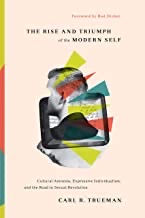
The Rise and Triumph of the Modern Self
 is Carl Trueman's attempt to trace the development of modern Western culture with its focus on sexuality and identity. He traces the development from Rousseau through the romantic poets, Wordsworth, Shelley and Blake, and the philosophies of Nietzsche, Marx and Darwin, and on to Freud and the New Left. He is a good writer so it is not as difficult as you might think. Well worth the effort.


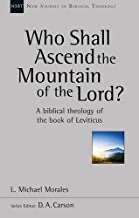
In Who Shall Ascend the Mountain of the Lord? Michael Morales gives us a biblical theology of Leviticus. It is packed with insights into the text and connections between the various parts of Leviticus and with other parts of Scripture. I found it very helpful.

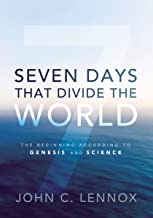
I have been reading books on creation since I was a teenager. I started with The Genesis Flood but when I studied geology at university became dissatisfied with its treatment of the evidence.

In Seven Days That Divide the World, John Lennox, professor emeritus of maths at Oxford, argues, convincingly, that the biblical data does not require us to take a young earth position. 


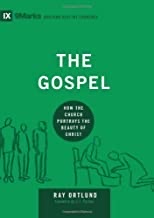
Ray Ortlund's The Gospel: How the Church Portrays the Beauty of Christ is a powerful little book. It is in the 9Marks series on Building Healthy Churches and focusses on how a local church needs to cultivate a healthy gospel culture that matches and adorns the gospel doctrine that it confesses.

Juicy quote: "The command of Christ is that we love one another. The example of Christ is that we die for one another. The promise of Christ is that our love will show a skeptical world the difference he really makes" (112).

Everyone would benefit from reading this.


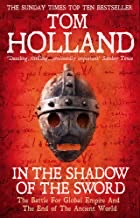
I have been following Tom Holland for a short while and am praying for him often. Last year I read his magisterial Dominion. He is on a journey, in his understanding of history and, I hope, in his understanding of the gospel.

This is the previous book he wrote, on the history of Islam. It didn't go down well with Muslims as it casts serious doubt on nearly all the claims of Islam's origins and early development. I met a lovely Muslim Pakistani doctoral student in Leiden last year who said that Holland's book destroyed his faith. Like Holland, though, Mohammed was not yet ready to confess Christ.

It is really important, in seeking to understand Muslims, to both read critical studies and talk with Muslims themselves. This book does a great job with the former.


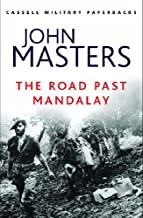
I have developed a fascination with the history of the Burma Campaign in WW2, probably because it features the Gurkha Regiment so much. 

This is the sequel to Master's first autobiographical book, Bugles and a Tiger. It tells the story of his leading a battalion of Gurkhas and others behind enemy lines as part of the Chindit force. The description of battles and deprivation is gripping. The book is sadly spoiled by the parallel account of his unfolding adulterous relationship with another officer's wife.


This is my favourite devotional book of the year. We read it slowly at the breakfast table each day over a period of several weeks. Dane Ortlund (Ray's son, see above) takes a deep dive into the Bible's portrayal of the person of Christ, expounding especially Matthew 11:28-30, in which the Lord Jesus tells his disciples that he is gently and lowly of heart.

Some in the family did not find the extended quotes from Puritans so helpful but if you are struggling it is not a problem to simply skip onto the next paragraph where Ortlund lays it all out in contemporary language. Much to dwell on and chew over. Worth working through it slowly.


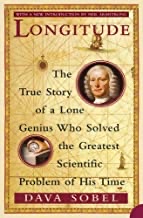
This is the book on horology - the study of time. Really fascinating historical account of how the 'longitude problem' was solved. I won't spoil it for you but it is a wonderful story of patience and persistence in the face of a consensus of scepticism. Clock making may seem not to offer much promise of interest but Sobel is a master story teller. I loved it.


Finally, this great little book by a bunch of pastors, many of whom are friends of mine, on the issue of depression. I have written about it already here.

Thursday, May 20, 2021

Pastors Get Depressed Too


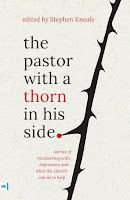
Review of The Pastor with a Thorn in His Side, ed. Stephen Kneale (Grace, 2021, 144 pages, £7.99).

Depression is a reality for pastors just as much, it seems, as it is in the wider population here in the UK.

Stephen Kneale has pulled together six other pastors to join him in telling their stories. 

After an introduction by the editor, each of the seven men tell of their experience of depression and share what they found helpful or unhelpful in dealing with the experience. A number of the men are suffering from depression still.

It might seem strange to some readers that pastors suffer from depression. After all, you might think, surely they are supposed to have it all together mentally as well as spiritually. These pastors, however, take the view, which I think is right, that mental illness may be the experience of followers of Christ just as physical illness is, because we live in a fallen world.

Reading the stories of these men is sobering. It is difficult, isn't it, to read about someone harming themselves or even attempting suicide. But that is the reality and we need to face it squarely. This book pulls no punches but tells it like it is.

The authors all write with a very readable style - a product, I guess, of their calling to make truth plain to their hearers and readers - so it is an easy read.

I am a friend of one of the authors and know most of the others in one way or another so I could picture them in their situation. I found their reflections on what was helpful or unhelpful instructive. I never thought, for example, that asking someone suffering from depression "Is there any way I can help?" could be so difficult, but if you are the sufferer it is adding to the burden by giving them one more thing to think about and act on when all their emotional resources are severely depleted.

If I may have any criticism it is that I would have liked to read more analysis of the stories. Kneale's concluding reflections are good but I would have liked more sustained theological, ecclesiological and sociological reflection. 

By theological reflection, I mean, for example, on the mystery of providence and the dimension of spiritual warfare in mental health issues. The use of the Bible in counselling is merely touched on and little is said about prayer. Should they have called their elders to pray for them and anoint them with oil (James 5:13-16)? In many parts of the world, churches would find the silence of these matters puzzling. Is it a cultural blindspot for us in the West?

The multifactorial nature of mental illness comes across clearly and should dissuade the reader from simplistic conclusions. However, I think it would have been good to have more reflection on the role of non-physical causes. There is a recognition that sinful behaviour might be one result of depression but is it ever a cause?

Furthermore, though I am pretty sure there is a Reformed consensus among the authors, it would have been good (if that is the case) to state this explicitly because it has a bearing on the interpretation of one's experience and on the options considered valid for management.

By way of ecclesiological reflection, there could be more discussion of the significance of a plurality of elders in the churches in which these men have been ministering. Some of the authors do mention the important role of elders (or deacons functioning as elders) but more explicit discussion of this would have been helpful.

By sociological reflection, I would have liked to see how each man's story is situated socially. Is their church in a residential suburb or a council estate? Derek French tells us about the fact that his house was overlooked from hundreds of windows. Having, I believe, visited that church, I can tell you he is not exaggerating - the church and manse lie in the midst of several Soviet-inspired high-rise blocks of flats. If that is a sink estate, the manse is the plug hole. If I am not mistaken, the previous minister had also had mental health issues. It seems a neglect of the duty of care that the church should allow that situation to have persisted. Ministers need to be able to relax just like anyone else. To be in a situation where one is perceived to be always available to the community (especially in such a needy one as that) is to load a heavy burden on a gospel worker with a sensitive conscience. 

No doubt the editor will say that if he had included all that it would be a different book. Fair enough. But somewhere we need that sort of discussion.

You can read more about the book here.


Friday, April 24, 2020

The Southgate Fellowship: Theological and Missiological Method

So far in this series I have sought to engage with the statement of TSF by describing the group and pointing out a few minor issues, exposing a glaring omission, indicating where it seems to want to fight old battles, and examining how it works out priorities in mission.
That was the warm up.
In this post I want to discuss an even more important issue: the authority of Scripture and the way we do theology and missiology.
TSF argues rightly that Scripture is the ultimate authority for missiology thus:
18a) We affirm that Scripture is the ultimate authority to which all human disciplines, including missiology and social sciences, must be subject.
Whatever happened to theology in that affirmation? Is not Scripture the ultimate authority for that human discipline too? On what basis is theology given such an exalted and privileged place? It may be the queen of the sciences but it is still a science, and so subject to critique in a way that Scripture must not be.
Further on, they warm to their task:
71a) We affirm that local expressions of the gospel should always function in the context of the catholic Christian church, so that local theologians are accountable to the formulations of the Christian faith in the historic creeds and confessions of the church.
But wait, if Scripture is the ultimate authority then are not historic formulations auxiliary? 
This would be a good place to make this explicit. They don't.
Rather they go on the attack:
71b) We deny that faithful contextual formulations of the gospel are merely ‘local theologies’, which have their validity apart from the catholicity of the church.
In other words, a local theology can only be valid if it engages with the historic formulations. Even if there is no translation of those formulations in the local language.
So what are local theologies?
The process of doing theology and interpreting Scripture in a given local context has often been labeled ‘local theology’. For some theologians, such local theologies are context-determined, thus breaking the necessary link between theology and Scripture—the only absolute determining criteria of theology.
I have three problems with this statement:
1.     The phrase ‘context-determined’ is loaded. Everything we say is influenced by our context. The moment we open our mouths we are using language, and there is no context-free language. Thus, there can be no context-free theology just as there can be no context-free visible church, which they acknowledge (§99a). So also there can be no context-free historic creed or confession. If they mean overly influenced by the context to the detriment of the influence of the Scriptures, then they should state this more clearly.
2.     The final clause is recursive: how can theology and Scripture be the only absolute determining criteria for theology? 
3.     The irony of this statement is that, of course, the TSF statement itself is influenced by its context. But this is never acknowledged. Rather, it is held up as a context-free statement to be signed up to by evangelicals all over the world as if it is an absolute standard.
Ultimately this is all special pleading: every other discipline, they seem to be suggesting, must be subservient to theology. But make no mistake, theology here is systematic theology. The work of the systematician is a cut above the work of every other kind of theologian, most notably that of the missiologist.
But why should that be so? Why should it not be the other way around? This is their answer:
86a) We affirm that theology must drive mission methodology, because a failure to deal adequately with the effects of truth suppression will generate an overly positive view of human nature and will manifest itself in distorted methodologies.
Note here that missiology is a ‘methodology’, but theology isn’t. It is a put down.
Two responses to that:
1.     Systematic theology, for that is what this is, is itself based on a methodology, commonly called prolegomena. How bizarre, then, that the prolegomena of TSF’s statement doesn’t even deal with the method by which theology is systematized. It is almost as if the framers wanted to give the impression that the only discipline not open to discussion is systematics.
2.     Missiology proper is not a mere methodology. Ministry methods must come from a robust framework that emerges from a careful interpretation of Scripture in the cultural context in which that ministry is being conducted. 
But that is not how TSF views theology. Theology is a given. 
This view of theology has significant implications, as many cross-cultural workers are aware. 
This is one: when theology is taught in a different context the communication is unidirectional. After all, the theologian is complete. All he needs to do is take his package and ensure it gets across. 
Hence, 
84a) We affirm that theological teaching can legitimately adjust its teaching style, phraseology, selection of content, use of illustrations, and many other ways that prove significant in facilitating the communication and grasp of truth in the audience’s target language and culture.
What if the “target audience” (unfortunate language of objectification) is not even thinking in the categories in which the theology has been framed? No amount of adjustments to its phraseology or use of illustration will connect quite like taking the host’s culture and using that as a framework, all the while probing, extending, and challenging that framework from within.
Why is there such a hard line on contextualization?
83c) We deny that the exigencies of any given local context should dictate how Scripture is to be read, interpreted, and applied.

I trust that none of the writers or endorsers of the statement mentioned Covid-19 in their sermons over the past few weeks.

Monday, April 20, 2020

The Southgate Fellowship

The Southgate Fellowship is a group of theologians, missiologists and reflective practitioners who are concerned at the state of missions in the contemporary evangelical world. A few days ago, the group, which has been meeting together over the past four years, launched a new web site.

Council members of The Southgate Fellowship are drawn from the USA, UK, and France. 
They belong to a number of denominations, but all are committed to Reformed theology; the Council is co-chaired by David Garner of Westminster Theological Seminary and Dan Strange of Oak Hill College, two heavyweight systematic theologians from Reformed institutions.
All council members take an active interest in cross-cultural ministry with a few having experience of work among Muslims. Some have ministry experience outside their homeland, though it is not clear that this includes substantial personal intercultural interaction.
I have met half of the council and was a supervisor of Bill Nikides’s uncompleted doctoral research. My review article of Dan Strange’s book on the subject is available here.
The council has been helped by a number of external advisors, though these are not named.
TSF has already been endorsed by dozens of well-known conservative evangelical leaders in church, seminary and mission, including Don Carson, Ligon Duncan, Kevin DeYoung, Michael Horton, Bill Edgar, Richard Pratt, Garry Williams, Paul Wells, Ray Porter, and Steve Smith, as well as lesser-known pastors and leaders in various other parts of the world.
You are given the opportunity to add your endorsement. I will not be doing this and will try over the next few blog posts to explain why.
For now, though, allow me to make some general comments.
It is the conviction of TSF that
due to a convergence of forces in contemporary theology and the global church, many in the study and practice of world mission have strayed methodologically from the sure foundation of Scripture; they functionally deny the categorical uniqueness of the Christian faith, and impose non-biblical and even anti-biblical interpretive grids upon people, religions, culture, and the work of mission.
The core project of the TSF, therefore, is a statement consisting of 100 pithy affirmations and denials that seek to outline where the points of contention are and provide a biblical critique. The statement is ordered in a systematic theological framework, is well presented and is easily accessible using the format of drop-down section headings.
For the most part, the statement is readable. But not always. In places it is even clunky:
79c) We deny that a younger church has no theological, financial or moral obligation to the sending church.
Why the double negative?
I understand that a statement of this nature needs to be terse. It is already long (nearly 10,000 words) but at times the degree of abstraction tends to opacity. For example, I am not really sure to what this is referring:
58b) We deny that in terms of redemptive history or for the sake of mission method, these last days offer direct parallel to or unqualified analogy to those prior to the coming of Christ.
That may be just my ignorance.
Proof reading missed out this incomplete sentence: 
Whilst individuals, groups and societies may see themselves as a-religious and describe themselves as such (whether atheistic, disinterested, secular or other).
These are minor concerns. Over the next few days I plan to engage with the statement in more significant ways.

Monday, November 26, 2018

Needed: Integrative Theology

As I fly home, I want to write down a few reflections on my time while the memories are still fresh. It’s been a privilege to have had these two weeks. I have enjoyed my time in Indonesia very much. My hosts in both places were very kind and went out of their way time and again for me. Indonesia reminds me of South India and Sri Lanka with its tropical vegetation and hot and humid climate. The people are friendly, always ready to smile, and a smile goes a long way in Indonesia: they say you will be forgiven many a mistake with a smile and a simple ‘sorry’. A ‘nice’ person is a good person. I wonder how that affects notions of sin and guilt, justice, crime and punishment.
Bandung Theological Seminary was founded, with the help of missionaries, by leaders of churches with a Reformed emphasis. These churches are dominated by Chinese, who form a significant proportion of the evangelical movement in the archipelago. My impression was that the seminary and denomination are well-heeled, being sponsored by wealthy businessmen. The students are well educated, their facility in English giving them unparalleled access to theological resources in their 60,000-volume library. Some of the students in my class are in ministries in which they might find it hard to benefit from my teaching, struggling with nominalism and apathy in the Christian community, rather than the joys and complexities of interaction with those of other traditions. Other students, however, seemed to find the challenge to their theological paradigm of religious pluralism very stimulating, and are considering how it might impact their ministries, especially among the Majority community and modern, secularised city dwellers.
Many of the students at ETSI in Yogyakarta, by contrast, come from far-flung, technologically less developed islands, with, I was informed, a corresponding inferiority complex. Relationships between faculty members struck me as very warm and collegial. I had lunch with the principal and two other faculty members one day. All three had turned to Christ out of Islam in their youth, when to do so did not usually carry with it the same social stigma as it does today (not that it was easy for them). All had gone through the rigorous system of the seminary and had the stories to share. Many of them had done their PhDs in American seminaries, with Dallas having quite an influence.
My approach to the course in both institutions was to give a lesson in contextual theologizing – that is, reflecting critically on modern thinking as it is expressed in both the West, from where the tradition of academic theology has spread across the world, and in Indonesia, where the national ideology of Pancasila stands over its six official ‘religions’.
Many seemed to find my approach stimulating. I was told that the leadership of the seminary in Bandung had revised the curriculum in order to get the students to think theologically on current societal issues but have found it difficult to recruit teachers. The lecturers are happy to teach systematic theology (both Berkhof and Ryrie are in Indonesian) or books of the Bible but don’t want to take on the challenge of more integrative courses. This fits in with some previous encounters with theological education in Asia. Taking on a new module and preparing it from scratch demands a lot more thought than going through notes from one’s own training. But the more I learned about the religious context in Indonesia, the more concerned I became that even seminary lecturers seem not to want to do the creative work. The missiological dimension is crucial in this. If we are going to reach the large number of people who have little or no access to the gospel, including in the Indonesian archipelago, we must do the hard work. Neither Berkhoff nor Ryrie, I ventured to guess, had much to say about honouring ancestors, spirit possession, or idolatry.

Thursday, June 22, 2017

Were They Right? Engel and Dyrness’s Changing the Mind of Missions

In their provocative, turn of the century book, Changing the Mind of Missions: Where Have We Gone Wrong? (Downers Grove: InterVarsity, 2000) James F. Engel and William A. Dyrness suggest that the modern missions movement is on a wrong footing. They assert that “the missions momentum from North America and much of the remaining Western world is functioning within theological paradigms and resulting ministry practices dating back prior to the dawn of the twentieth century” (24).


Time for a Paradigm Shift?

They contend that Christ’s “call has been interpreted for many decades, especially in North America and parts of Western Europe, as communicating a set of biblical propositions to a maximum number of people and declaring them as ‘reached’ once this takes place” (21, emphasis in original).

They describe a crisis in the American missions movement that has resulted in a huge shortfall in funds for traditional mission projects and personnel (which is clearly also affecting many British-based missions). At the same time, there is a growing interest in mission of a different sort – especially one in which donors can have more of an immediate experience by, for instance, a short trip for themselves.

Centre-Periphery Model of Mission


Engel and Dyrness contend that the present N. American missions movement is dominated by a ‘Centre-periphery model’ that is outmoded (41). They agree with Jonathan Bonk who points out that in the last two centuries missionaries have often been allied with colonialism even if they were “reluctant imperialists.”[1]

The authors point out that in the book of Acts the first mission was not from a centre of power and influence but rather from a place where something happened and that in so being it is a parody of the modern missions project (40-43). But, “Ever since the end of World War II, and definitively since the fall of the Berlin wall, prevailing concepts of what represents the center and what represents the periphery have radically changed in political, cultural and economic terms (47)”.

They explain, “While the modern development of missions was associated with centers of power and influence, today those places where economic power resides are not important centers of Christianity, and the most vital Christian communities are found in areas of limited political and economic power”, a point since also made by Philip Jenkins in The Next Christendom: The Coming of Global Christianity (2002) and Mark Noll in The New Shape of World Christianity (2009).

Because of this shift in the balance of the global church Engel and Dyrness propose that a “better model for conceiving of missions, consistent with the emerging postmodern consciousness, is multiplying centers of influence making up a network of mutual exchange and support (48)”. I don’t think any thoughtful mission leaders would explicitly have any problem with that in principle. The authors paint a scenario, however, in which N. American missions are deliberately blocking such a development. Are they setting up a straw man to knock him down? Take this for example:
What is the true motivation for missions? Appearances to the contrary, it is not about selling some spectacular product, eternal life or forgiveness of sins, however wonderful these realities are. Missions flows from the heart of a people who have been transformed by the Holy Spirit and who leave all to follow Christ. (37)
The desire to control is inherent in every fallen human being and is not confined to N. American mission agencies. There could be many different reasons why Western mission leaders may desire to hang on to the control of resources: perhaps they are merely seeking to honour the wishes of the donors; perhaps there are legal reasons. But I wonder if the situation is as bad as they paint. There may be a lot more networking with mutual exchange and support going on than they realize.

According to Engel and Dyrness, Western Christians over the last two centuries have been influenced by the spirit of the age in three ways (57):

1.     by their two crucial omissions from the Great Commission;
2.     by their reducing of world missions to a managerial enterprise;
3.     by their displacing the local church from its rightful place at the centre of world outreach.

“Contemporary missions retain,” they suggest, “a kind of structural hangover that continues to impede a genuine openness to the work of God (46)”.

Engel and Dyrness’s criticism of modern missions is damning. Too damning, in my estimation. I think they have exaggerated the problems. They have clearly identified weaknesses in modern missions, just as Samuel Escobar has done in A Time for Mission (2003).[2] But Escobar is more nuanced than Engel and Dyrness. The latter dismiss so much of evangelical ministry as corrupted by modernity. Is this a consequence of embracing postmodernism? If modern mission is too closely wedded to modernity then how will it improve things to create a model that is “consistent with the emerging postmodern consciousness”? The danger of syncretism with the spirit of the age is as great here as in the model they are so keen to throw out.

Engel and Dyrness’s ‘Kingdom Paradigm’


The authors work out their theology of mission around what they call a ‘Kingdom Paradigm’, suggesting some “strategies that better reflect our contemporary postmodern situation” (89):

1.     sensitive to the initiative of God;
2.     motivated by a vision of the reign of Christ refracted through the multiple cultures of the world;
3.     characterized by mutual sharing from multiple centres of influence;
4.     committed to partnership and collaboration.

They call for a “spirit of mutual submission and interdependency” for there to be real collaboration between partners. Those with funds must not drive the programme (96). I agree. This is an important point in the light of so many donor-driven mission programmes.

Engel and Dyrness have some good things to say about the church but it is framed in the same way as the rest of their argument, contrasting what they see as the biblical way with the worst of superficial evangelicalism. They assert, rightly, that, “…the church is no longer conceived by the vast majority as the cultural space where certain critical things happen….” because of the collapse of Christendom (111). In place of the Christendom model they propose a ‘spiritual pilgrimage’ model of church (98-107), a point recently echoed by Michael W. Stroope in Transcending Mission (reviewed here).

According to Engel and Dyrness the modern ‘institutional’ model of church encourages, by its structure the following traits (113):

1.     individuality;
2.     programme orientation;
3.     a preoccupation with numbers;
4.     passivity;
5.     resistance to change.

This model is contrasted with one which sees the church as an organism than an organization, based on six theological realities (117):

1.     its nature as a living temple for God;
2.     its ministry through gifts of the Spirit;
3.     its nature as a society of mutual love and service;
4.     its servant leadership;
5.     its community;
6.     its outward focus.

Again, here, the authors are attacking the worst of evangelicalism. For sure there are many churches that reflect their ‘modern model’. But there are also many that do not. Engel and Dyrness set up a tale of two models, one ‘modern’ and the other ‘theological’. Organization is modern, something to be repented of. What do they make of Acts 6, Ephesians 4:11-13, 1 Timothy 3, and Titus 1? Their binary opposition proves to be simplistic.

Engel and Dyrness’s Model of Mission


According to Engel and Dyrness, local churches must be at the centre of mission. Here they cite Bruce Camp’s typology of church-mission involvement.[3] Churches fall into three categories with respect to their commitment to world mission:

1.     Supporting – passive;
2.     Sending – active, initiating;
3.     Proactive – synergistic, initiating, partnering.

The church, they assert, should be proactive, and take its rightful role at the centre of mission. Sounds good in theory. But their argument is not practicable for much of the world for the  following reasons:

1.     Host churches may not exist, as in many Muslim, Hindu, and Buddhist communities;
2.     Where they do exist, host churches may not be capable of mature partnering;
3.     Large groups of short-termers parachuting into a community that does not have an indigenous church may have an adverse impact through its lack facility in the local language and its lack of cultural sensitivity;
4.     It is very difficult to avoid dependency within this paradigm.

Engel and Dyrness seem to contradict their own hatred of ‘modern’ mission activity by insisting on accountability from mission agencies that most likely “will be a description in numerical terms of what was done…” (126). They then compare mission agencies to businesses which have had to go through a painful process of change to compete in the postmodern world. Like businesses, mission agencies “require an organizational transformation that encompasses five essential steps”:

1.     Restoration
2.     Convergence
3.     Regeneration
4.     Adaptation
5.     Reengineering

The authors say they advocate a high degree of field autonomy but they insist this should be only within the parameters of a definitive mission statement and with accountability based on clearly defined outcomes and objectives (158). Their view of mission agencies, therefore, is very strongly oriented towards the home base – the very view they censure. Their solution to the problem is to bring about organizational change from the centre. But surely cross-cultural ministry teams should be largely free from a high-handed home ‘board’ that wants to ‘reengineer’ their identity and ministry. Such talk of ‘reengineering’ seems to me to be as much modernistic as the mentality they have condemned.

More solid, however, is their insistence that agencies establish a relationship of mutual respect and esteem with established indigenous churches. Furthermore, agencies, must initiate a sensitive dialogue with their supporting churches on how they should use their resources. Should their personnel and material resources be available to serve already-established churches while there are people and communities still unreached by the gospel? It takes great tact and sensitivity to discern the best way forward in such a situation. Thankfully, the Lord has not left us alone to make such decisions as he has promised us the resources we need at the proper time (James 1:5).

So, Were They Right?


Yes: much of what Engel and Dyrness said was surely right. No doubt in some circles the book has had a beneficial effect. If only others had read it and taken its criticisms on board!

And no: this book ultimately fails to satisfy for four reasons:

1.     They overstate their case, pitting their remedies against the worst forms of Western evangelicalism;
2.     Their approach is too receptor-oriented towards the postmodern context and not enough to the Bible;
3.     It is inconsistent, as some of their solutions suffer from the same modernistic assumptions that they criticize;
4.     Their approach assumes that biblical and contextually-sensitive churches are globally ubiquitous, which they are not.

I am thankful that Engel and Dyrness wrote this book. Truly the mind needs to be changed in some important respects. But the book would have been better had it been more rigorous and consistent in biblical theology, hermeneutics, and global realities. David Smith’s Mission After Christendom (London: Darton, Longman & Todd, 2003) and the aforementioned Transcending Mission by Michael W. Stroope (London: Apollos, 2017) are more reliable guides.


[1] Jonathan Bonk, “All Things to All Persons: Missionary as a Racist-Imperialist” Missiology 8 (1980): 285-306.
[2] Escobar argues along the same lines in Evangelical Missiology: Peering into the Future at the Turn of the Century” in Global Missiology for the 21st Century - The Iguassu Dialogue (W. D. Taylor, ed.; Grand Rapids: Baker Academic, 2000), 101-22.
[3] Bruce K. Camp, “Three Ministry Paradigms for Local Church Involvement in Missions” International Journal of Frontier Missions 11 (July/August 1994), quoted in Engel and Dyrness, Changing the Mind of Missions, 121.