Showing posts with label Francis Schaeffer. Show all posts

Monday, December 29, 2025

Favourite Books of 2025

Theology

Finding the Right Hills to Die on: The Case for Theological Triage, by Gavin Ortlund 

When theological argument is conducted in a good spirit, then it should be helpful. After all, none of us has a monopoly on the truth; we all have blindspots, though many do not acknowledge that. Ortland provides a framework by which to judge the level at which doctrine should be a cause for separation:

  • First rank doctrines are those that are essential to the gospel;
  • Second rank doctrines are "urgent for the health and practice of the church";
  • Third rank doctrines are important but not so important that they should lead to separation between brothers and sisters;
  • Fourth-rank doctrines are really not important at all - we should be able to agree to disagree on these matters without that affecting gospel fellowship.

But what should we make a big issue about, and what should we learn to live with? That question, in a nutshell, is what Ortlund seeks to address. This matters because the witness of the church is negatively affected both by minimising and maximising distinctions.

He develops a hierarchy of doctrinal importance:

I think this is an excellent book. Even if you don't land exactly in the same place on each of the examples he gives - e.g., the virgin birth, justification by faith alone, baptism, spiritual gifts, women in ministry, the millennium, the days of creation - the exercise is well worth it. Evangelicals desperately need this sort of thinking as we seek to hold forth the gospel together to a dying world.

Biography

God's Fool, by George Patterson

I picked this up some years ago but never read it. When I was a teen, I read Tibetan Tales by Patterson's ministry partner, Geoffrey Bull. It had a profound effect on me and helped to propel me into cross-cultural ministry in the same neighbourhood.

Patterson's story is a rollicking read. He and Bull had arrived in China in the late 1940s to witness for Christ among the peoples of the greater Tibetan plateau and had made friendship with the leaders of the Khambas just as they were trying to throw off the threat from the Communist Peoples' Army to annex Tibet. Patterson volunteers to escape to India to alert the West to what is happening and what follows is a fascinating tale of extreme horse riding through the most rugged terrain possible.

As a travelogue the account is gripping, but I was struck by the hyper-subjective nature of his approach to discerning the will of God and disappointed by the arrogant and judgmental attitude Patterson had towards other Christians. 

In later life, Patterson and his wife, Meg, a medical doctor, courted controversy by advocating for what seems to be quack medicine in the treatment of drug addiction. I can't help but think that a more humble attitude to other Christians (and other people in general actually) would have made this energetic and visionary man more fruitful in the kingdom.


Schaeffer on the Christian Life: Countercultural Spirituality, by William Edgar

Francis Schaeffer is one of my heroes (see another blog post here). 

This book, in the 'Theologians on the Christian Life' series, is an examination of the life and ministry of this American pastor and missionary, who died when I was still at university, at a time when his influence on me had already been profound. 

Bill Edgar came to Christ through Schaeffer's careful personal witness. Edgar's recounting of that episode is very moving. Edgar was then involved in L'Abri on an off for a while, which no doubt prepared him well to teach on apologetics at Westminster Seminary.

The book is divided into three parts: The Man and His Times, True Spirituality, and Trusting God for All of Life.

I found it a super-encouraging read.


Missiology

You Will Be My Witnesses: Theology for God’s Church Serving in God’s Mission, by Brian A. DeVries


The theology of mission has been hotly debated for many decades. DeVries has read deeply in the literature and seeks here to resolve the key points of that debate. 

The book is divided into three parts: The Biblical Story of God's Mission, Concise History of Christin Witness, and Our Witness in an Un-Christian World.

There is much to commend in this work. I think the author's approach is helpful: having constructed a biblical theology of God's mission, he lands on the terminology and theology of witness as the key to understanding the role of the church in pursuing her calling in the world. Though this is a good insight, I am not sure that this adequately covers the biblical material, so I am left dissatisfied.

The second section suffers from too little critical engagement with some of the weaknesses of the Christian movement historically, and the last section, too, leaves me with too many unanswered questions. So I am in two minds whether to recommend it really, but will try to write a longer review article for publication sometime in 2026.


Fiction

Orbital, by Samantha Harvey

My wife, Becky, got me onto this one - a Booker Prize winner. The idea is deceptively simple: we follow the lives of the astronauts and cosmonauts on the International Space Station as it orbits the Earth sixteen times over 24 hours. Challenges your perception of time and reminds us of how vulnerable we all are as we spin through space.


Pride and Prejudice, by Jane Austen

My first Jane Austen novel. I was surprised at how modern the style was - very accessible. I was also surprised at how witty Austen was. There are so many good lines - many of which I recognised from the TV series, e.g. when Mrs Bennet complains that her husband gives no consideration for her nerves: 

"You mistake me, my dear. I have a high respect for your nerves. They are my old friends. I have heard you mention them with consideration these last twenty years at least.”

There is much wisdom here. Marrying well - the main preoccupation of the story - is so important. And it is a good reminder of how our own besetting sins are often so difficult for us to see.


The Count of Monte Christo, by Alexandre Dumas

Edmond Dantes is a young sailor in Marseilles at the end of the Napoleonic era. Through the selfishness and betrayal of his associates he is unjustly imprisoned on a rocky island as he was about to wed his beloved Mercedes. 

The rest of the novel is how he deals with the injustice. It isn't pleasant but offers so many insights into the human heart, the effects of sin, the sovereignty of God, and how human stories are often messy because we live in a world that is marred by evil.

There is symbolism here in the name of the island on which Dantes recovers and after which he takes his title, in the priest who enables his escape, and in the way Dantes pursues his antagonists. And probably a lot more, which I would need to re-read to discover. But at 1400 pages, that is not going to happen soon!


Lila, by Marilynne Robinson

This is the third in Robinson's Gilead series but the fourth that I read, as I read Jack out of order. No matter, they stand alone, or virtually alone. Robinson's writing is slow, meditative, and humane. You feel you know the protagonist even though she is from such a different background to yourself. There is sadness and longing as well as redemption and hope. I have read all of Robinson's novels now and cannot recommend them too highly. If all you want from a novel is a ripping, action-packed thrill, you will hate Lila. But you should read it anyway; it will do your soul good.


Tuesday, October 31, 2023

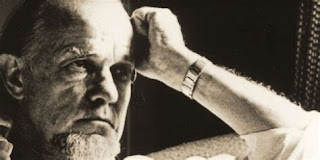
Francis Schaeffer at Lausanne

This weekend, Lord willing, I will join 134 others in Budapest for the Lausanne Europe Gathering. This is preparatory to the next large congress that is scheduled for next September in Seoul. There are four of us going from Great Britain, representing a spread of age, gender, ministry situation, and ethnicity. 

Often when we consider the first Lausanne Congress in 1974, we think of the important contributions of John Stott, Samuel Escobar, Rene Padilla, and Ralph Winter.

But one of the less well-known contributors to that first congress was Francis Schaeffer. Francis and Edith Schaeffer were American missionaries who had developed a very significant ministry, inviting disillusioned young people to their home in Switzerland, and sharing the gospel with them.

I had come across Schaeffer as a teenager, and read everything I could that the Schaeffers had written.

Schaeffer’s talk at Lausanne was published as “Two Contents; Two Realities”.

As I reread that talk the other day, I was struck by two things:

1.     How this message had been so influential on my ministry throughout my life; and

2.     How relevant it is half a century later.

This is what he said:

There are four things which I think are absolutely necessary if we as Christians are going to meet the need of our age and the overwhelming pressure we are increasingly facing. They are two contents and two realities:

 The First Content: Sound Doctrine

 The Second Content: Honest Answers to Honest Questions

 The First Reality: True Spirituality

 The Second Reality: The Beauty of Human Relationship


I want to read to you one short quote from each point to give you a flavour of his presentation:


The First Content: Sound Doctrine


Schaeffer focusses firstly on the importance of believing and practicing truth:

…nowhere is practicing the truth more important than in the area of religious cooperation. If I say that Christianity is really eternal truth, and the liberal theologian is wrong—so wrong that he is teaching that which is contrary to the Word of God—and then on any basis (including for the sake of evangelism) I am willing publicly to act as though that man’s religious position is the same as my own, I have destroyed the practice of truth which my generation can expect from me and which it will demand of me if I am to have any credibility. (411)


The Second Content: Honest Answers to Honest Questions


His second point is on the importance of what we would now call cultural engagement:

Christianity demands that we have enough compassion to learn the questions of our generation. The trouble with too many of us is that we want to be able to answer these questions instantly, as though we could take a funnel, put in in one ear and pour in the facts, and then go out and regurgitate them and win all the discussions. It cannot be. (414)


The First Reality: True Spirituality


Here Schaeffer tells of a spiritual crisis he had gone through twenty years before, as he reflected on his life, and how he recognised that his spiritual life had not kept in line with his stated beliefs. He took time out to rethink his whole belief system, and then he says this:

I found something I had not been taught, a simple thing but profound. I discovered the meaning of the work of Christ, the meaning of the blood of Christ, moment by moment in our lives after we are Christians—the moment-by-moment work of the whole Trinity in our lives because as Christians we are indwelt by the Holy Spirit. That is true spirituality. (416-17)


True spirituality, he is arguing, is essential if we are to have any kind of lasting fruit in our lives. And that spirituality must be real, not fake.


The Second Reality: The Beauty of Human Relationships


Here he is talking about the importance of love in the community of God’s people:

Now if we are called upon to love our neighbour as ourselves when he is not a Christian, how much more…should there be beauty in the relationships between true Bible-believing Christians, something so beautiful that the world would be brought up short!...if we do not show beauty in the way we treat each other, then in the eyes of the world and in the eyes of our children, we are destroying the truth we proclaim. (419)


It is my conviction that these things are as true now as they were when Schaeffer first spoke them, and that is why they continue to have a profound influence on my life. My prayer is that these convictions would also shape the way we interact in Budapest.

(All refs are to the Complete Works of Francis Schaeffer, Vol. 3)

Wednesday, December 21, 2022

Favourite Books of 2022

So much of my reading these days is online. I read lots of articles. I find many of them helpful. This year, as before, I have found the articles on UnHerd informative and insightful, especially on the current issues and trends in politics and culture. This year, though, I think the website that has been most helpful to me has been that of Mere Orthodoxy. If you haven't read any of their material you are missing out. They are often long-form articles so you may need half an hour of undisturbed reading. But they are well written and often display profound theological and cultural depth.

As for books though, as usual I have not read nearly as many as I had hoped. But here are my top ten books from this year:

Commentaries

The Letters to Timothy and Titus, by Philip H. Towner 

Over the last few years at Freeschool Court Church, we have been working through the letters Paul wrote to his friends Timothy and Titus in our bimonthly home groups. We are nearly finished and it has been so helpful. I don't have a great wall of commentaries in my study as many of my friends do, as I have not been in a pastorate with the need to be constantly working on new preaching material. But I have adopted the practise of asking my good friend John Kendal (among others) for a recommendation when I have to spend more time on a book. This is what John suggested. It is chunky - nearly 900 pages - and scholarly. But it is not technical so you don't have to have Greek to benefit from its wisdom. Highly recommend it if you are willing to spend the money - it's expensive.


Theology & Culture

The Intolerance of Tolerance
, by D. A. Carson

This is ten years old and already a little out of date but still well worth the read. Like all Carson's books it is well-researched and readable.


Carson distinguishes between what he calls the 'old tolerance' and the 'new tolerance'. The old tolerance involves the acceptance of the existence of different views. The new tolerance involves the acceptance of different views. It is a subtle shift linguistically but profound in its impact. In the old tolerance of liberal democracy citizens were not to impose their beliefs on others. In the new tolerance the mere expression of disagreement with the radical agenda is to be banned.


The author reports a number of often high-profile cases in politics, the media, and the universities in which the new tolerance has been displayed. He then looks at the history of the idea of tolerance, directs the problems with the new paradigm, and suggests ten words as ways ahead. Still relevant.


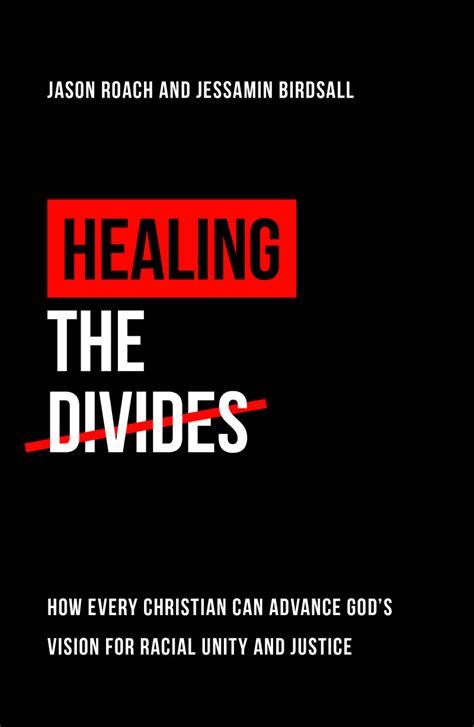
Healing the Divides: How Every Christian Can Advance God's Vision for Racial Unity and Justice
, by Jason Roach and Jessamin Birdsall

The authors, a Black British medic/pastor and a white American adult missionary kid writer, tackle this very thorny issue of race and especially the way Christians and churches should respond to ethnic diversity and prejudice.

They write well and explain current thinking clearly. They tackle the Black Lives Matter movement, Critical Race Theory, and anti-racism activism. Instead of emphasising one angle on racism they accept that there are individual and structural perspectives that are both useful. I had not come across the idea of 'interest convergence' before. Roach and Birdsall give plenty of practical suggestions along the road. I found the book helpful. It is a popular-level book and it left me wanting to go deeper into the concepts and theories that are informing much of the activism of our generation. I think that the authors on the whole did a fairly good job at navigating what is a potential minefield in writing this book. If there is any weakness I think it is in uncritical use of categories like BAME.


He Still Speaks: Francis Schaeffer’s Enduring Relevance
, edited by Steve Wellum

I picked up this book at the FEUER conference. I am a Schaeffer fan and thoroughly enjoyed these essays by folks involved in L'Abri: Andrew Fellows, Dick Keyes, Ranald McCaulay, and others. Schaeffer is shown to be prescient in so many ways. It is astonishing to see how he really understood the times way ahead of pretty much everyone else. If you have not read Schaeffer himself (I read nearly all his books while I was a student) this would be a good way into his works. (I couldn't find a photo of the book and don't know where to buy it either.)


Biographies

Bavinck: A Critical Biography, by James Eglinton

Herman Bavinck was a prodigious Dutch theologian at the turn of the last century and for a long time was not well known in the English speaking world. Eglinton, of Edinburgh University, is a leading Bavinck scholar and, with others, is in the process of translating his works into English. I have not read any of Bavinck's works (though I have read some work of his missiologist nephew John Herman Bavinck) so wanted to read this biography as a way into understanding his significance. The book is scholarly but readable. I hope to go on to read some of Bavinck himself before long, though I doubt I have it in me to read his magnum opus, the four volume Reformed Dogmatics. (An interesting personal connection with Bavinck was when I was stopped by the police for riding a bike on the very Leiden street on which student Bavinck lived [a century before - I admit this is tenuous!]. I explained that I was visiting and couldn't read the Dutch no cycling sign, so he let me go.)


In the Shadow of the Rock, by Geoffrey Thomas

Geoff is my old pastor from student days in Aberystwyth and continues to stay in touch with me. He has written this autobiography in the hope that it will be a blessing to his readers. It was a joy to read old stories again and learn so many new anecdotes from his life. In a way Geoff was an ordinary pastor. But in that he ministered in the same congregation for over 50 years you want to read his story to glean lessons for your own life. So many men, especially, have benefitted from his mentoring over all these years, including me. When I was a teenager I was already convinced that the Lord wanted me to go overseas with the gospel and wanted to prepare by going to Bible college. But I was advised to go to university first and so I ended up in God's providence at Aber. I always say that sitting under Geoff's ministry for three years was my Bible college! 


The Snow Leopard, by Peter Matthiessen 

I used to see this book in every book shop in Nepal and had often wanted to read it. When I saw it among the dross at the local lockdown book exchange - I periodically drop off gospel books there and they are always taken - it was like encountering someone I had known for ages but never had the chance to meet. It is a completely different book from what I had expected. Part travelogue and part Zen Buddhist meditation, Snow Leopard traces the journey of the author with his zoologist friend, George Shaller, into the snowy wastes of Dolpo to observe the rut of the Himalayan blue sheep. Evidence of those elusive and majestic cats is all around them, but would they actually get to see them with their own eyes? A tale of grief, human relationships, and personal discovery in an epic theatre.


Novels


The Thursday Murder Club
, by Richard Osman

Osman's first, blockbuster novel. I resisted jumping on the bandwagon for a while but when a copy was left at our house I resisted no more - and thoroughly enjoyed it. The plot is a bit of a stretch, but the characters - especially the four friends who form the club at Cooper's Chase retirement home - are a delight. I love the idea for the setting, especially as Osman paints older people in such a positive light. 


Klara and the Sun, by Kazuo Ishiguro

This is the fourth of Ishiguro's novels I have read, after The Remains of the Day, Never Let Me Go, and When We Were Orphans. I think Klara is more like Never Let Me Go than any of the others but really quite different as well. Ishiguro is an expert in making you think about what it means to be human. And that is perhaps the most important issue in Western culture in our generation. Thoroughly recommend it. But don't read it if you want to read something to relax and make you happy. It made me renew my commitment to reaching lost people with the good news of Jesus.