Showing posts with label Book Review. Show all posts

Monday, December 29, 2025

Favourite Books of 2025

Theology

Finding the Right Hills to Die on: The Case for Theological Triage, by Gavin Ortlund 

When theological argument is conducted in a good spirit, then it should be helpful. After all, none of us has a monopoly on the truth; we all have blindspots, though many do not acknowledge that. Ortland provides a framework by which to judge the level at which doctrine should be a cause for separation:

  • First rank doctrines are those that are essential to the gospel;
  • Second rank doctrines are "urgent for the health and practice of the church";
  • Third rank doctrines are important but not so important that they should lead to separation between brothers and sisters;
  • Fourth-rank doctrines are really not important at all - we should be able to agree to disagree on these matters without that affecting gospel fellowship.

But what should we make a big issue about, and what should we learn to live with? That question, in a nutshell, is what Ortlund seeks to address. This matters because the witness of the church is negatively affected both by minimising and maximising distinctions.

He develops a hierarchy of doctrinal importance:

I think this is an excellent book. Even if you don't land exactly in the same place on each of the examples he gives - e.g., the virgin birth, justification by faith alone, baptism, spiritual gifts, women in ministry, the millennium, the days of creation - the exercise is well worth it. Evangelicals desperately need this sort of thinking as we seek to hold forth the gospel together to a dying world.

Biography

God's Fool, by George Patterson

I picked this up some years ago but never read it. When I was a teen, I read Tibetan Tales by Patterson's ministry partner, Geoffrey Bull. It had a profound effect on me and helped to propel me into cross-cultural ministry in the same neighbourhood.

Patterson's story is a rollicking read. He and Bull had arrived in China in the late 1940s to witness for Christ among the peoples of the greater Tibetan plateau and had made friendship with the leaders of the Khambas just as they were trying to throw off the threat from the Communist Peoples' Army to annex Tibet. Patterson volunteers to escape to India to alert the West to what is happening and what follows is a fascinating tale of extreme horse riding through the most rugged terrain possible.

As a travelogue the account is gripping, but I was struck by the hyper-subjective nature of his approach to discerning the will of God and disappointed by the arrogant and judgmental attitude Patterson had towards other Christians. 

In later life, Patterson and his wife, Meg, a medical doctor, courted controversy by advocating for what seems to be quack medicine in the treatment of drug addiction. I can't help but think that a more humble attitude to other Christians (and other people in general actually) would have made this energetic and visionary man more fruitful in the kingdom.


Schaeffer on the Christian Life: Countercultural Spirituality, by William Edgar

Francis Schaeffer is one of my heroes (see another blog post here). 

This book, in the 'Theologians on the Christian Life' series, is an examination of the life and ministry of this American pastor and missionary, who died when I was still at university, at a time when his influence on me had already been profound. 

Bill Edgar came to Christ through Schaeffer's careful personal witness. Edgar's recounting of that episode is very moving. Edgar was then involved in L'Abri on an off for a while, which no doubt prepared him well to teach on apologetics at Westminster Seminary.

The book is divided into three parts: The Man and His Times, True Spirituality, and Trusting God for All of Life.

I found it a super-encouraging read.


Missiology

You Will Be My Witnesses: Theology for God’s Church Serving in God’s Mission, by Brian A. DeVries


The theology of mission has been hotly debated for many decades. DeVries has read deeply in the literature and seeks here to resolve the key points of that debate. 

The book is divided into three parts: The Biblical Story of God's Mission, Concise History of Christin Witness, and Our Witness in an Un-Christian World.

There is much to commend in this work. I think the author's approach is helpful: having constructed a biblical theology of God's mission, he lands on the terminology and theology of witness as the key to understanding the role of the church in pursuing her calling in the world. Though this is a good insight, I am not sure that this adequately covers the biblical material, so I am left dissatisfied.

The second section suffers from too little critical engagement with some of the weaknesses of the Christian movement historically, and the last section, too, leaves me with too many unanswered questions. So I am in two minds whether to recommend it really, but will try to write a longer review article for publication sometime in 2026.


Fiction

Orbital, by Samantha Harvey

My wife, Becky, got me onto this one - a Booker Prize winner. The idea is deceptively simple: we follow the lives of the astronauts and cosmonauts on the International Space Station as it orbits the Earth sixteen times over 24 hours. Challenges your perception of time and reminds us of how vulnerable we all are as we spin through space.


Pride and Prejudice, by Jane Austen

My first Jane Austen novel. I was surprised at how modern the style was - very accessible. I was also surprised at how witty Austen was. There are so many good lines - many of which I recognised from the TV series, e.g. when Mrs Bennet complains that her husband gives no consideration for her nerves: 

"You mistake me, my dear. I have a high respect for your nerves. They are my old friends. I have heard you mention them with consideration these last twenty years at least.”

There is much wisdom here. Marrying well - the main preoccupation of the story - is so important. And it is a good reminder of how our own besetting sins are often so difficult for us to see.


The Count of Monte Christo, by Alexandre Dumas

Edmond Dantes is a young sailor in Marseilles at the end of the Napoleonic era. Through the selfishness and betrayal of his associates he is unjustly imprisoned on a rocky island as he was about to wed his beloved Mercedes. 

The rest of the novel is how he deals with the injustice. It isn't pleasant but offers so many insights into the human heart, the effects of sin, the sovereignty of God, and how human stories are often messy because we live in a world that is marred by evil.

There is symbolism here in the name of the island on which Dantes recovers and after which he takes his title, in the priest who enables his escape, and in the way Dantes pursues his antagonists. And probably a lot more, which I would need to re-read to discover. But at 1400 pages, that is not going to happen soon!


Lila, by Marilynne Robinson

This is the third in Robinson's Gilead series but the fourth that I read, as I read Jack out of order. No matter, they stand alone, or virtually alone. Robinson's writing is slow, meditative, and humane. You feel you know the protagonist even though she is from such a different background to yourself. There is sadness and longing as well as redemption and hope. I have read all of Robinson's novels now and cannot recommend them too highly. If all you want from a novel is a ripping, action-packed thrill, you will hate Lila. But you should read it anyway; it will do your soul good.


Tuesday, December 31, 2024

Favourite Books of 2024

Theology and Culture

The Holy Spirit, by John Owen

I took this Puritan Paperback with me on my Asia trip in the Autumn. Owen's famously heavy style has been made readable here by the editor, R. J. K. Law. Even so, it still demands a careful read. Owen is both biblical and devotional. If someone dismisses his work because he doesn't tick all their 21st Century boxes, it is more to their detriment. I found it both challenging and encouraging spiritually.

I was struck by how much of the work of God can be examined as the work of the Spirit. Such a neglected theological topic.


Freedom, Authority and Scripture, by J. I. Packer

This book came out over 40 years ago but is still hugely relevant. It is a slim volume but if you are familiar with Packer you will know what to expect. His prose is tightly woven, without the slightest careless phrase. So it needs to be read slowly, like Owen, one of his heroes.

If I ever have to give a seminar on these themes, this will be the book I go to first.


In Search of the Common Good, by Jake Meador

Jake Meador is one of my favourite writers. He edits the Mere Orthodoxy web site, and has written a bunch of very good articles. So I picked up this book from a few years ago. Meador is heavily influenced by Schaeffer, as well as other Reformed writers and preachers. Keller writes the forward.

Meador seeks to diagnose the decline of Western civilisation. His focus is his own, United States, but much of what he addresses is shared with the UK and other Western societies.

He argues that modern liberalism is a story that we have told ourselves and that that has led to our decline, seen in the loss of meaning, wonder, and good work. He then seeks to tell a different story - the Christian tradition, heavily informed by the Bible - and show how this gives a better grounding for our common good.

Devotional

Truth for Life, Volume 1, by Alistair Begg

My wife and I really enjoyed starting the day together with Alistair Begg's devotional in 2024. He gives a connected Bible reading at the end of the day's page; we found it helpful to read the Bible passage first, before reading the verse or verses that he bases his meditation on.

Our plan is to go back to an old Packer daily devotional that we read 30 years ago (Your Father Loves You) for 2025 and then probably pick up Begg's second volume for 2026.


Missiology

The Church between Temple and Mosque, by J. H. Bavinck

Dan Strange was the power behind getting this book reprinted, and he writes a helpful introduction (slightly spoiled by too many typos). J. Herman, if you don't know, was the nephew of Herman Bavinck, who, with Abraham Kuyper, was a founder of the neo-Calvinist movement, that continues to gather steam, especially with the translation work of James Eglinton and his gang. J. H. was a missionary to Indonesia in the mid-twentieth century, and worked in Bandung and Yogyakarta, both cities of Java with which I have become familiar after three visits in recent years.

J. H. Bavinck spent a lot of time in dialogue with Indonesian religious leaders, and by carefully studying their texts, he was a very knowledgeable evangelist and church worker. This comes out in much that he writes in this book, that forms a good companion with his more well known, Science of Mission.

There is much to learn. But I think J.H.B. was hampered by two weaknesses: 1) he was a man of his time, and that time was Dutch colonial time, with all the obstacles that created for the intercultural minister; 2) he does not seem to have understood how much Asian religious life is shaped by the social order in which it is lived. That latter weakness makes him too cognitive and too individualistic, in my opinion.


Biography

Timothy Keller: His Spiritual and Intellectual Formation, by Collin Hanson

I don't read enough biography. I love Tim Keller and have read quite a few of his books. But I still learned a lot from this account of his life. The way Hansen arranges his material is really helpful: at each distinct stage of Keller's life, the key influences on his life and ministry are described. It is easy to see how these influences - writers, lecturers, preachers, friends - shaped Keller's thinking and ministry.

It is lovely to see the providence of God in the way these people came into Keller's life, and how each added a building block that was later to bear such astonishing fruit (if I may mix metaphors) in his ministry in New York City and then in his wider ministry in later life.

Makes me thankful to the Lord for all the godly and wise influences that he has brought into my life over the years, and cry out to him for grace to steward those influences for his glory in the years I have left.


Fiction

The Luminaries, by Eleanor Catton

This could be the biggest book I have ever read - over 800 pages. The setting is that of the gold fields of New Zealand in the nineteenth century, which Catton describes so evocatively.

The author arranges the novel in a number of acts, that get shorter and shorter as the story goes on - the first is 400 pages and the last is 1 - guided by a fascinating  astrological framework.  I frequently referred back to a helpful page of dramatis personae at the front.

Jack, Marilyn Robinson

It has been a few years since I read the first two novels in this series - Gilead and  Home, so I re-read those stories before reading Jack. I won't spoil it for you, but Marilyn Robinson doesn't let you down. A love story; very sad and very lovely.


Monday, January 1, 2024

Favourite Books of 2023

Theology and Culture

Biblical Critical Theory: How the Bible's Unfolding Story Makes Sense of Modern Life and Culture, by Christopher Watkin.

Watkin is a Yorkshireman who teaches French Literature in Australia. In this chunky book Watkin uses Augustine's City of God as a model of how to use the Bible in cultural engagement. I have found it bristling with insights and hope to go over it again to try to retain some of the stuff I have learned from it.


Unpacking Forgiveness: Biblical Answers for Complex Questions and Deep Wounds, by Chris Brauns. 

This is the one book (apart from the Bible) that I took into hospital with me in November. Chris is an American Presbyterian pastor with a lot of experience of helping people work through the pastoral issues related to forgiveness. He lands squarely on the need for repentance to precede forgiveness. Some people are horrified by such a stance, and many would be puzzled, but Brauns makes a solid case that, to me at least, is convincing. I am still working through issues in this area myself and this book has been a helpful guide.


Into His Presence: Praying with the Puritans, by Tim Chester.

Tim is an old friend of mine, and I have benefitted from so many of his books - he is a prolific writer. I am not normal big on written prayers, but having enjoyed The Valley of Vision a couple of years ago, thought I would give this a try. I was not disappointed. Gave copies to the family for Christmas.


What Makes Us Humans? And Other Questions about God, Jesus and Human Identity, by Mark Meynell.

Mark calls this a "short book about a big subject". There can be few subjects that are so important in our cultural moment. It is so vital we get a proper view of what it means to be human when all around us people are questioning reality and coming to grief. If you haven't read anything on this, please give this one a read. It is one of a series on hot topics by The Good Book Company called 'Questions Christians Ask'. They are bite size, biblical, and brilliant.


Reality and Other Stories: Exploring the Life We Long for through the Tales We Tell, by Matt Lillicrap and Peter Dray.

Stories are fundamental to what it means to be human (see above). Matt and Peter reflect on seven kinds of stories that we tell each other. This book started as a series of talks by Peter at Cambridge Inter-Collegiate Christian Union and then reworked with Matt, using the framework provided by Christopher Booker in his The Seven Basic Plots. It's brilliant.


Missiology

Motus Dei: The Movement of God to Disciple the Nations, edited by Warrick Farrah.

News from far-flung places suggests that great numbers of people around the world are turning to Christ. And we are told that a leading factor in this movement is a relatively new method of church planting or disciple making. Motus Dei (Latin for the 'Movement of God') is a multi-author work that reflects on this phenomenon in a number of contexts around the world. It's a mixed bag. I offered to review this book for the International Journal of Frontier Mission but the project snowballed and now a whole issue is to be given over to it with my review article being followed by responses by other writers. Spoiler alert: I am sympathetic but have serious misgivings.


Biography

A Camaraderie of Confidence: The Fruit of Unfailing Faith in the lives of Charles Spurgeon, George Müller and Hudson Taylor, by John Piper.


This is the fourth book that I have read in this series of potted biographies by Piper. They spring from papers that he has given at his annual pastors' conference at Bethlehem Baptist Church. They are always super-encouraging and challenging. Piper doesn't focus on critique or analysis, though he could, but he does think freshly on his subject. His concern is to bring the faith of these three great men into focus so that we would emulate that faith in our day. I gave copies to a bunch of pastors in my area, with whom I hope we too form a camaraderie of confidence in the Lord.


Fiction

The Murder of Roger Ackroyd, by Agatha Christie.

I am not an aficionado of crime fiction as some of my friends are, but this has got to be one of the best. An excellent plot with a stunning plot twist. 

Wednesday, December 21, 2022

Favourite Books of 2022

So much of my reading these days is online. I read lots of articles. I find many of them helpful. This year, as before, I have found the articles on UnHerd informative and insightful, especially on the current issues and trends in politics and culture. This year, though, I think the website that has been most helpful to me has been that of Mere Orthodoxy. If you haven't read any of their material you are missing out. They are often long-form articles so you may need half an hour of undisturbed reading. But they are well written and often display profound theological and cultural depth.

As for books though, as usual I have not read nearly as many as I had hoped. But here are my top ten books from this year:

Commentaries

The Letters to Timothy and Titus, by Philip H. Towner 

Over the last few years at Freeschool Court Church, we have been working through the letters Paul wrote to his friends Timothy and Titus in our bimonthly home groups. We are nearly finished and it has been so helpful. I don't have a great wall of commentaries in my study as many of my friends do, as I have not been in a pastorate with the need to be constantly working on new preaching material. But I have adopted the practise of asking my good friend John Kendal (among others) for a recommendation when I have to spend more time on a book. This is what John suggested. It is chunky - nearly 900 pages - and scholarly. But it is not technical so you don't have to have Greek to benefit from its wisdom. Highly recommend it if you are willing to spend the money - it's expensive.


Theology & Culture

The Intolerance of Tolerance
, by D. A. Carson

This is ten years old and already a little out of date but still well worth the read. Like all Carson's books it is well-researched and readable.


Carson distinguishes between what he calls the 'old tolerance' and the 'new tolerance'. The old tolerance involves the acceptance of the existence of different views. The new tolerance involves the acceptance of different views. It is a subtle shift linguistically but profound in its impact. In the old tolerance of liberal democracy citizens were not to impose their beliefs on others. In the new tolerance the mere expression of disagreement with the radical agenda is to be banned.


The author reports a number of often high-profile cases in politics, the media, and the universities in which the new tolerance has been displayed. He then looks at the history of the idea of tolerance, directs the problems with the new paradigm, and suggests ten words as ways ahead. Still relevant.


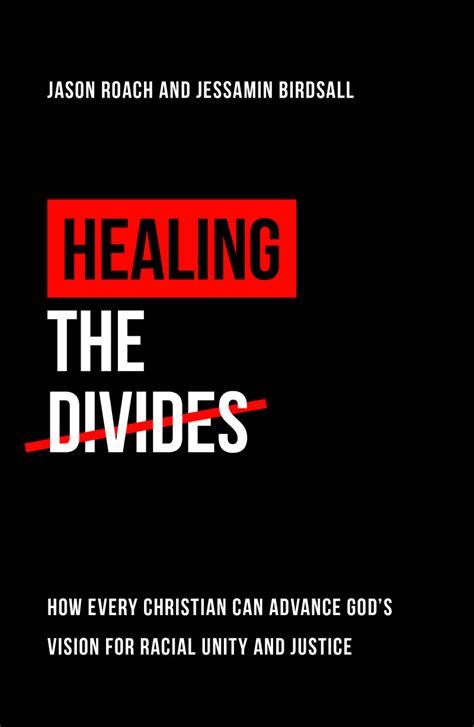
Healing the Divides: How Every Christian Can Advance God's Vision for Racial Unity and Justice
, by Jason Roach and Jessamin Birdsall

The authors, a Black British medic/pastor and a white American adult missionary kid writer, tackle this very thorny issue of race and especially the way Christians and churches should respond to ethnic diversity and prejudice.

They write well and explain current thinking clearly. They tackle the Black Lives Matter movement, Critical Race Theory, and anti-racism activism. Instead of emphasising one angle on racism they accept that there are individual and structural perspectives that are both useful. I had not come across the idea of 'interest convergence' before. Roach and Birdsall give plenty of practical suggestions along the road. I found the book helpful. It is a popular-level book and it left me wanting to go deeper into the concepts and theories that are informing much of the activism of our generation. I think that the authors on the whole did a fairly good job at navigating what is a potential minefield in writing this book. If there is any weakness I think it is in uncritical use of categories like BAME.


He Still Speaks: Francis Schaeffer’s Enduring Relevance
, edited by Steve Wellum

I picked up this book at the FEUER conference. I am a Schaeffer fan and thoroughly enjoyed these essays by folks involved in L'Abri: Andrew Fellows, Dick Keyes, Ranald McCaulay, and others. Schaeffer is shown to be prescient in so many ways. It is astonishing to see how he really understood the times way ahead of pretty much everyone else. If you have not read Schaeffer himself (I read nearly all his books while I was a student) this would be a good way into his works. (I couldn't find a photo of the book and don't know where to buy it either.)


Biographies

Bavinck: A Critical Biography, by James Eglinton

Herman Bavinck was a prodigious Dutch theologian at the turn of the last century and for a long time was not well known in the English speaking world. Eglinton, of Edinburgh University, is a leading Bavinck scholar and, with others, is in the process of translating his works into English. I have not read any of Bavinck's works (though I have read some work of his missiologist nephew John Herman Bavinck) so wanted to read this biography as a way into understanding his significance. The book is scholarly but readable. I hope to go on to read some of Bavinck himself before long, though I doubt I have it in me to read his magnum opus, the four volume Reformed Dogmatics. (An interesting personal connection with Bavinck was when I was stopped by the police for riding a bike on the very Leiden street on which student Bavinck lived [a century before - I admit this is tenuous!]. I explained that I was visiting and couldn't read the Dutch no cycling sign, so he let me go.)


In the Shadow of the Rock, by Geoffrey Thomas

Geoff is my old pastor from student days in Aberystwyth and continues to stay in touch with me. He has written this autobiography in the hope that it will be a blessing to his readers. It was a joy to read old stories again and learn so many new anecdotes from his life. In a way Geoff was an ordinary pastor. But in that he ministered in the same congregation for over 50 years you want to read his story to glean lessons for your own life. So many men, especially, have benefitted from his mentoring over all these years, including me. When I was a teenager I was already convinced that the Lord wanted me to go overseas with the gospel and wanted to prepare by going to Bible college. But I was advised to go to university first and so I ended up in God's providence at Aber. I always say that sitting under Geoff's ministry for three years was my Bible college! 


The Snow Leopard, by Peter Matthiessen 

I used to see this book in every book shop in Nepal and had often wanted to read it. When I saw it among the dross at the local lockdown book exchange - I periodically drop off gospel books there and they are always taken - it was like encountering someone I had known for ages but never had the chance to meet. It is a completely different book from what I had expected. Part travelogue and part Zen Buddhist meditation, Snow Leopard traces the journey of the author with his zoologist friend, George Shaller, into the snowy wastes of Dolpo to observe the rut of the Himalayan blue sheep. Evidence of those elusive and majestic cats is all around them, but would they actually get to see them with their own eyes? A tale of grief, human relationships, and personal discovery in an epic theatre.


Novels


The Thursday Murder Club
, by Richard Osman

Osman's first, blockbuster novel. I resisted jumping on the bandwagon for a while but when a copy was left at our house I resisted no more - and thoroughly enjoyed it. The plot is a bit of a stretch, but the characters - especially the four friends who form the club at Cooper's Chase retirement home - are a delight. I love the idea for the setting, especially as Osman paints older people in such a positive light. 


Klara and the Sun, by Kazuo Ishiguro

This is the fourth of Ishiguro's novels I have read, after The Remains of the Day, Never Let Me Go, and When We Were Orphans. I think Klara is more like Never Let Me Go than any of the others but really quite different as well. Ishiguro is an expert in making you think about what it means to be human. And that is perhaps the most important issue in Western culture in our generation. Thoroughly recommend it. But don't read it if you want to read something to relax and make you happy. It made me renew my commitment to reaching lost people with the good news of Jesus.

Friday, December 31, 2021

Favourite Books of 2021

Since so many friends are doing this I thought I would join them. I am a slow reader so I am in awe at the piles of books some people get through. I have read books in the fields of theology, missiology, religion, church history, military history, and horology (yep), as well as a few novels. I read to warm my heart as well as to feed my mind, or just to relax. A few books are re-reads, and one I have now read three times.

Here are my favourites, in no particular order:


The Rise and Triumph of the Modern Self
 is Carl Trueman's attempt to trace the development of modern Western culture with its focus on sexuality and identity. He traces the development from Rousseau through the romantic poets, Wordsworth, Shelley and Blake, and the philosophies of Nietzsche, Marx and Darwin, and on to Freud and the New Left. He is a good writer so it is not as difficult as you might think. Well worth the effort.


In Who Shall Ascend the Mountain of the Lord? Michael Morales gives us a biblical theology of Leviticus. It is packed with insights into the text and connections between the various parts of Leviticus and with other parts of Scripture. I found it very helpful.

I have been reading books on creation since I was a teenager. I started with The Genesis Flood but when I studied geology at university became dissatisfied with its treatment of the evidence.

In Seven Days That Divide the World, John Lennox, professor emeritus of maths at Oxford, argues, convincingly, that the biblical data does not require us to take a young earth position. 


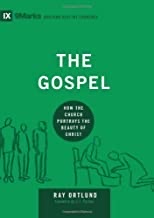
Ray Ortlund's The Gospel: How the Church Portrays the Beauty of Christ is a powerful little book. It is in the 9Marks series on Building Healthy Churches and focusses on how a local church needs to cultivate a healthy gospel culture that matches and adorns the gospel doctrine that it confesses.

Juicy quote: "The command of Christ is that we love one another. The example of Christ is that we die for one another. The promise of Christ is that our love will show a skeptical world the difference he really makes" (112).

Everyone would benefit from reading this.


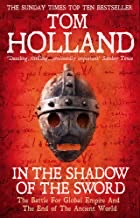
I have been following Tom Holland for a short while and am praying for him often. Last year I read his magisterial Dominion. He is on a journey, in his understanding of history and, I hope, in his understanding of the gospel.

This is the previous book he wrote, on the history of Islam. It didn't go down well with Muslims as it casts serious doubt on nearly all the claims of Islam's origins and early development. I met a lovely Muslim Pakistani doctoral student in Leiden last year who said that Holland's book destroyed his faith. Like Holland, though, Mohammed was not yet ready to confess Christ.

It is really important, in seeking to understand Muslims, to both read critical studies and talk with Muslims themselves. This book does a great job with the former.


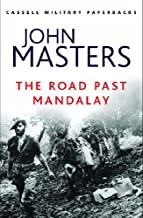
I have developed a fascination with the history of the Burma Campaign in WW2, probably because it features the Gurkha Regiment so much. 

This is the sequel to Master's first autobiographical book, Bugles and a Tiger. It tells the story of his leading a battalion of Gurkhas and others behind enemy lines as part of the Chindit force. The description of battles and deprivation is gripping. The book is sadly spoiled by the parallel account of his unfolding adulterous relationship with another officer's wife.


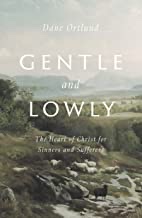
This is my favourite devotional book of the year. We read it slowly at the breakfast table each day over a period of several weeks. Dane Ortlund (Ray's son, see above) takes a deep dive into the Bible's portrayal of the person of Christ, expounding especially Matthew 11:28-30, in which the Lord Jesus tells his disciples that he is gently and lowly of heart.

Some in the family did not find the extended quotes from Puritans so helpful but if you are struggling it is not a problem to simply skip onto the next paragraph where Ortlund lays it all out in contemporary language. Much to dwell on and chew over. Worth working through it slowly.


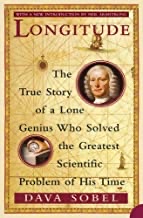
This is the book on horology - the study of time. Really fascinating historical account of how the 'longitude problem' was solved. I won't spoil it for you but it is a wonderful story of patience and persistence in the face of a consensus of scepticism. Clock making may seem not to offer much promise of interest but Sobel is a master story teller. I loved it.


Finally, this great little book by a bunch of pastors, many of whom are friends of mine, on the issue of depression. I have written about it already here.

Thursday, May 20, 2021

Pastors Get Depressed Too


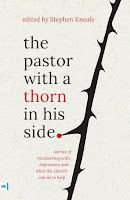
Review of The Pastor with a Thorn in His Side, ed. Stephen Kneale (Grace, 2021, 144 pages, £7.99).

Depression is a reality for pastors just as much, it seems, as it is in the wider population here in the UK.

Stephen Kneale has pulled together six other pastors to join him in telling their stories. 

After an introduction by the editor, each of the seven men tell of their experience of depression and share what they found helpful or unhelpful in dealing with the experience. A number of the men are suffering from depression still.

It might seem strange to some readers that pastors suffer from depression. After all, you might think, surely they are supposed to have it all together mentally as well as spiritually. These pastors, however, take the view, which I think is right, that mental illness may be the experience of followers of Christ just as physical illness is, because we live in a fallen world.

Reading the stories of these men is sobering. It is difficult, isn't it, to read about someone harming themselves or even attempting suicide. But that is the reality and we need to face it squarely. This book pulls no punches but tells it like it is.

The authors all write with a very readable style - a product, I guess, of their calling to make truth plain to their hearers and readers - so it is an easy read.

I am a friend of one of the authors and know most of the others in one way or another so I could picture them in their situation. I found their reflections on what was helpful or unhelpful instructive. I never thought, for example, that asking someone suffering from depression "Is there any way I can help?" could be so difficult, but if you are the sufferer it is adding to the burden by giving them one more thing to think about and act on when all their emotional resources are severely depleted.

If I may have any criticism it is that I would have liked to read more analysis of the stories. Kneale's concluding reflections are good but I would have liked more sustained theological, ecclesiological and sociological reflection. 

By theological reflection, I mean, for example, on the mystery of providence and the dimension of spiritual warfare in mental health issues. The use of the Bible in counselling is merely touched on and little is said about prayer. Should they have called their elders to pray for them and anoint them with oil (James 5:13-16)? In many parts of the world, churches would find the silence of these matters puzzling. Is it a cultural blindspot for us in the West?

The multifactorial nature of mental illness comes across clearly and should dissuade the reader from simplistic conclusions. However, I think it would have been good to have more reflection on the role of non-physical causes. There is a recognition that sinful behaviour might be one result of depression but is it ever a cause?

Furthermore, though I am pretty sure there is a Reformed consensus among the authors, it would have been good (if that is the case) to state this explicitly because it has a bearing on the interpretation of one's experience and on the options considered valid for management.

By way of ecclesiological reflection, there could be more discussion of the significance of a plurality of elders in the churches in which these men have been ministering. Some of the authors do mention the important role of elders (or deacons functioning as elders) but more explicit discussion of this would have been helpful.

By sociological reflection, I would have liked to see how each man's story is situated socially. Is their church in a residential suburb or a council estate? Derek French tells us about the fact that his house was overlooked from hundreds of windows. Having, I believe, visited that church, I can tell you he is not exaggerating - the church and manse lie in the midst of several Soviet-inspired high-rise blocks of flats. If that is a sink estate, the manse is the plug hole. If I am not mistaken, the previous minister had also had mental health issues. It seems a neglect of the duty of care that the church should allow that situation to have persisted. Ministers need to be able to relax just like anyone else. To be in a situation where one is perceived to be always available to the community (especially in such a needy one as that) is to load a heavy burden on a gospel worker with a sensitive conscience. 

No doubt the editor will say that if he had included all that it would be a different book. Fair enough. But somewhere we need that sort of discussion.

You can read more about the book here.


Friday, June 28, 2019

Beyond Caste: Identity and Power in South Asia, Past and Present, by Sumit Guha: a Review

Beyond Caste: Identity and Power in South Asia, Past and Present, by Sumit Guha, Ranikhet: Permanent Black, 2016 (Leiden: EJ Brill, 2013), pp. 291 + xxiii.


In the course of my research in Nepal I read a lot about caste. Caste is typically understood to be the characteristic social order of India and its neighbours. Debates about what makes it what it is abound. Researchers and theorists approach it from various angles: sociological, historical, political, economic, religious.
My study on the city of Lalitpur in Nepal was largely a sociological one depending heavily on my ethnographic methodology. I did, however, do a fair bit of historical investigation, by delving into the way groups had evolved over the centuries. I was disappointed that my publisher, Orchid Press, decided to entitle my work Caste and Kinship in a Modern Hindu Society because much of what I discovered was of more historical interest. Indeed, I argued that the ritual complex of the city told us a lot about how the city wasin days gone by, rather than what it is today. (Orchid Press, by the way, has not responded to any of my attempts at communication since the book was published and I have never received a single penny in royalties.) 
In Beyond Caste, Sumit Guha delves assiduously into previously unresearched historical material and interacts with nearly all the significant literature (though not all – see below). Replete in historical and geographical detail, it is a piece of serious scholarship that deserves careful reading. I will not attempt a thorough review here but merely state Guha’s thesis, note some significant historical facts that were new to me, and make some brief comments. (For a more comprehensive review please see that of H. L. Richard here. I was given a copy of the South Asian edition. The European and American editions are a ridiculous price.)
Guha argues that a caste is a “bounded social group demarcated by the exercise of power throughout its millennial history” (252). He reminds us that, in the study of caste, the exotic has often been highlighted over aspects that are shared with other social systems. In this way, then, caste became an Orientalist trope, as did so many other aspects of Hindu culture. Guha’s point is to demonstrate that “the bounded, status-ranked ethnic community or ‘caste’ is a social form that frequently appears in multi-ethnic societies” (3).
It is not that it is exactly like that of other societies because “in South Asia it became a highly involuted, politicised form of ethnic ranking shaped by the constant exercise of socio-economic power.” And that encapsulates Guha’s answer to the big question that emerges in all the good studies of caste: to what extent is caste in South Asia unique? In my study, I argue that caste is indeed unique because of the creative tension that arises from the competing demands of centralizing kingship and decentralizing kinship, but more on that below.
One of the strengths of Guha’s study is its historical approach, focussing as it does on “dynamic social processes” (6). But it is also valuable because he does not focus on the development of caste in just one part of India. He demonstrates, rather, how social processes have gone on in different parts of the subcontinent at different rates, are often not completed, and often set in reverse; he eschews an evolutionist theoretical position which deems certain systems as necessarily primitive.
In all the vicissitudes of history, however, “the bounded ethnic group remained and remains a powerful presence” (7).
Guha, rightly, after Nicholas Dirks and Susan Bayly, argues that caste is not a product of a single ‘Hindu’ ideology. I also argued that caste is structural rather than ideological. Rather, says Guha, power is the all-important ingredient.
Guha argues that castes are a sort of tribe, by which he means “large, stratified, socio-political organizations characterized by diffuse authority and collective leadership such as, for example, a council of important chiefs” (71). He says that such “identity-centred and geographically bounded communities” were “the domains in which ethnic politics was formed” and that this gives us a “deeper appreciation of how indigenous states in India grew out of and reproduced the lasting structures of inequality so inadequately captured by what has been called the ‘caste system’” (99).
Kinship is far from the fixed, bounded unit of social organization that we often see portrayed in the literature: “kinship and exclusion from the kin were both socially constructed statuses, and a person could move from one to the other in the course of a lifetime” (150). And yet, as my research seems to suggest, there are times when kinship groups do indeed attempt to maintain a tighter boundary. 
How did caste develop under British rule? Guha reports how important the colonial administration of British India was in the formation of South Asian identities. Bernard Cohn and Nicholas Dirks, he reports, “argued that colonialism was more than a system of power: it was also a mode of knowing that constructed its objects of knowledge” 174). The colonial administration created a significant apparatus to classify and count all the peoples in its domain. Sometimes administrators visited a region and, working with local Brahman literati, as in the Bombay Presidency at the beginning of the nineteenth century, “simply divided the people into Muslims and Hindus, and the latter into Brahman, Rajput, ‘Shoodruh’ or Maratha, and Ati-Shudra or outcastes” (201), masking and distorting a much more complex reality on the ground. Interestingly, twenty years later, in the mid-nineteenth century a change had occurred, with the “basic ordering seems to have been religious (201). This would seem to correlate with the developing notions of religion in the emerging paradigm of ‘world religions’.
After the great anti-colonial uprising of 1857-8 the notion of race became a significant category in a way it had not been hitherto (203). And this was a surprise to me: by the late eighteenth century, “It was the political value of this sense of European-born identity that…led the [East India] Company to assiduously limit the development of a local power elite with any genealogical depth. It also caused the Company to discourage the immigration of non-official Englishmen into India. All this was designed…to pre-empt any local claim to the ‘rights of Englishmen’ that had just been forcefully raised in North America. The disavowed India-born offspring formed a socially inferior class of Eurasians, excluded from power” (218). In order to encourage English officials to return to Britain once their term of service was complete, Lord Cornwallis, the then Governor-General of India, sanctioned a large pay increase, allowing them to return at middle age with a substantial nest egg.
Returning to his main point, Guha tells us to “abandon the futile search for a social essence” because “social structures, old and new, have been politically ordered in ways that we cannot grasp unless we deploy the concept of caste as a bounded corporate body shaped by socio-political power throughout its long history” (255).
I have a few quibbles with Guha’s analysis.

Firstly, I think he makes too much of ranking. That is, he seems to follow the standard idea that all the castes in a society are in a clear hierarchy relative to each other. He quotes Weber: “A status segregation grown into a ‘caste’ differs in its structure from a more ‘ethnic’ segregation: the caste structure transforms the horizontal and unconnected coexistences of ethnically segregated groups into a vertical social system of super- and subordination” (13).

As I demonstrated in my work, with the exception of Dalits (those formerly known to others as Untouchables) and, to a lesser extent, other impure, but not untouchable castes, such as Butchers, those vertical relations are often contested and indeterminate because of no ritual intercaste relations. Guha does acknowledge, at least, that ethnic boundaries are porous.

Secondly, although Guha examines caste throughout traditional India (including the territories now Pakistan and Bangladesh), dividing it helpfully into five regions, and makes several references to caste in Sri Lanka, he barely mentions Nepal. In a sense Nepal is little different from other parts of the subcontinent, especially in the old Mithila kingdoms of the southern plains (Tarai). But the Newar former kingdoms of the Kathmandu Valley – Kathmandu, Lalitpur (Patan), and Bhaktapur – are particularly significant exemplars of archaic caste systems because the Nepal Valley was never under Mughal or British rule.

Although he does indeed discuss the phenomenon of kingship, and interacts with Dirks and A. M. Hocart, he doesn’t even reference Declan Quigley’s important theoretical work, The Interpretation of Caste. Thus, in my opinion, kingship and the city are not given their due.
Has Guha’s study led me to change my view of caste? Not a lot. But it has broadened it. Guha’s careful elucidation of the ongoing centrality of power in the development of caste society is convincing. In so arguing, Guha is stating that caste is not unique but is, rather, a South Asian example of political realities found in every society, but in a way that previous materialist writers had not managed.
However, Guha makes no mention at all of the ‘climax communities’ of the Kathmandu Valley. I think that is a failing. In so doing he misses the centrality of kingship in those societies. But his central thesis is solid, and I now think such cities must be regarded not as the apex of caste society but as perhaps caste's most complex instantiation.

There are missiological implications to this analysis, but more on that later.