Wednesday, May 28, 2014

Glossary to Caste and Kinship in a Modern Hindu Society

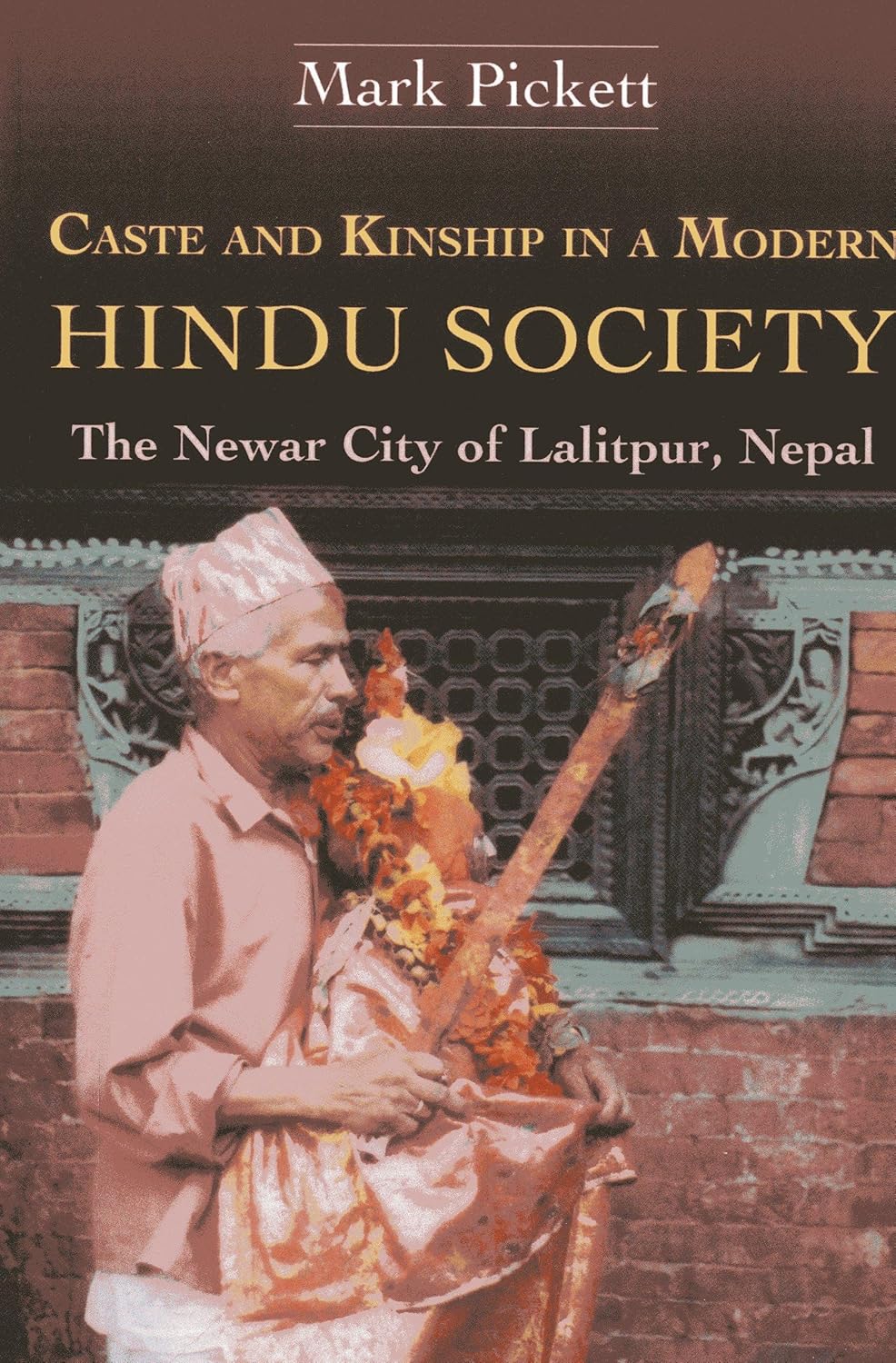
My publisher forgot to include the glossary to my book, Caste and Kinship in a Modern Hindu Society: The Newar City of Lalitpur, Nepal (Bangkok: Orchid, 2013, available here) so here it is for anyone struggling their way through it.


Apart from English terms, all names and terms are transliterated from Newari, Nepali (Np.) or Sanskrit (Skt.).

ācārya (ācāḥ)—learned teacher
āgã chẽ—Tantric shrine
āgã dyaḥ—god that resides in āgã chẽ
agnate—patrilineal kin, a person that is related to ego through links with males alone
aĩta—sweet presented as part of ritual gift-giving
Aji—midwife; provides ritual service at Birth Purification
Ajimā (Hāriti)—malevolent goddess
Ashtamātrika—Eight Mother Goddesses
ashtami—Eighth day of lunar fortnight; important for Buddhists
avatār—‘avatar’; incarnation of Vishnu
Awāle—Potter
aylaḥ—spirits, usually distilled from rice
bāhāḥ, bahi—Buddhist monastery
baigaḥ—uppermost storey of house
bājã—particular style of traditional music; music in general
baji—beaten rice, staple at feasts
Bāl Kumāri—one of the Eight Mother Goddesses
bali—sacrifice, usually animal
Banepa—small Newar town east of Bhaktapur
Bārāhi—lineage of Carpenters; one of the constituent thars of the Pengu Daḥ
Bhairava—blood-accepting, male deity; consort of the Devi
bhakta—devotee (usually in context of Vaishnavite sects)
bhajan—hymn
Bhimsen (Bhindyaḥ)—blood-accepting, male deity beloved of traders
bhincā macā—sister’s son and his children
bhoto (Np.)—waistcoat or vest of Bῦgadyaḥ
bhujyaḥ—offering to Bῦgadyaḥ
bhutu—hearth
bhway—feast
bodhisattva—one who aims to become a fully enlightened Buddha
Brahman—a member of a particular lineage with links to the priesthood
brahman—the uppermost of the four ideal varna categories; priest
Bhaktapur—Newar city, east of Lalitpur
bhusyāḥ—large cymbals
bhut/pret—ghost, malevolent spirit
buddhamārgi—a follower of the path of Buddha; one who has a Vajrācārya domestic priest
Bῦgadyaḥ (coll.)—the god of Bῦga; Karunāmaya/Matsyendranāth
caḥre—the fourteenth day of the waning fortnight, especially sacred to the worship of Shiva.
caitya—votive Buddhist shrine; like a stupa but much smaller
cāku—molasses
Cākwāḥdyaḥ (a.k.a. Minnāth)—accompanies Bῦgadyaḥ on the Jātrā
Caturmāsa—period of four months of Vishnu’s sleep
chẽ—house
cheli—ground floor of house
chwāsā—Remains Deity marked by an aniconic stone embedded in the ground
chwaylā bhu—pre-purification feast
cibhāḥ—(see caitya)
Citrakār—Painter
cuka—courtyard
cusyāḥ—small cymbals, accompany naykhĩ
cwatã—second floor of house
dakshina—ritual fee
dabu—dance platform
daḥmā—the main forward beam of the chariot
dāmaru (dabu dabu)—small, one-handed double-headed drum
dān—inauspicious gift
dāphā—a genre of traditional Newar music
darshan—view of the deity; obeisance
dasa karma—Ten Life-Cycle Rituals (see samskāra)
Dashmahāvidya—Ten Great Knowledges; a set of female protective deities
dekhā—Tantric initiation
devi—goddess; refers to all goddesses or specifically to the great Goddess (the Devi)
Dewāli—season for Lineage Deity Worship
dhāḥ—two-headed drum, may be played with wooden stick
dharma—religious duty, law, custom, classically set out in sacred texts (dharmashastra); by extension, moral order more generally
dhimay—double headed drum, played with hand and curved cane stick; bigger than dhāḥ
dholi (Np.)—palanquin
digu dyaḥ—Lineage Deity
doti—traditional wrap-around loincloth
dyaḥ—god
dyaḥ pālā—god guardian; caretaker of a temple
Dyaḥlā—Fisherman/Sweeper
ekadasi—11th day of lunar fortnight; sacred to Vaishnavites
emic—the perspective of the insider (the opposite of etic)
galli—narrow lane
Ganesh (Ganedyaḥ)—elephant-headed god, Shiva’s first son and god of beginnings
ghaḥ—traditional Newar water pot
Ghaḥku—a lineage of Farmers who act as brakemen for the Bῦgadyaḥ and Cākwāḥdyaḥ chariots
ghāt—slope, typically adjacent to a river
ghyaḥ—clarified butter
Gubhāju (coll.)—Vajrācārya, Buddhist Priest
guthi (gu)—socio-religious association
guthiyār—member of a guthi
gway—areca (betel) nut
Haluwāi (coll.)—alternative thar appellation of Sweetmaker or more general referent of any sweetmaker
hāmwa—sesame
harmin—harmonium
hiti—water spout
Holi—important spring festival
Indra—the Vedic king of the gods
ishtadevatā—chosen deity
—boiled rice
jajmān—patron
jāt/jāti—common term for group of intermarrying lineages, or caste
jātrā—processional festival; The Jātrā refers specifically to that of Bῦgadyaḥ
jhyāli—small cymbals
Joshi—Astrologer
juju—king
Jyāpu (coll.)—Maharjan, Farmer
kacha—raw food
kāshyap (kāshi)-gotra—of Aryan (Indic) ancestry
Kasāḥ (coll.)—Mulmi/Nyāchyã Shresthas, Bronzesmiths
kaḥsi—roof terrace
kalasha—Flask used for sacred purposes
Kāpāli—Tailor-Musicians
Karamjit—Mahābrāhman death specialists
Karmācārya (Acāḥju)—Tantric priest
kartal—two-piece, one-handed percussion instrument
Karunāmaya—name of bodhisattva Avalokiteshvara (see Bῦgadyaḥ)
Kāstakār—Carpenter (alt. to Sthāpit)
Kathmandu—capital city of Nepal; one of three cities of medieval Nepal Valley
Kãwã—skeletal demon
kawaḥ—sub-lineage
Khadgi (Nay)—Butcher
khaḥ—palanquin
khalaḥ—lineage
khĩ—drum
Khwapa (coll.)—Bhaktapur
khya—the goblin with the lolling red tongue
khyaḥ—field
Krishna—incarnation of Vishnu
kshatriya—second of ideal varna categories; warriors and kings
kuladevatā (Np.)—Lineage Deity (see digu dyaḥ)
Kumāri—Mother Goddess; also virgin goddess in Newar societies
Kwenādyaḥ (coll.)—Jala Vināyak; one of the four important forms of Ganesh in the Valley
lakh—one hundred thousand
lākha mari—sweet presented as part of ritual gift-giving
Lakshmi—goddess of good fortune; Vishnu’s principle wife
Lalitpur—city of Nepal (Kathmandu) Valley south of Bāgmati River; home of Pengu Daḥ
laptyā bhway—traditional Newar leaf-plate feast
laskus—ritual welcome at the door of house or gate of city
lhāsā-gotra—of Tibetan (Bodic) ancestry
Licchavi—ancient rulers of Nepal Valley
linga—phallic representation of Shiva
Lwahãkaḥmi (coll.)—Stonemason; one of the constituent thars of the Pengu Daḥ
magaḥ khĩ (Np. mādal)—small two headed drum Mahādyaḥ (Shiva)
Mahālakshmi—Mother Goddess
Maharjan—Farmer
Malla—rulers of medieval Nepal
mānā—volumetric measure of ten handfuls or about a litre
Mānandhar—Oil Presser
mandala (mandap)—sacred diagram or platform
Marikaḥmi (coll.)—Sweetmaker; one of the constituent thars of the Pengu Daḥ
mashān—cremation ground
mātã—first floor of a house
melā—grand festival
mhāy—tenant
mhyāy macā—daughter and her children
Mohani (Dashaĩ)—the most important festival of the autumn season
mridanga (Skt.; Nw. pacimā)—two-headed drum
mudrā—ritual position of the hands
muhāli—shawm (medieval-style oboe)
Mulmi/Nyāchyã Shresthas—Bronzesmiths
murti—image or form of deity
nāga—serpent deity
Nakaḥmi—(Newar) Blacksmith
nakhaḥ—festival
nakhaḥtyā—feast associated with a nakhaḥ
Narasimha—‘man-lion’ incarnation of Vishnu
Nārāyana—alternative name of Vishnu; common form in Nepal
nani—courtyard
Nāpit (Nau)—Barber
Nauni—Barber’s wife
nāyaḥ—supervisor
naykhĩ—double-headed drum, like dhāḥ but smaller; usually played by Butchers (Nay)
nitya pujā—daily worship
Nyāchyã—(see Mulmi)
Panauti—small Newar town in Banepa Valley
pāju—mother’s brother
Pānju—priest of Bῦgadyaḥ
Parbatiyā—Nepalese of the hills
pāthi—volumetric measure equivalent to eight mānās
Pengu Daḥ— ‘The Four Groups’; the focus of this study
phālca—public shelter
phuki—patrilineal relative
pikhā lakhu—carved stone that marks the ritual entrance to the house; Kumar
pitha (pigandyaḥ)—Power-Place
pitri—ancestor
pradakshinapātha (Skt.)—procession route
Prahlāda—son of Hiranyakashipu; devotee of Vishnu
prākrit—natural, aniconic stone image
Pramānas—medieval, de-facto rulers of Lalitpur
prasād—‘grace’; sanctified food, flowers and sinha distributed to worshippers in return for pujā
pujā—worship, usually comprising offerings of fruit, flowers, vermilion, and sweets
pujāri—temple priest
pukka—food that has been made acceptable to eat; well cooked; more generally, solid
purohit—domestic priest
punhi—full moon, auspicious day especially for Buddhists
pwanga—short horn
pyākhã—dance-drama
Rādhā—Krishna’s lover
Rājbhandāri—Royal Storekeeper, member of dominant caste
Rājopādhyāya—Newar Brahman caste
Rājkarnikār (Marikaḥmi)—Sweetmaker
Rām (Rāma)—avatar of Vishnu
Rana—rulers of Nepal from 1847-1951
sadhu (see sannyasin)—ascetic renouncer
sagã—good luck food; two varieties-egg (khẽy) and fish (nyā)
sāit—auspicious time
samay baji—feast-like meal consumed after special pujā
Samgha—Buddhist Monastic Community
samskāra—life-cycle rituals
Sankhu—small town north of Bhaktapur
sãnhu (sãlhu)—first day of solar month
sannyasin—ascetic renouncer
Sarasvati—goddess of learning, Brahma’s wife
Shaivite—of, or pertaining to, Shiva; worshipper of Shiva
Shah—present dynasty of Nepal kings; descendants of Prithvi Narayan Shah
Shākya (Bare)—Goldsmiths; also workers of silver and brass; shopkeepers; of one caste with Vajrācāryas
Shilākār (Lwahãkaḥmi)—Stonemason; alt. thar appellation for Shilpakār
Shilpakār (Lwahãkaḥmi or Sikaḥmi)—Sculptor
shivamārgi—a follower of the path of Shiva; one who has a Brahman priest
shudra—fourth of ideal varna categories; servants, slaves, labourers
Sikaḥmi (coll.)—Carpenter; one of the constituent thars of the Pengu Daḥ
sinha—mark of vermilion on forehead
shakti—divine power, personified as feminine
shawm—medieval-style oboe
shrāddha—Ancestor Worship
Shrestha—dominant Newar caste; proper thar name of some of these
sikāḥ bhu—meal involving ritual division of head of sacrificial animal
sinājyā myẽ—rice transplantation song
snāna—ritual bathing
soḥra shrāddha—Sixteen [Day] Ancestor Worship
Sthāpit (Sikaḥmi)—Carpenter
stupa (thur)—sacred mound
Swanti (Np. Tihār)—important late-autumnal festival
syāḥ phuki—close or ‘bone marrow’ kin
tāḥ—bells
taksāri—chief of royal mint
Taleju—chosen deity of Malla kings; blood-accepting female deity
Tamvaḥ (coll.)—Coppersmith; one of the constituent thars of the Pengu Daḥ
Tāmrakār (Tamvaḥ)—Coppersmith
tāpā phuki—distant kin
thaḥ chẽ—natal home of married woman
thākāli—senior male; elder
thākāli luyegu—initiation as a thākāli
thākāli nakĩ—senior married female
thar—surname
thāy bhu—ceremonial dish used at a Marriage or Mock Marriage celebration
Theravāda Buddhism—form of Buddhism found in Sri Lanka and more recently brought to Nepal
thon—homebrewed beer
thyasaphu—biographical entry on a legal document
trope—a word or expression used in a figurative sense
Tulādhar—principle thar of merchant caste in Kathmandu
tulasi—sacred basil plant; worshipped as Vishnu throughout Caturmāsa
twaḥ (Np. tol)—traditional locality
Urāy (coll.)—Tulādhar et al.
utsāva (Skt.)—festival
vaikuntha—Vishnu’s abode
Vaishnava (Vaishnavite)—of or pertaining to Vishnu; worshipper of Vishnu
vaishya—third of ideal varna categories; traders
Vajrācārya—Buddhist Priest
Vārāha—the boar-avatar of Vishnu
varna—‘colour’; system of castes in sacred texts; ideal caste structure
vermilion—mercuric sulphide; a bright red to reddish-orange coloured powder; mixed with curd, and husked rice it is applied with the finger to the image of the deity and thence to the worshipper’s forehead as prasād
Vishvakarma—patron deity of artisans
vrata—Observance including fasting usually in devotion toward a particular deity
waḥ—lentil cake
wala pala or wala pā—sub-section of guthi
yaḥ—festival
yaḥ mari—special rice cake especially consumed at winter solstice festival
yaḥsĩ—ceremonial pole
yajña (homa)—Fire Sacrifice
yaksha—demon
Yama (Yamadyaḥ, Yamarāja)—the god of the abode of the dead
Yāngwa—a lineage of Farmers who lash the chariot together with vines
Yẽnyaḥ (Indra Jātrā)—important late-monsoon festival


Friday, May 23, 2014

My Debt to Francis Schaeffer

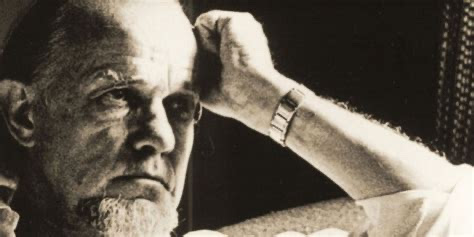
As a teenager I was profoundly affected by watching the films of How Should We Then Live? by Francis Schaeffer. In this series of films (now accessible on YouTube) Schaeffer, in breeches and goatee beard, traces the history of Western civilization from the first century to the twentieth arguing, in his characteristic way, that “There is a flow to history and culture”, and that “This flow is rooted and has its wellspring in the thoughts of people” (Complete Works, Vol. 5, p. 83). I had never heard anyone talk like this before. Not that I understood much of it – my head was spinning as I tried to get my mind around the phrases like ‘autonomous man’ and ‘upper-storey faith’. As the end music (the third movement of Corelli’s Concerto Grosso no. 8 – a favourite to this day) washed over me I knew that I had to watch all ten films. I was hooked. So I travelled up to Haywards Heath every Friday evening with the rest of the youth group until the series was finished. From then on I read every Schaeffer book I could get my hands on. Some, like He is There and He’s Not Silent, were beyond me the first time I tried: I was a science student – how could I be expected to deal with epistemology? Others, like True Spirituality and Edith’s L’Abri were encouraging and sanctifying as well as being stretching.

At some point while I was studying geology in Aberystwyth I read Art and the Bible. I had no idea, then, how foundational that little book would be in my life. Recently I realized that Schaeffer’s ‘Four Standards of Judgment’ (Complete Works, Vol. 5, pp. 399ff.) have been shaping my interaction with culture ever since. Let me share them with you with the prayer that they will be as helpful to you as they have been to me.

Schaeffer, writing about a Christian approach to art in particular (I hope you can see how it applies to culture in general) argues that “there are four basic standards: (1) technical excellence; (2) validity; (3) intellectual content, the world-view which comes through; and (4) the integration of content and vehicle” (emphasis in the original).

  1. By technical excellence Schaeffer is talking about, for painting, “the use of color, form, the texture of the paint, the handling of lines, the balance, composition and the unity of the painting, and so forth”. In other words, how well the work of art is executed. “We are not being true to the artist as a man if we consider his art work junk simply because we differ with his outlook on life.....Man must be treated fairly as man.”
  2. By validity Schaeffer means “whether an artist is honest to himself and to his world-view, or whether he makes his art only for money or for the sake of being accepted.” He talks about the difficulty an artist is in if he paints for a patron (whether an old nobleman or a modern art gallery). There is a real tension here and it affects the ‘art’ of preaching as Schaeffer points out. My students often struggle with this concept. When I say that a society that has rejected the idea of a God to whom we are accountable is valid in approving of euthanasia frowns appear around the room. A cultural artefact, a piece of art by Damien Hurst or a social practice such as abortion may be completely valid, if it matches the world-view of the actor. That doesn’t mean it is ‘good’. It may be completely horrifying. But it would not be, for that, invalid.
  3. Schaeffer’s third criterion is worldview: “The third criterion for the judgment of a work of art is its content, that which refers to the world-view of the artist” (emphasis in the original). The question here is whether the creator of the work of art or whatever has produced something that reflects the truth or falsehood – in Schaeffer’s words, whether a Christian worldview is shown through it or not.
  4. “The fourth criterion for judging a work of art involves how well the artist has suited the vehicle to the message” (emphasis in the original). Schaeffer has in mind here the idea of congruence: does the form suit the message that the creator wants to convey? To be told you have cancer by your doctor with a smile on his face is to experience incongruence. Picasso’s Guernica, with its broken images of broken people and broken animals is a piece of art in which the form of the art is congruent with the subject.

Over the decades since I first read those standards they have prompted me, cajoled me, corrected me and aided me (mostly sub-consciously I am sure) in my quest to understand and evaluate culture. They continue to help me to avoid two equal and opposite errors: (1) thinking that a cultural form is bad just because I don’t like it (the error of ethnocentrism, or just plain selfishness); and (2) thinking that all cultural forms are equally acceptable (the error of relativism). It is possible, then, to look at a West African spirit mask or listen to a drug-fuelled electric guitar solo or watch a Hindu dance-drama and appreciate them without agreeing with the worldview of their creators. It is also possible to critique a piece of so-called Christian music or art, not because it does not convey true content (Schaeffer’s third criterion) but because it does so in a poorly executed (criterion 1), invalid (criterion 2) and tacky (criterion 4) way.

I have much to be thankful for that I was taken to watch those Schaeffer films. I am still trying to work out the implications of his advice three and a half decades later.

Friday, May 16, 2014

Business as Mission as Business as Usual

Business as mission is a significant idea that has received a fair bit of exposure in the missions world in recent years. According to the Lausanne Committee for World Evangelization Occasional Paper 59, business as mission (BAM) is based on the principle of holistic mission (http://www.lausanne.org/en/documents/all/173-lop/875-lop-59.html; my interaction in this post is entirely with this paper). As holistic mission attempts to address God’s concern for all of life so a biblical and Christian and missional view of business must address issues such as economic development, employment and unemployment, economic justice and the use and distribution of natural and creative resources. Advocates of business as mission assert the validity of “business as a mission, a calling, a ministry in its own right”. It has, they assert, a kingdom perspective rather than an approach to call people to separate from the world.


The paper then goes on to define BAM by distancing it from other related concepts. It is not, they say, “workplace ministry”. Nor is it tentmaking or “business for missions” in which legitimate business is engaged in to generate profits to plough into missions. BAM advocates also distance the approach from fake businesses that exist solely to provide a platform for missionaries to get a visa and businesses that operate solely for the personal gain of the owner even if they are purportedly run out of Christian motivations. As the Lausanne Occasional Paper puts it “The business of business is business. And the business of business of business as mission is business with a kingdom of God purpose and perspective”.

The Lausanne Occasional Paper gives us ten foundational business principles of good business as mission, the first two of which are those that are shared with all good businesses. The rest are those that are distinctive of BAM. BAM, then,
  1.  strives to be profitable and sustainable in the long term. As such then it takes a positive view of the profit motive. A good profit indicates that resources are being used wisely and that the business is a good steward of those resources.
  2. strives for excellence, operates with integrity and has a system of accountability. Hard work, honesty and fairness are valued. These qualities become known and lead to the long term viability and success of the business.
  3.  has a kingdom motivation, purpose and plan that is shared and embraced by the senior management and owners. The principle here is that the company should be set up with the intention of having a “positive and lasting impact in the local community as well as the local church”.
  4.  aims at holistic transformation of individuals and communities. The business will use every opportunity to bring spiritual, social, economic or environmental benefits to the local community.
  5. seeks the holistic welfare of employees. The company sets high standards for the way it treats its employees.
  6.  seeks to maximise the kingdom impact of its financial and non-financial resources. This is worked out in different ways by different companies.
  7.  models Christ-like, servant leadership, and develops it in others. Managers lead by example, living a life of prayer and mentoring.
  8.  intentionally implements ethical Christ-honouring practice that does not conflict with the gospel. Kingdom businesses operate on moral and ethical principles of the Bible.
  9.  is pro-active in intercession and seeks the prayer support of others. Managers and owners actively seek the prayer support of others and keep them informed of the progress of their company in recognition that they are operating in a spiritual conflict.
  10. seeks to harness the power of networking with like-minded organizations. Partnership with other organizations with such a kingdom orientation is sought for the common good.

I think all these principles are very good but I have a question about categories: I find it difficult to see how they are any different from what one would hope from any business that is being run by those who have experienced the grace of God in their lives and understood the positive value and legitimacy of life ‘in the world but not of it’. But the advocates of BAM seem to be saying that the concept is different from such a business because of its intentionality in mission. I think it is important to recognise how many Christians who do business do so with values that are far from Christian and therefore one can see how such a contrast can be maintained but surely the principles they are advocating are those that should be the norm for all Christ-followers in business, are they not?

So BAM, for a business person, really means living your whole life under the lordship of Christ. It is not, in the end, something new at all. Rather, it should be business as usual for the one who follows Christ with integrity and desires that his whole life should bring glory to God.

Wednesday, May 7, 2014

Hunger for the Word

During my travels over the last few months I preached at a church of maybe 200 people who really appreciated my ministry. I was happy of course. It is always heartening when people come up to you afterwards and share how much they learned from the message. But what I learned afterwards shocked me. I had a hint of it beforehand when I was told that the people would appreciate a message from the Bible. Afterwards I was informed that the pastor hardly uses the Bible at all! He gets his material from the internet. Things had got so bad that the church committee (in effect, the deacons) had even approached the pastor to ask him to ‘refer to the Bible more’. Now if the regular church members are having to ask the pastor to refer to the Bible more things have got pretty bad. Of course, it would be worse, wouldn’t it, if no one noticed how bad things had got, if nobody cared about the weekly ministry from the pulpit? But this is a church of committed believers who desire to meet together for worship and edification. So how does it get like this?

How can we stop this sort of thing from happening? Firstly, churches, you need to make your expectations clear from the outset. A prospective pastor may be a wonderful chap, a great people person and a wise counsellor, but what is his preaching like when he visits? If he really wants to be the man who is called to your church he will do his best to preach well on his visits. He will use his well-worn illustrations that are guaranteed to get a laugh or a tear. The message may be carefully crafted according to some trusted homiletic method. But how much are you fed by the ministry? Is the Bible being explained and applied to your conscience? Is it the Bible that moves your affections or an anecdote of the Chicken Soup for the Soul variety? Do you feel that you are better equipped to read the Bible for yourself? If not, think again. He may be a really nice guy, but he shouldn’t be called to your church. Hang in there and don’t settle for second best.

Secondly, Bible colleges, seminaries, and schools of theology, you need to check your curriculum. Are your students getting equipped for a lifetime of ministry? Does what they learn at the seminary merely give them the ability to teach the same books of the Bible that they learn in class? Or, even worse, does it equip them merely to be great communicators with nothing to communicate? In some countries the turnover of pastors is ridiculous. But it is no wonder is it if they rely on a stock of sermons for their pulpit ministry? They have not been equipped for lifetime of learning and teaching.

Thirdly, preachers, you must read, read, read. Listening to a dynamic preacher on the internet may be a real blessing. But how much will that enable you to mine the Scriptures yourself? Isn’t it just a little too easy to copy down the points he makes and the illustrations he uses and refashion them for your people? I once heard a shocking statistic that suggested that a large percentage of preachers never read a book once they leave seminary. If that is you, then repent. You need to be feeding your own soul. That means that you must be a voracious reader. Only then can you feed others. And it is not enough to read the easy books, the best sellers that everyone is reading. You need to be stretching yourself, reading the challenging books that will broaden your mind, open up new vistas onto the Word and enable you to dig out of that Word the truth that your people desperately want.

I have been heartened on my travels to experience a real hunger for the Word, especially among young people. Let’s not let them down with the spiritual equivalent of Happy Meals. 

Saturday, April 19, 2014

The Local in an Age of the Global

I have spent the last few months on a semi-sabbatical so I thought I would write a few reflections. I  continued to teach (a light load) and to do some forward planning for the School but most of my administrative work was taken on by my colleagues (thanks Cor and Tibbie). I had grand ideas of writing a book but with hindsight that was exceptionally idiotic. Oh well, I am still learning. I did manage to write an article for Transformation as well as putting the finishing touches on another for the International Journal of Frontier Missions.

What made the semester so refreshing for me were the opportunities to travel that mostly came unsought after. After 8 1/2 years I took a trip to Nepal with my two eldest kids. We had a great time catching up with old friends and completed it with a trek up to Annapurna Base Camp and a couple of nights in the jungle at Chitwan National Park. A month later I was in Helsinki for a long weekend for meetings with the Agricola Theological Institute and United Community Church; my first time in Finland. Then last month I was in Lausanne, Switzerland at the invitation of Westlake Church for their first Global Mission weekend.

My first reflection is on the global/local tension that is everywhere the same and everywhere different. In Helsinki I was sitting in a Chinese restaurant talking theology with a handful of Finns, an American and a Canadian, in English. The restauranteur was Chinese and seemed at ease in Finnish and English as well as her native tongue. I suppose most of the ingredients of the dishes we ate were imported from elsewhere. At one point a song by English rock band Bastille was played on the hifi (thanks kids for educating me). All such restaurants and cafes in Finland have wifi - of course - so you can connect with anyone anywhere anytime.

Well, that may not sound so strange but just reflect on that a bit. Even a decade ago that would have been unusual. And it is not just highly connected countries like Finland that exhibit this phenomenon: we even got wifi half way up the Himalayas! This has huge implications. One of these is that if you have English a whole world of opportunity opens up as English is by far the lingua franca of globalization. When I arrived in Nepal nearly 30 years ago hardly anyone spoke English (unlike India where even illiterate rickshaw-wallas could ply their trade in the old colonial tongue). Now nearly everyone seems to be able to. Of course it is not always the Queen's English but the beauty of English is that even if you speak it badly most people can catch on to what you are saying. That is not true for all languages. (Not that I know all languages, you understand, but that is what I am told!)

I had the opportunity to preach in a number of international churches during my travels (more about preaching in another post). I am sure there are Korean churches and Chinese churches in most of these places as well but I am equally sure they don't have the incredible kaleidoscope of ethnic groups that the English-speaking churches have. One thing I am fascinated with is that a number of locals also worship at each of these churches. What makes them want to worship in English rather than their mother tongue? At least a part of the answer to that question is that for many locals at such churches the English language is the medium in which they have come to know Christ and in which they pursue their discipleship. That may not be very adequate from a missiological perspective but it is the ground reality.

But all this talk of globalization must not mask the continued significance of the local. Even while the world becomes increasingly homogeneous the local takes on even greater importance. Whether it is fondue and tress bread in Switzerland, or reindeer sandwiches in Finland (yes, really), or dalbhaat in Nepal there is nothing quite like home cooking, and the drive to connect with the other must never be confused with a denial of home. The most significant thing Joel Morris (COO of WEST) and I did in Finland was to brave the hottest sauna our Finnish host had ever experienced, taking dips in the ice-fringed lake in between sessions! Our reception by the pastors the next morning was about as enthusiastic as a group of phlegmatic Finns could get I would imagine. Shaun Rossi, Director of OM Europe Church Planting, reckons that a number of church planting efforts by expatriates in Finland have foundered because the workers have not taken to the sauna. If that doesn't demonstrate the significance of the local in an age of the global, what does?

Thursday, March 20, 2014

Wood for the Pyre

“Brother David, Saila’s mother has died and he has a problem he wants to discuss with you.” Dilip, David’s young Hindu landlord had come up the outside stairs to David’s flat with Saila, one of their neighbours. Saila was clearly upset. His face was drawn and downcast. He spoke quietly, hardly raising his gaze to meet David’s eyes, while Dilip stood by quietly. Saila’s elderly mother had died just an hour or two earlier. Her body was in the flat next door and needed to be taken as soon as possible to the burning ghat by the river for cremation. According to Hindu custom cremation should be carried out as quickly as possible after death; certainly within 24 hours. In a hot country like India it is a physical necessity. As with many customs, though, this is also explained in religious terms: in this case, a speedy cremation is seen as important for the good of the departed soul.

Saila came to his problem. His family was poor. David knew that. (He also knew that one of the reasons for that was that Saila drank heavily; he could sometimes hear him beating his wife at night.) He could not afford the wood that they needed to cremate his mother’s body at the burning ghat. “How much do you need?” David asked. “5000 rupees,” Saila mumbled under his breath. David didn’t quite catch that and looked up at Dilip for clarification. “Are you able to lend Saila 5000 rupees?” Dilip asked. That was a lot of money for anyone. David did a quick calculation in his head. Saila, a day labourer, would probably have to work two months to earn that. Even if he didn’t drink so heavily that would be a lot of money for a simple labourer to have stashed away in his flat.

Clearly here was a legitimate need. Moreover, Dilip, David’s landlord had brought Saila to him for help. Everyone in the neighbourhood knew he was a follower of Jesus. “Aren’t believers in Jesus supposed to be generous and kind, to help those in need?” thought David. There was so much poverty in India. It seemed to David that it stared him in the face day after day. Beggars held out their hands as he walked along the street. Hardly anyone gave to them. Most passers-by seemed not to even look at such people. On the other hand, wandering holy men stopped by the compound most mornings begging for a handful of rice, and the landlord’s wife always gave to them. 

David and Sue had been living in India for a year now and had enjoyed building relationships with their Hindu neighbours, particularly with their landlord and his wider family. They had had several opportunities to tell them about Jesus and Dilip had appeared to have some interest. As David thought about the issue in front of him, it seemed like a test. If he didn’t lend money to Saila Jesus himself may not be held in honour because David was his only representative in this neighbourhood.

On the other hand, thought David, wouldn’t lending to Saila affirm his lifestyle choices? Shouldn’t he rather make a stand at this point? Also, if he did lend to Saila, might he not have a string of others turning up at his door for handouts? David had heard that most Indians did not have a habit of saving for life’s calamities; whenever she had an illness in the family their house helper, Parvati, would always let Sue know the price of the medicine, in the hope, Sue reckoned, that she would help out with the cost. They usually did. After all, the local people were for the most part very poor and it was hardly surprising that they were not prepared to face a crisis. But didn’t this encourage dependency? How would people like Parvati and Saila learn to save and be self-reliant if David and Sue always helped out when there was a need? But here was a particularly acute need, and David’s landlord had brought Saila to him. The witness of David and Sue was at stake. David said they would discuss it and get back to them. Dilip left with Saila to go and wait in the courtyard.

David and Sue sat down to talk it over. “He isn’t asking us to give him the money,” David said. “True, but what is the chance that he will be able to pay us back?” Sue replied. “I know. It seems unlikely doesn’t it?” “Perhaps that is why Dilip doesn’t want to help him out,” said Sue. “But surely he could help. He has a decent business. And he has a steady income in rent from us.” David was reminded that, in fact, Saila was the one their landlord called to do the ritual sacrifice of the goat in the annual Dasara festival. Saila always received a portion of the meat for that doing that. Occasionally he could be seen doing odd jobs around the compound as well. So why did Dilip bring Saila to them? Why doesn’t he sort out the problem? “What about Dilip’s three brothers who all have good jobs?” added Sue. Each one, in fact, lived with his family in his own house in the compound and collected rent on their upstairs flat. “You know how it is,” David replied. “They have financial pressures of their own with their children in fee-paying schools. Besides they would be unlikely to have 5000 rupees in cash in the house.”

The more David and Sue discussed it, the more they felt they were being used. But they felt that they must give to be a good witness in a society that seemed to treat the poor with such callous disregard. Jesus’ injunction, “Give to everyone who asks you” (Luke 6:30) kept coming back to their minds. And it was not as if they were struggling financially. In fact David had just gone to the bank that morning so they had the cash on hand. But would their supporters approve of this use of their money? Some of their supporters worked very hard to enable David and Sue to live and minister there. And wasn’t the money the Lord’s, in the end? Would he approve of this? Would he not hold them accountable for their use of this cash? Would he not want them to help Saila out? Surely, thought David, if the cattle on a thousand hills belong to him, 5000 rupees was peanuts.

Saila and Dilip were waiting in the courtyard. They couldn’t make them go on waiting. The wood needed to be purchased right away. David and Sue committed the problem to the Lord in prayer, and then went down to give their answer to Saila.

If you were David or Sue, what would you do?

Thursday, February 13, 2014

Jotham’s Failure


This morning I was meditating on 2 Chronicles 27. Jotham was king of Judah during the time of the divided kingdom. Judah’s brother nation and enemy (2 Kings 15:37), Israel, was in its death throes as a nation. Jotham became king at the age of 25. He was already married and had a son, Ahaz, who would succeed him (2 Chron 28:1). Jotham’s father Uzziah (a.k.a. Ahaziah) had been a good king but had let his success go to his head and entered the temple to offer incense as if he were a priest as well as a king, for which he had been struck with leprosy (2 Chron 26). (Interestingly his body was buried ‘near’ his ancestors, rather than ‘with’ them, which suggests that the Israelites considered him polluting even after death.)

The story as it is given to us in 2 Chronicles 27 focuses on Jotham’s personal piety and achievements: “He did what was right in the eyes of the Lord, just as his father Uzziah had done, but unlike him he did not enter the temple of the Lord” (v. 2). “Jotham grew powerful because he walked steadfastly before the Lord his God” (v. 6). Apart from his successful war against the Ammonites (v. 5) we are not told anymore about his life and reign. He died at the disappointing age of 41, however, having reigned for only 16 years. On the face of it, Jotham seems to have lived an exemplary life but not been rewarded with longevity for it, as it would seem he should have been (cf. e.g., Deut 17:20; 30:18).

But there is more to Jotham’s life than his personal godliness. Jotham was also anointed king over the Lord’s people. He had a responsibility to lead his people to obey God’s law. At the time of the Judges the big problem was that, as “Israel had no king, everyone did as he saw fit” (Judges 21:25). But here Israel has a king, and still they do as they see fit, “continuing their corrupt practices” (2 Chron 27:2b; 2 Ki 15:35; cf. Deut 12). Jotham’s failure was not one of personal piety but of leadership. He failed to act when he should have acted. And his failure to build on his personal piety cost him his life.

We often hear people say things like “God wants us, not our actions” or “God wants us to be not to do; he is more interested in our character than our work”. The Bible does not drive such a wedge between our lives and our actions. Part of being is doing. “By their fruit you will know them,” said our Lord (Matt 7:20). We know God by his actions, in creation and providence, and supremely in his mighty acts of salvation. I think it was A. W. Tozer, who said “We have a tendency to think and not to act.” Jotham may have thought much about his people’s corrupt practices and regretted it deeply. But that was not enough. He was called upon to exercise leadership in this situation but he didn’t act. And the Lord removed him. 

Jotham’s reign was short lived. That of his grandson, Hezekiah, was not (2 Chron 31:1; 2 Ki 18:4). Whatever responsibility the Lord has given us may we not shrink back like Jotham but step out in faith and act.