Friday, June 28, 2019

Beyond Caste: Identity and Power in South Asia, Past and Present, by Sumit Guha: a Review

Beyond Caste: Identity and Power in South Asia, Past and Present, by Sumit Guha, Ranikhet: Permanent Black, 2016 (Leiden: EJ Brill, 2013), pp. 291 + xxiii.


In the course of my research in Nepal I read a lot about caste. Caste is typically understood to be the characteristic social order of India and its neighbours. Debates about what makes it what it is abound. Researchers and theorists approach it from various angles: sociological, historical, political, economic, religious.
My study on the city of Lalitpur in Nepal was largely a sociological one depending heavily on my ethnographic methodology. I did, however, do a fair bit of historical investigation, by delving into the way groups had evolved over the centuries. I was disappointed that my publisher, Orchid Press, decided to entitle my work Caste and Kinship in a Modern Hindu Society because much of what I discovered was of more historical interest. Indeed, I argued that the ritual complex of the city told us a lot about how the city wasin days gone by, rather than what it is today. (Orchid Press, by the way, has not responded to any of my attempts at communication since the book was published and I have never received a single penny in royalties.) 
In Beyond Caste, Sumit Guha delves assiduously into previously unresearched historical material and interacts with nearly all the significant literature (though not all – see below). Replete in historical and geographical detail, it is a piece of serious scholarship that deserves careful reading. I will not attempt a thorough review here but merely state Guha’s thesis, note some significant historical facts that were new to me, and make some brief comments. (For a more comprehensive review please see that of H. L. Richard here. I was given a copy of the South Asian edition. The European and American editions are a ridiculous price.)
Guha argues that a caste is a “bounded social group demarcated by the exercise of power throughout its millennial history” (252). He reminds us that, in the study of caste, the exotic has often been highlighted over aspects that are shared with other social systems. In this way, then, caste became an Orientalist trope, as did so many other aspects of Hindu culture. Guha’s point is to demonstrate that “the bounded, status-ranked ethnic community or ‘caste’ is a social form that frequently appears in multi-ethnic societies” (3).
It is not that it is exactly like that of other societies because “in South Asia it became a highly involuted, politicised form of ethnic ranking shaped by the constant exercise of socio-economic power.” And that encapsulates Guha’s answer to the big question that emerges in all the good studies of caste: to what extent is caste in South Asia unique? In my study, I argue that caste is indeed unique because of the creative tension that arises from the competing demands of centralizing kingship and decentralizing kinship, but more on that below.
One of the strengths of Guha’s study is its historical approach, focussing as it does on “dynamic social processes” (6). But it is also valuable because he does not focus on the development of caste in just one part of India. He demonstrates, rather, how social processes have gone on in different parts of the subcontinent at different rates, are often not completed, and often set in reverse; he eschews an evolutionist theoretical position which deems certain systems as necessarily primitive.
In all the vicissitudes of history, however, “the bounded ethnic group remained and remains a powerful presence” (7).
Guha, rightly, after Nicholas Dirks and Susan Bayly, argues that caste is not a product of a single ‘Hindu’ ideology. I also argued that caste is structural rather than ideological. Rather, says Guha, power is the all-important ingredient.
Guha argues that castes are a sort of tribe, by which he means “large, stratified, socio-political organizations characterized by diffuse authority and collective leadership such as, for example, a council of important chiefs” (71). He says that such “identity-centred and geographically bounded communities” were “the domains in which ethnic politics was formed” and that this gives us a “deeper appreciation of how indigenous states in India grew out of and reproduced the lasting structures of inequality so inadequately captured by what has been called the ‘caste system’” (99).
Kinship is far from the fixed, bounded unit of social organization that we often see portrayed in the literature: “kinship and exclusion from the kin were both socially constructed statuses, and a person could move from one to the other in the course of a lifetime” (150). And yet, as my research seems to suggest, there are times when kinship groups do indeed attempt to maintain a tighter boundary. 
How did caste develop under British rule? Guha reports how important the colonial administration of British India was in the formation of South Asian identities. Bernard Cohn and Nicholas Dirks, he reports, “argued that colonialism was more than a system of power: it was also a mode of knowing that constructed its objects of knowledge” 174). The colonial administration created a significant apparatus to classify and count all the peoples in its domain. Sometimes administrators visited a region and, working with local Brahman literati, as in the Bombay Presidency at the beginning of the nineteenth century, “simply divided the people into Muslims and Hindus, and the latter into Brahman, Rajput, ‘Shoodruh’ or Maratha, and Ati-Shudra or outcastes” (201), masking and distorting a much more complex reality on the ground. Interestingly, twenty years later, in the mid-nineteenth century a change had occurred, with the “basic ordering seems to have been religious (201). This would seem to correlate with the developing notions of religion in the emerging paradigm of ‘world religions’.
After the great anti-colonial uprising of 1857-8 the notion of race became a significant category in a way it had not been hitherto (203). And this was a surprise to me: by the late eighteenth century, “It was the political value of this sense of European-born identity that…led the [East India] Company to assiduously limit the development of a local power elite with any genealogical depth. It also caused the Company to discourage the immigration of non-official Englishmen into India. All this was designed…to pre-empt any local claim to the ‘rights of Englishmen’ that had just been forcefully raised in North America. The disavowed India-born offspring formed a socially inferior class of Eurasians, excluded from power” (218). In order to encourage English officials to return to Britain once their term of service was complete, Lord Cornwallis, the then Governor-General of India, sanctioned a large pay increase, allowing them to return at middle age with a substantial nest egg.
Returning to his main point, Guha tells us to “abandon the futile search for a social essence” because “social structures, old and new, have been politically ordered in ways that we cannot grasp unless we deploy the concept of caste as a bounded corporate body shaped by socio-political power throughout its long history” (255).
I have a few quibbles with Guha’s analysis.

Firstly, I think he makes too much of ranking. That is, he seems to follow the standard idea that all the castes in a society are in a clear hierarchy relative to each other. He quotes Weber: “A status segregation grown into a ‘caste’ differs in its structure from a more ‘ethnic’ segregation: the caste structure transforms the horizontal and unconnected coexistences of ethnically segregated groups into a vertical social system of super- and subordination” (13).

As I demonstrated in my work, with the exception of Dalits (those formerly known to others as Untouchables) and, to a lesser extent, other impure, but not untouchable castes, such as Butchers, those vertical relations are often contested and indeterminate because of no ritual intercaste relations. Guha does acknowledge, at least, that ethnic boundaries are porous.

Secondly, although Guha examines caste throughout traditional India (including the territories now Pakistan and Bangladesh), dividing it helpfully into five regions, and makes several references to caste in Sri Lanka, he barely mentions Nepal. In a sense Nepal is little different from other parts of the subcontinent, especially in the old Mithila kingdoms of the southern plains (Tarai). But the Newar former kingdoms of the Kathmandu Valley – Kathmandu, Lalitpur (Patan), and Bhaktapur – are particularly significant exemplars of archaic caste systems because the Nepal Valley was never under Mughal or British rule.

Although he does indeed discuss the phenomenon of kingship, and interacts with Dirks and A. M. Hocart, he doesn’t even reference Declan Quigley’s important theoretical work, The Interpretation of Caste. Thus, in my opinion, kingship and the city are not given their due.
Has Guha’s study led me to change my view of caste? Not a lot. But it has broadened it. Guha’s careful elucidation of the ongoing centrality of power in the development of caste society is convincing. In so arguing, Guha is stating that caste is not unique but is, rather, a South Asian example of political realities found in every society, but in a way that previous materialist writers had not managed.
However, Guha makes no mention at all of the ‘climax communities’ of the Kathmandu Valley. I think that is a failing. In so doing he misses the centrality of kingship in those societies. But his central thesis is solid, and I now think such cities must be regarded not as the apex of caste society but as perhaps caste's most complex instantiation.

There are missiological implications to this analysis, but more on that later.

Tuesday, May 28, 2019

Review Article: Outside In

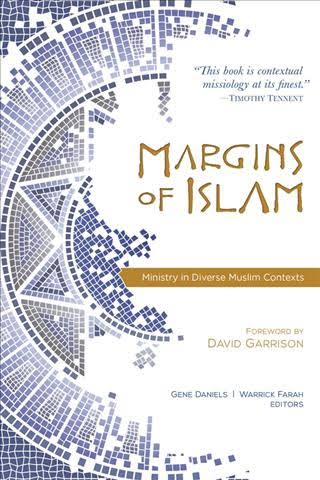
Margins of Islam: Ministry in Diverse Muslim Contexts

Edited by Gene Daniels and Warrick Farah (Pasadena: William Carey), 2018, 240pp, £12.30 (Amazon), £7.66 (Kindle)
I was in Indonesia last year, teaching in a couple of seminaries.[1] That vast archipelago constitutes the most populous Muslim-majority nation on Earth. Just a few months earlier, the country was shocked when radical Islamists (from one family as it happens) killed thirteen worshippers at Easter services in the city of Surabaya.[2] That violent extremism seemed far away from the folk I met there, such as the middle-aged hijabi who sat next to me on the long train journey across the island and offered me a share of her snacks. I also met the leader of a movement of people, outside mainstream evangelicalism, who meet regularly in small groups to read the Bible and worship Jesus. After twenty years, the movement’s leaders reckon their numbers have now reached six figures. The key feature of these vignettes for our purposes is that all these people would identify as Muslims.
Since then, I have met a number of Muslims as I have visited universities around the UK. Let me introduce some of them to you: the young Mancunian woman in her hijab, the mature Iranian man who dare not go home for fear of the state, the Algerian researcher trying to make sense of the modern world, the Egyptian postgraduate student who asked me why Christians are so private about their religion, and the young Saudi woman who told me she had rejected Wahabi Islam when she saw what IS was doing.
What staggering diversity. How do we make sense of Islam in a world of such variety? What, after all, is Islam? Is it a religion or a way of life or something else? 
This book is a major contribution to understanding Islam and ministry to Muslims. Read more here.

Thursday, April 18, 2019

Winter into Spring VIII: Muslims

In both Newcastle and Dundee, especially the latter, the events were attended by a number of Muslim students. I was struck by the diversity in this ‘community’. There was the British young lady in her hijab, the mature Iranian man who can’t go back home for fear of the state, the Egyptian post-graduate student who asked me why Christians are so reticent to be public about their religion, the young lady from a very tightly-controlled country who told me she had rejected the Wahabi interpretation of Islam when she saw what IS was doing, and the Arab student who identified as an atheist (more about him later).
Those that attended events listened respectfully and were happy to discuss the issues that arose. There were no heated arguments, no verbal attacks. On first entering the marquee they were perhaps a little uncomfortable, wondering, probably, if they were allowed. But a welcome by a student or CU guest soon put them at ease.
One leader of the Islamic Soc. in Newcastle attended a lunch bar and asked me a load of questions about the logistics of the venue, etc.: he was getting ideas for their own events week!
Another male student, from Pakistan, came during the morning slack time when the marquee was open for coffee. We had a respectful and frank exchange of views and I gave him my email if he should want to contact me later. I received an email a few weeks later apologising if he had given offence (he had not) and said he would come back to me with more questions.
The high point from the point of view of witness to Muslims, was the dialogue between an Imam and a Pastor in Dundee. Imam Jabil, a local mosque leader, shared the stage with Duncan Peters from Glasgow, with the two-hour event ably chaired by a retired Dundee lecturer. The chair had made a list of questions which he asked in turn, with each man having three minutes to answer each question. At the end, questions were fielded from the floor, with the whole event lasting two hours.
About 15 Muslim students attended as well as around the same number of CU members and a few of us others. The Arab atheist stood at the back nearly the whole time (arriving slightly late). He was clearly flabbergasted at what he was witnessing – a friendly sharing of views. He asked me who had organised the event. Afterwards he stayed to talk, not giving too much away but telling me he was unimpressed by the answers the Imam was making.
I thought this event was a modest success. The big gain for the CU is that it provided an environment for building relationships and in which the sharing of the gospel was entirely natural. It was important for those of us who organised this that the event should not be a debate but a dialogue. The former can sometimes cause people to feel threatened, leading them to become defensive and combative. Here no one felt under attack; all were happy to talk afterwards. Duncan’s fresh translation of Luke’s Gospel – Holy Injil: Luke– was available for people to take afterwards. A number of the Muslims who attended came back for subsequent events.
It would be great to see such events put on in universities throughout Europe, especially where there are a significant number of Muslim students. We need to help students to create concrete ways in which they can show love to their classmates, and in which the truth of the person of Jesus and his saving work can be shared respectfully and humanely.

Wednesday, April 17, 2019

Winter into Spring VII: Hindus


I got to share the gospel with a number of Hindus in all four locations I visited over the past few months. Nearly all were international students.
in Dundee a group of post-graduate students from India joined us for dinner one evening. It was hard to discern if they had anything more than a passing interest in what was going on. They asked intelligent questions and listened respectfully. There was a marked ignorance (I don’t mean that pejoratively) among the group, of our message. One asked me, “You know there are three types of Christianity?” I asked him what he meant, and he replied, “You know, those who worship Jesus, those who worship Mary, and those who worship Satan”! Some serious groundwork needed there. These were intelligent young men but with very little awareness of who Jesus is or what he has done. (On a side note, I just about managed to prevent them from eating the beef – ‘Cottage Pie’ could be anything to the uninitiated. Thankfully there was a vegetarian option.)
Two Hindus stood out for me. One was a young lady in Aber who had migrated from Nepal in her mid-teens. She had heard of Yeshu in Nepal and thought it must be a foreign god. She was astonished when I told her that the Jesus who we talk about here is the same person!
I had the joy of interacting with one recent Indian graduate in Utrecht. He had been involved in a Globe CafĂ© and was reading John Uncovered with his new friends. We talked seriously until it was time to leave. His first question to me after hearing Lindsay speak on ‘Why Bother with Jesus’ was this: If this is true what does it mean for the Indian villager who has never heard? Wow! This was no smug attempt to humiliate me – he was probably thinking of his grandmother. I told him how we all alike are held responsible for the way we have handled the light we have received and that we can only be saved by conscious faith in the Lord Jesus Christ. His reaction was to say something along the lines that, if that is the case, people need to get the message out. Indeed.

I wrote a piece on Sharing Jesus with Hindu Friends for bethinking here.


Tuesday, April 16, 2019

Winter into Spring VI: Roman Catholics


As last year, I had some very good conversations with students (and one tutor) who are practising Roman Catholics. One, an African student, had never heard an evangelical explanation of the cross of Christ. She came back later in the week and showed me how her Bible readings have taken on a new freshness – I had directed her to Romans and Hebrews. She is now in a follow-up group. The tutor told me frankly that he had been going to church his whole life, his friends had now all given up, and he was seriously wondering if it was all worth it.
The way I approach Roman Catholics is this: I tell them they have a great tradition – the Creeds and Councils of early Christianity. But traditions are always mixed because the people who develop them are not pure in their motives and make mistakes. So, we need something that is not dependent on the tradition to critique it and correct it. That’s the Bible, that has come to us from God himself and therefore should be respected as the ultimate authority. And we go from there. Not all will buy it – one graduate I talked with in Newcastle was sufficiently astute to realise my argument didn’t fit with official dogma and would not countenance going any further with it. But he kept coming along to the lunch bars, as he has done for years.
Any thoughtful Roman Catholic will have loads of questions that follow. If they have understood the argument for the authority of the Bible (even if they haven’t yet come to agree with it) they will be happy to hear how the Bible answers those questions.

Monday, April 15, 2019

Winter into Spring V: sub-Saharan Africans


In most of the universities I met a few students either from Africa itself or of African heritage. I will mention some under Islam and Roman Catholicism but here want to point out an African group of which we need to be aware – those who are scarred by the prosperity gospel. This is, of course, no gospel at all but a false teaching. In its milder forms it is repeated by poorly trained pastors who are simply not reading their Bibles carefully, leading to disappointment and disenchantment. In its extreme forms it can involve serious child abuse and even murder. In between are a host of different churches and denominations, many of which have a presence in the UK. Young people are coming to university in the UK from a background that is heavily impacted by such groups. 
On the one hand there will be those, like a young lady I met before in Leeds, who are sceptical of the claims of the gospel because they have never had their questions answered. Prosperity preachers confuse the gospel with material success and seem to have no inclination to engage with the difficult questions that are pressing to their young people – sexuality, climate change, work. 
On the other hand, there will be those, like a young man I met in Newcastle, who have been badly burned by their experience of church. Jim, I will call him, recounted how he had gone with his mother to a big event at the O2 Arena as a child and been thoroughly turned off by the obvious fraud that was going on – fake healing etc. He now considered himself an agnostic.
So young people from such backgrounds arrive at university with a shaky faith (if any) and a tenuous attachment to church. Reaching out to such students in their early days is vital if they are not going to be lost altogether.
Even still, however, events weeks will pull some along. They will listen. They will ask questions. Are we sufficiently aware of these folk and ready to handle them sensitively?

Friday, April 12, 2019

Winter into Spring IV: Chinese

As I pointed out yesterday, a number of CUs are actively seeking ways to engage international students in their events weeks. It is a joy for me to have been involved invited to help out with this. It is a great opportunity to share the gospel with such students while they are studying here. If they come to faith in Christ, then they get to take the Lord Jesus back with them to their families and friends. Friends International have staff workers in many towns and cities across the country supporting CUs and local churches in this ministry.
I have said before that CUs are doing so well in reaching out to sceptical British students, with their persuasive evangelistic approach. And many are putting a lot of effort into hospitality, especially in efforts to reach international students.
There are large numbers of students getting missed out, though, including British students from other religious traditions and internationals who have a strong sense of attachment to their own tradition. We need to be looking for ways to engage these folk as well as learning ways to be more sensitive to their heritage.
In the following blog posts, I will address ministry to such students grouped into the following categories: non-Muslim Africans, Roman Catholics, Hindus, and Muslims. But here I will start with a few words about the Chinese. A word of caution: this is all anecdotal; I have had little experience of this ministry compared with others. These are my observations and reflections only, not a thoroughgoing analysis.
In recent decades, in the West, there has been a significant movement of Chinese students to Christ, matching the great movement of Chinese more generally back home. I remember leading an Uncover John study with a tableful of Chinese students in Durham four years ago. They were so eager and so quick to pick up what we were sharing with them. I wonder if that window of blessing is closing now. I met many Chinese students on campuses over the past few months. In Dundee especially, I handed out hundreds of flyers to students from mainland China. But very few came along to events. Nothing wrong with the flyers – they were well-designed, and the information was clear. But there seemed to be a hardness I have not encountered before. Is it busyness? Surely that has always been the case. Could it be that the increasing hardness of the regime against the church in China is galvanising opposition against the gospel more generally? What about the Orwellian social credit system? Is that causing students to keep their heads down even when they are off camera and in another country? This is worthy of more research.